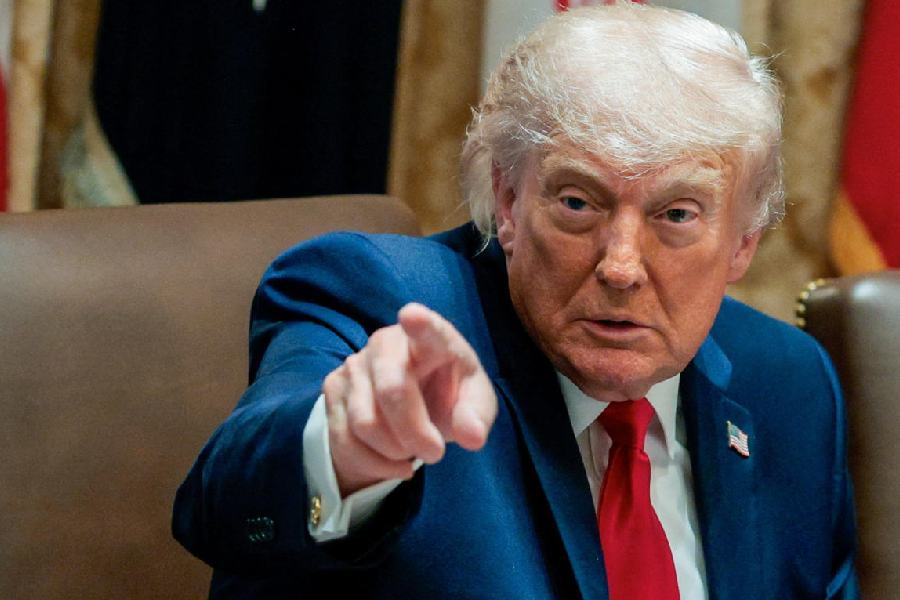
US President Donald Trump has refiled a defamation lawsuit seeking at least $10 billion in damages against the Wall Street Journal over a report detailing his alleged ties to convicted sex offender Jeffrey Epstein, after a federal judge dismissed an earlier version of the case on procedural grounds.
The amended lawsuit, filed in Miami federal court on Wednesday, names media mogul Rupert Murdoch, Dow Jones, News Corp CEO Robert Thomson, and Wall Street Journal reporters Khadeeja Safdar and Joseph Palazzolo as defendants. Trump alleges the newspaper defamed him and caused “overwhelming” financial and reputational harm through its reporting.
The lawsuit centres on a Wall Street Journal article that described a birthday card to Epstein as bearing Trump’s signature. Trump and his lawyers have denied the authenticity of the card, calling it fake even after it was released by lawmakers investigating Epstein’s case.
“At the time of publication, Defendants recklessly disregarded whether the Defamatory Statements were true and/or they purposefully avoided the discovery of the truth,” lawyers for Trump wrote in the amended complaint.
Dow Jones has defended the report, saying it has full confidence in the rigor and accuracy of the Journal’s reporting and will vigorously defend the lawsuit.
The case is part of a broader series of legal actions Trump has launched in his personal capacity against media organisations, including lawsuits against the New York Times, the BBC and Iowa’s Des Moines Register. The outlets have denied wrongdoing and are contesting the claims in court.
U.S. District Court Judge Darrin P. Gayles had dismissed Trump’s earlier complaint in April, ruling that he failed to meet the “actual malice” standard required in defamation cases involving public figures. The legal threshold requires proof that a publication knowingly published false information or acted with reckless disregard for the truth.
Epstein, the disgraced financier and convicted sex offender, died in a New York jail cell in 2019. His case fuelled conspiracy theories among some of Trump’s supporters, who alleged the government concealed Epstein’s connections to influential figures. Trump has maintained that he cut ties with Epstein before the financier’s legal troubles became public in 2006.
Trump’s administration has also faced criticism over its approach to the media, including moves to restrict press access to government agencies and threats to use regulatory powers against critical outlets. Media organisations have challenged several of those actions in court.
The White House, however, has defended Trump’s record on media access, describing him as the most open and accessible U.S. president ever and saying his administration has expanded press access in unprecedented ways.