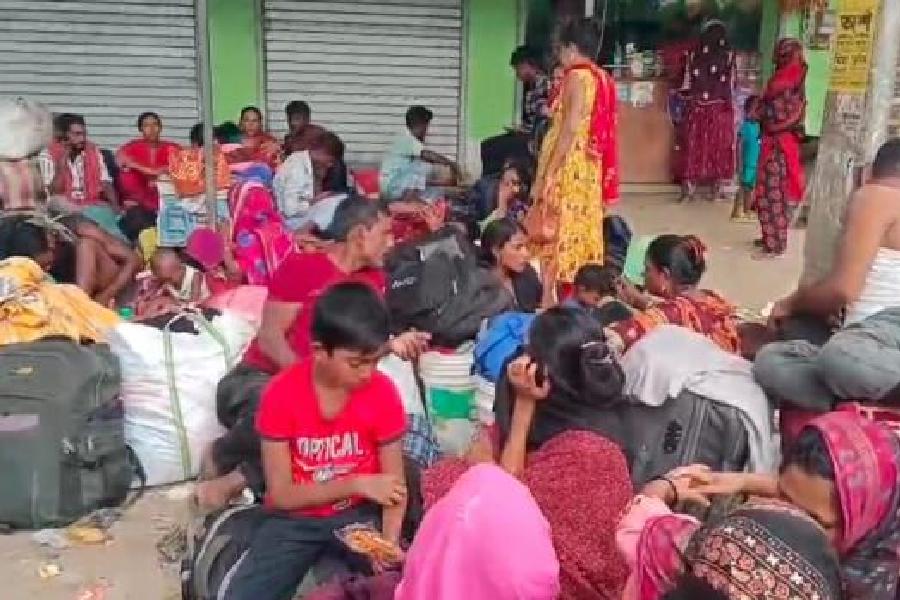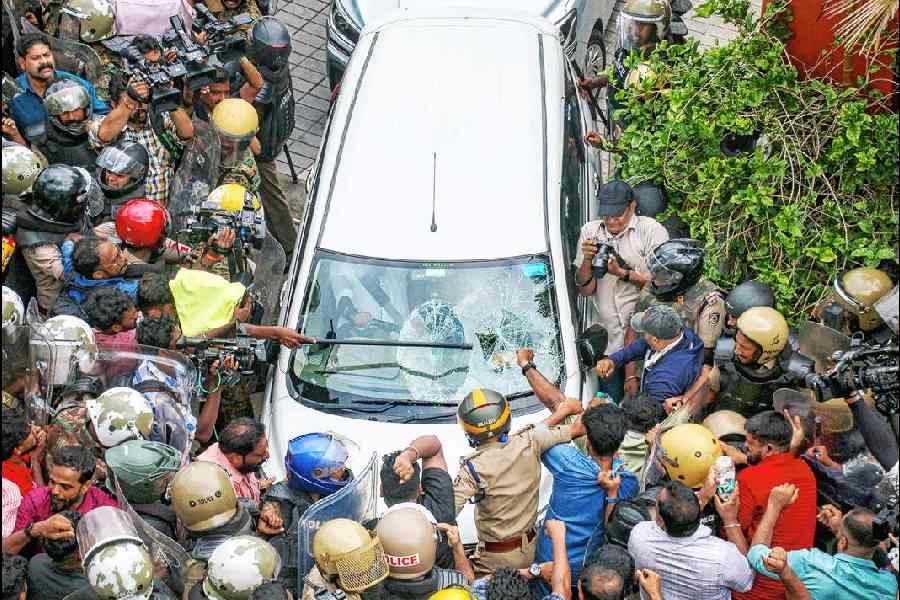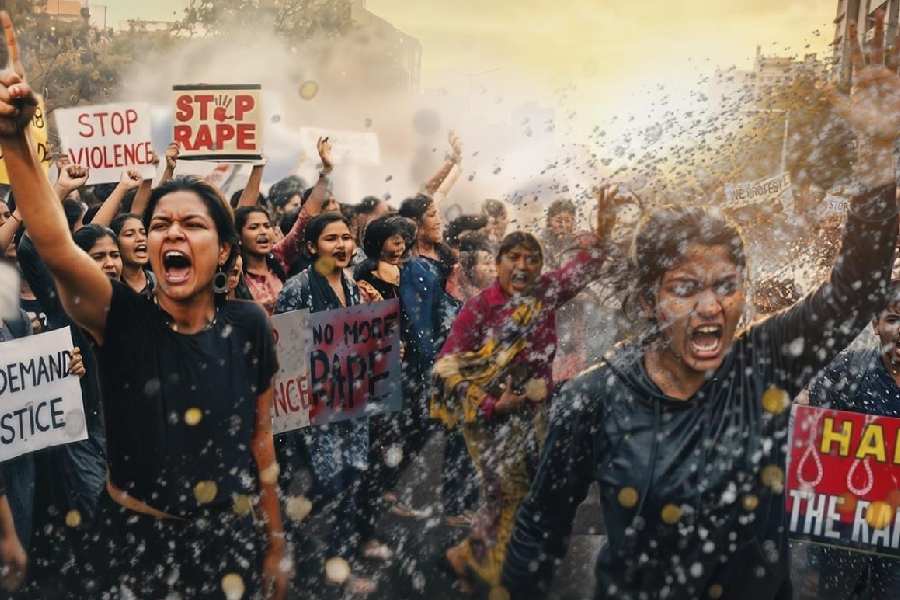
Hathras — 16 Days, an original investigative series, is a searing exploration of one of India’s most disturbing and debated rape cases that shook the conscience of the nation.
Directed by filmmaker Patrick Graham (Ghoul, The Dupatta Killer), the series follows the haunting 16-day journey after the 2020 Hathras incident, involving the rape and murder of a Dalit girl by so-called upper caste members, uncovering the intersections of caste, gender, institutional silence, and the relentless pursuit of truth.
Through the eyes of journalist Tanushree Pandey, one of the first on the ground who has single-mindedly pursued this case and is an executive producer on this series, Hathras pieces together the uncomfortable realities that play out over three episodes. Produced by DocuBay in association with Epic Studios, Hathras — 16 Days is streaming on Zee5.
Over a video call, t2 chatted with Patrick and Tanushree on their series that has met with shock, awe and praise.
The Hathras gangrape has been a blot on India’s history. Unfortunately, as a country, we move on, as all other cases of this nature have shown. What kind of emotions has your documentary Hathras — 16 Days evoked so far?
Tanushree Pandey: I wasn’t expecting this kind of a reception. People are receiving it so well, they are waking up to the reality of what happened. Many knew about how a Dalit girl had been raped, who subsequently died and how the administration cremated her against her family’s wishes. It was a horrific incident, but as you said, the next thing happened and the country moved on. Most are telling me that this feels like a one-of-a-kind documentary because what we have mostly seen so far in other docu-series of this nature is a fictionalised version of events.
Hathras is one of the first documentaries that spotlights rural India... a Dalit girl being denied justice and no one taking cognisance of it. As a country, we couldn’t do anything for her. After watching it, people are angry and emotional. Many have told me they couldn’t watch it at one go, that it gave them sleepless nights.
Some people are asking me if caste is really such a big thing. I want to say that yes, on ground, it is. We are privileged and hence we don’t have to face such things. I am happy that we could at least bring out some part of the truth. And this is not just about one case — the idea is to bring attention to a larger pattern of injustice, a pattern of lethargy in the system, which mostly Dalit victims have to face.
Patrick Graham: I was in Mumbai during the pandemic and I distinctly remember the case from that time. It stayed with me. When I was approached for this documentary in 2023, I definitely wanted to work on it. Tanushree’s perspective and her coverage of the story brings an emotional and engaging layer to it.
As far as reaction goes, it has been overwhelmingly positive, people have really engaged with it. I feel this is a bipartisan topic — it doesn’t matter what party you vote for, whether you support the right wing or the left wing... this is something that we all recognise as a problem that needs to be solved.
Patrick, apart from this horrifying case itself, what other aspects — which may or may not be connected to it — shocked you while researching and making Hathras?
Patrick: I was always aware of casteism in the abstract, but had never seen it up close, apart from a few examples in the urban setting. I had never been to a place like Hathras before, which is what one calls the cow belt, the hinterland of Uttar Pradesh. It was an eye-opener for me. Hathras felt like a place founded on principles that were prevalent 500 years ago, rather than how we would like progressive, modern India to be. Here, we are talking about an extreme patriarchal society, one that keeps women off the streets as much as possible, keeps them hooded under scarves. You literally don’t see many women in Hathras at all. When you see men and women dining together, the men are on one table, the women on another. That, to me, was quite surprising because I had always associated that with places like Afghanistan or Saudi Arabia.
Caste is an extremely sensitive and complicated subject. It shocks me how an ancient hierarchical structure still has so much effect on a modern 21st-century country. There have, of course, been significant attempts to eliminate it, but it is still there. Caste is the basis and the crux for this crime having been allowed to happen in the first place.
During the investigation and the interview process, we spoke to so many people who didn’t believe rape existed or they simply didn’t understand the mechanics of rape! Their thought was that if a man rapes a woman, then surely the woman has allowed it. It was very shocking to hear these things out loud. It was interesting, but quite depressing as well.
Tanushree, what was the most painful part of retracing the journey to Hathras?
Tanushree: The most depressing part was that I had thought things would change, at least a little, in six years. That girls would have more liberty than before, but there is a greater sense of fear among the women there now. Women are stuck in time in that village. Men can do everything freely, but women can’t.
The Hathras rape victim’s family hasn’t been able to break the chain of trauma. Their girls can’t get admission in the government school because the children of the accused also study in the same school. The chain of hatred, trauma and inequality continues.
Hathras is not a one-off case. We see millions of such cases happening in India. A lot of it has to do with divisiveness and systemic lapses in authority. In a country where such things are ingrained, how do we even eradicate such practices?
Tanushree: You have asked a very important question. The system of
accountability, asking questions, having a discourse, having room for discussion barely exists. From the first day I started reporting on this case, I have maintained one thing — the government is not responsible for this crime and it is definitely not possible to have a cop shadowing every single girl in this country. My question is: how did the authorities react after this crime was committed? In the case of Hathras, it has been evident that the entire system has been on the side of the accused.
Why was everyone so hell-bent on proving that rape didn’t happen? Let the investigation agencies take their course. We have shown that in the documentary. That the system has been skewed in favour of the accused and completely against the victim.
No proper forensic examination was done. Her clothes, which was forensic evidence, was lying at home. I saw them and asked the cops to take it and that is when they were taken for examination. So unless we push and question the authorities — and that includes the government in power — nothing will be done. We elect our governments to serve us, not the other way round.
Patrick: I think you also have to ask the question as to who actually benefits from the continuation of this caste system, and that is where it becomes even more complicated. Clearly, there is an advantage for certain powerful people to maintain caste hierarchy. Unfortunately, there is, even to this day, a benefit for this system to be maintained, even if many people aren’t even consciously aware of it.
Tanushree: The system went ahead and forcibly cremated the body saying that not doing it could create a law and order problem. No one gave them the right to do it. They could only do it because they knew the family is neither privileged nor powerful, that they could do nothing to challenge it. Rather than sending out a clear message that this kind of crime will not be tolerated, this act emboldened the perpetrators — even those of the future — more.
In my coverage of this case and even in whatever else I have done, I have never sided with a government or attacked another. This has happened in other states too, including West Bengal and Maharashtra. As journalists, our job is to make people accountable. Otherwise, it is all just PR.
Apathy and inhumaneness on the part of talking heads comes across very worryingly in your documentary, especially in the final episode. What was it like for you hearing it all first-hand and what do you attribute it to?
Patrick: The news cycle is so insane that we are confronted by stories every single day which grab our attention. But I do think that the Hathras case has stayed in people’s minds. As far as apathy is concerned, it will eventually boil down to education and changing belief systems at their very roots.
Tanushree: We are a very regressive country on the whole. A country that needs masala in its news and the mindset of most people in this case reflects that. Hathras happened in the middle of the pandemic where people were dropping dead, hospitals ran out of oxygen.... But even at that time, the country was distracted by the news cycle and found a victim in Rhea Chakraborty (in the Sushant Singh Rajput case). She has now been given a clean chit, but she was made a scapegoat. I always feel that this country needs a woman to blame. It may sound like a blanket statement, but it is true. At that time it was Rhea and then the Hathras victim. In the case of the latter, she didn’t get dignity even after death.