The rise of streaming culture post the recent pandemic years has facilitated the arrival of various books to the screen as makers of OTT shows choose to focus on quality and depth over visual spectacle. Crime is a genre that has emerged to be one of the biggest crowd-pullers in the hands of makers, today’s audiences being fascinated by psychological twists and intricately knitted plots.
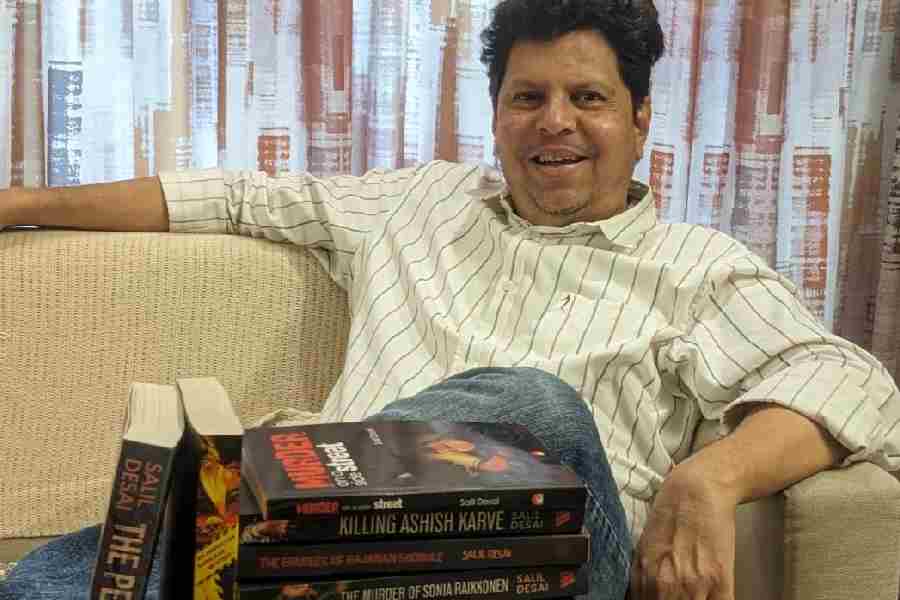
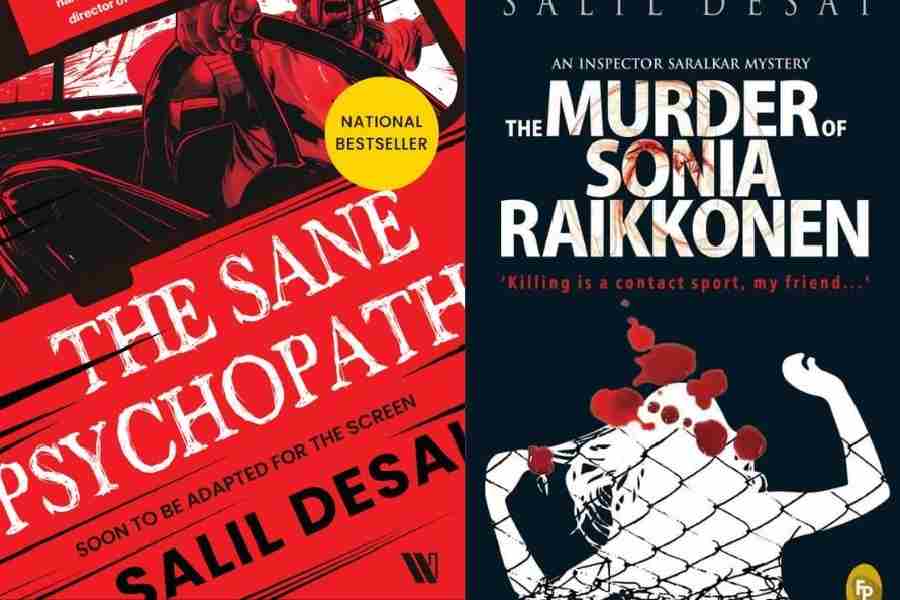
Salil Desai, the man behind several acclaimed crime narratives including the Inspector Saralkar novels, currently being adapted into a series by Jio Studios, is among the foremost authors leading the rise of Indian crime fiction in English. He is also the only crime author in India to have sold the rights to five of his books to a major Bollywood production house.
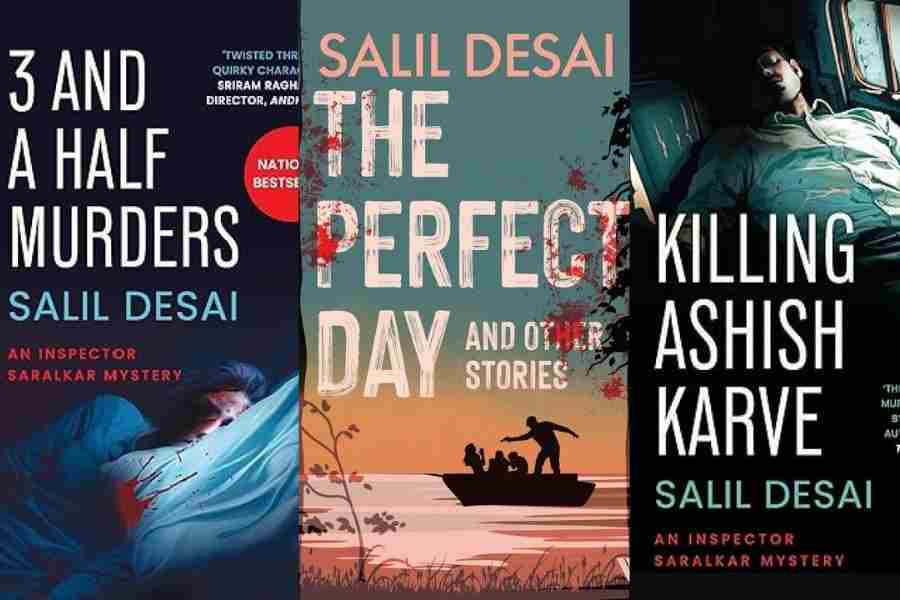
Salil’s most recent collection, The Perfect Day and Other Stories, covers multiple genres, from crime and supernatural to love and slice-of-life. In a t2-exclusive chat, the author opens up on his journey through crime fiction, the relationship between books and the screen, and the creative processes that go behind composing stories in the genre.
Was crime always the genre you wanted to focus on as an author? Walk us through your journey towards crime as a genre.
Early on, I realised that I had a natural flair for writing stories that either had crime in them or humour. By the time I came around to writing my first novel in 2009, I also knew I was a plot-based writer and reckoned that a crime narrative, laced with a seasoning of abrasive humour, was my best bet if I had to put 80,000 words on paper. Also, the crime genre was very sparsely populated by Indian authors writing in English. I strongly believed I could write as good a crime novel as any international author. That’s how I took the plunge and I am delighted I have just completed my 11th book in 15 years.
Do you think today’s rising streaming culture allows makers to do more justice to the intricacies of adapted crime narratives?
It most certainly does. Some of the best screen adaptations of crime novels are multi-episode OTT series, because the format enables filmmakers to explore the intricacies and layers of a crime novel, that a two-hour movie cannot. In a sense OTT series can be more faithful to the original books, written by authors. In fact, many crime novels have depth, including I daresay my own books. I try to craft my novels and stories not merely as thrilling or gruesome tales, but as insightful accounts of human behaviour, raising existential questions.
As a writer, how do you navigate the challenge to compose high-octane scenes in books, without visual incentives available for the screen?
Look, I think the story is the king as far as crime fiction goes, whether as a book or on celluloid. As an author, I must weave an ingenious plot, an original permutation or combination of the various elements of the crime genre. Next comes the presentation and prose — every sentence, every dialogue, every scene you pen to move the story forward, its construction, its style, its mood, its choice of words — has to be fiercely your own, because that is what makes it so different from that of another author.
Have you been inspired by the works of any previous authors in the crime, mystery or detective genre?
I have probably been inspired by almost all crime books I have read by a multitude of authors. That said, some authors and their books have left a more lasting impression — Arthur Conan Doyle, Agatha Christie, James Hadley Chase, Colin Dexter, John Grisham, Hakan Nesser, to name a few. Then comes the turn of inspiring filmmakers of the crime genre — Alfred Hitchcock, Sidney Lumet, Martin Scorcese, Joel and Ethan Coen, Quentin Tarantino, our own Sriram Raghavan, Vijay Anand, Anurag Kashyap and also Malayalam filmmakers are superb at understanding the craft of telling crime stories. As I said, I am a crime buff and all the books I have read and films I have seen in the genre have shaped my work in some way or the other. I carry them all inside me.
What, according to you, are the traits shaping an ideal, awe-inspiring detective figure with whom readers of all ages can relate?
Detectives in crime fiction must unfailingly be mavericks and possess integrity. A sleuth also must very much be a product of the setting — city, town, village and the times he lives in — yet time and again show the ability to dissect the dark impulses of the era and locale, and shine an unflinching light on the nature of crimes and villains. The detective also needs to have an unconventional point of view and personal style that makes him endearing and insufferable at the same time. This is something I have managed to do with my protagonist Senior Inspector Saralkar, over the six titles of my police procedural series.
How do you perceive the future of crime authorship in India?
India is full of part-time writers. I have been able to be a full-time author in the last five years, not because of royalty revenues, but because screen rights of my various books have been acquired by studios and production houses over the years.
As things stand, I personally feel, Indian crime fiction in English requires an international breakthrough like homegrown Scandinavian and Japanese crime fiction did a couple of decades ago, to really thrive. And this wave needs to be led by Indian writers based in India, for it to be really authentic.
You have blended multiple genres in your book The Perfect Day and Other Stories, where two completely disparate genres — crime and slice-of-life — begin and end the collection. Walk us through your combination of the different genres.
The Perfect Day and Other St ories is a collection of the best short stories I have written over the years in four different genres — crime, supernatural, love, sex and deception and slice of life. In fact, two of the crime stories in the collection, The Perfect Day and Burden, are being adapted for screen. The common theme running across the stories of the four different genres, is the chaotic, cultural confusion of urban India and how people react to the curveballs, baits, enticements and crisis that modern life springs on them.