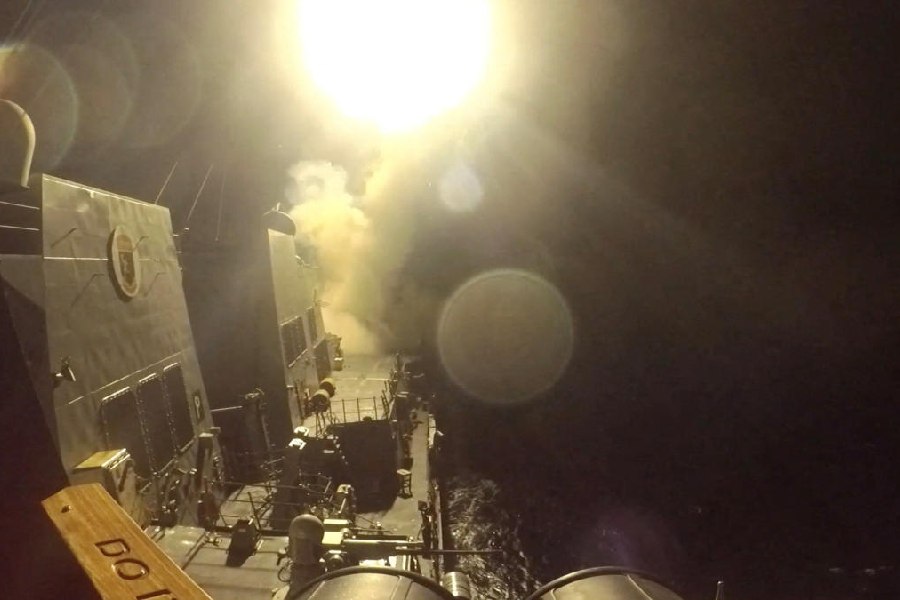
The US military said early Thursday that that it had "completed" its latest round of airstrikes targeting Iran, after President Donald Trump warned that Tehran would "pay the price" for stalled negotiations. The escalating attacks threatened to derail efforts to end the war.
The US Central Command issued a statement saying its forces targeted "Iranian military surveillance capabilities, communication systems and air defense sites across Iran". It did not elaborate on the damage done by the strikes, which it said had been carried out by the US Air Force, Marines and Navy.
"The strikes are in response to Iran's unwarranted and continued aggression," Central Command said. "US forces remain vigilant, lethal and ready."
Iran has threatened to retaliate, and missile sirens sounded early Thursday morning in Bahrain, which hosts US troops.
Earlier, the US Central Command said in a social media post that the military was striking "multiple targets in Iran", in attacks that were in response to "Iran's unwarranted and continued aggression". Iran threatened to retaliate.
The strikes took place after a day of Iranian fire in Bahrain, Kuwait and Jordan - all of which host US troops.
Iranian media reported that explosions were heard in southern Iran, in Bandar Abbas, Sirik and Minab.
It was the third time this week that back-and-forth strikes have tested a two-month ceasefire.
Trump has urged Iran to sign a deal to end the war and suggested earlier this week that an agreement could be reached in days.
Iran's United Nations envoy said the US should refrain from threats of force if it wants a deal.
"Iran has never negotiated under threats and pressure and will never submit to pressure or question," Ambassador Amir Saeid Iravani told the UN Security Council on Wednesday.
Still, both countries seem to be looking for a way to end the conflict - if they can manage to sell it as a win at home.
Iran has proved resilient despite weeks of heavy bombing. It is betting that its ability to effectively close the Strait of Hormuz - a crucial passageway for oil and natural gas - gives it a strong bargaining chip.
Israel Prime Minister Benjamin Netanyahu appears intent on pursuing goals that make compromise harder: the collapse of Iran's theocratic government, the elimination of its nuclear programme, and the destruction of the Iranian-allied Hezbollah militant group in Lebanon. On Monday, Iran and Israel targeted each other.