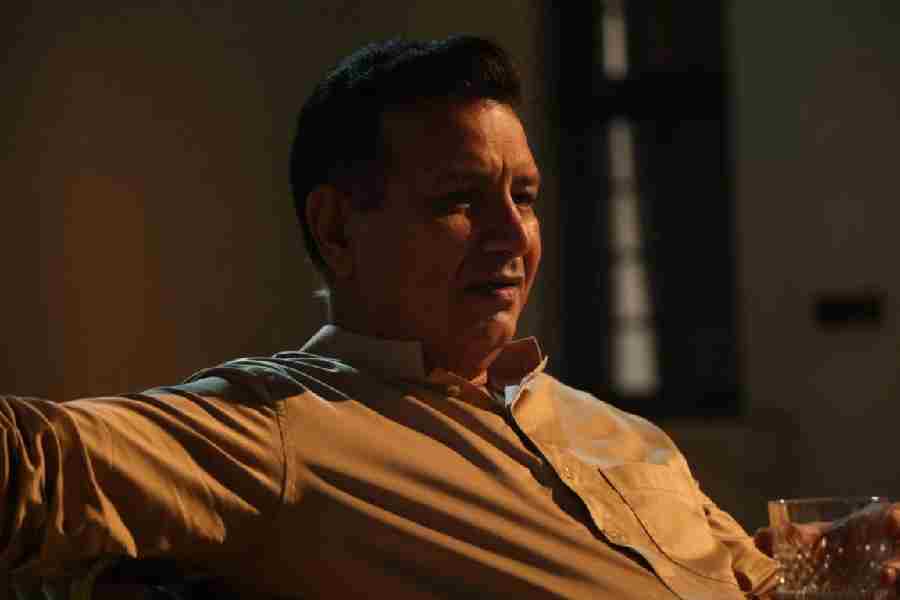
Kumud Mishra was back in his native town of Rewa in Madhya Pradesh when t2 caught up with him. The actor, who has completed three decades in films, plays Sona Singh, a ruthless feudal landlord, in his current project Satrangi: Badle ka Khel. The Zee5 revenge drama is set against the backdrop of rural north India and the seven-episode crime thriller dives deep into caste politics, survival and a thirst for revenge. Over to Mishra on the many shades of Satrangi.
The series, Satrangi: Badle ka Khel, is centred around a young man forced into his late father's profession as a "launda naach" performer while he secretly plots revenge. What is launda naach?
It is an age-old folk tradition of Bihar whereby men dance dressed as women. It is a centrepoint of this story.
The trailer suggests that it is a grim story set in rural politics and steeped in gender and caste discrimination.
It is a layered script. There are many characters. Bablu, doing the launda dance in the avatar of Lalli, is the central character and the story tracks how he changes as things change around him. It is a realistic story with a lot of dramatic elements.
Do the characters speak in a regional dialect?
We did not want to localise it too much as a pan-India audience will be watching it. We shot near Sanchi, in the neighbourhood of Bhopal.
What drew you to your role?
I read the script and found many shades in my character as antagonist — as a father, as a leader and a human being. How he is looking at his daughter, at his relatives and at society at large. There are some complexities. I don’t want to reveal more. I am old school. I prefer that the audience discovers the story on seeing the film. I do not like how these days by the time a film or a show releases, people know all about the story, its backdrop. I have seen films, of which I had seen even the making before stepping into the theatre. It feels like there is nothing left to see.
It’s been three decades that you have been in the industry, since Shyam Benegal’s Sardari Begum (1996), after your Doordarshan stint on Swabhimaan. Is overexposure one of the biggest changes that has come about?
In our time, people stood in front of posters and tried to figure out what the film was about. There was excitement. That magic is gone, in a way. We are in a rush to reach information to people. There is a fear of getting left behind. Also, the experience of watching films has become so expensive! We have taken away that joy from the economically weaker sections. Film-watching used to be a social event. I hope the economics of it are managed so that such people are weaned away from their mobiles and TV sets, back to movie halls. Only a cinema hall can provide the experience of cinema.
If one introduces you, one is likely to mention only blockbusters like MS Dhoni: The Untold Story or Tiger Zinda Hai. Which would you choose as your best work in three decades?
These are important films too. It is difficult to choose but there’s Airlift, all the films of Anubhav Sinha (Thappad, Article 15, Mulk), Nitin Kakkar’s films Fimistaan and Ram Singh Charlie, Rockstar, Vikrant Deshmukh’s Nazar Andaaz…There are so many projects that I liked. May be the audience remembers the big films more.