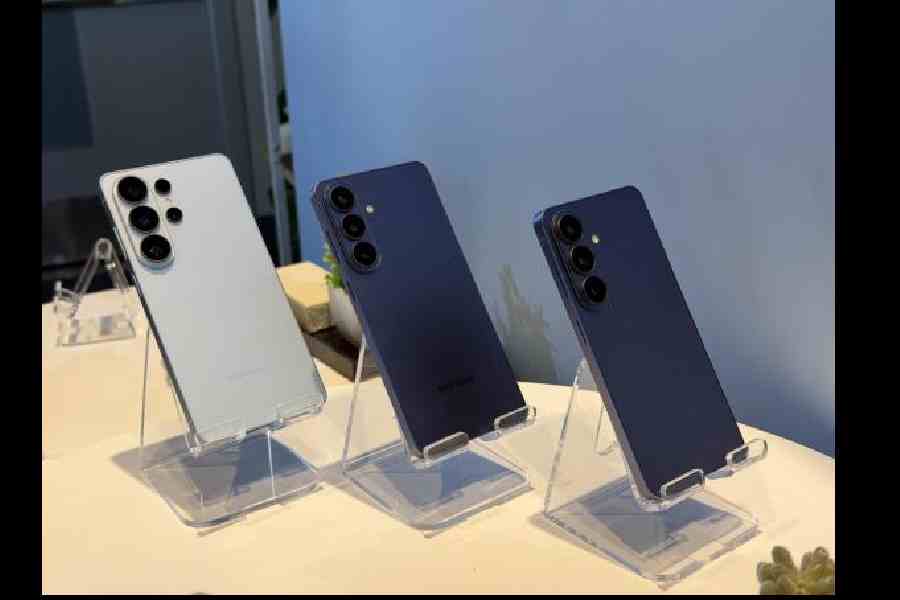
As artificial intelligence reshapes modern society and industry, Samsung Electronics’ commitment to advancing technology within the Galaxy S series has provided a much-needed silver lining for the wider smartphone industry. What began as a modest collection of features has blossomed into a sophisticated bouquet of tools, most notably within the latest Galaxy S26 series. These handsets offer early glimpses of agentic AI alongside powerful generative AI models, yet the company remains equally focused on shielding customers from the far-reaching risks of modern machine learning.
The real heart of this technological ambition beats behind the unassuming glass and steel of the Samsung R&D Institute India-Noida (SRI-Noida). Established in 2007, the facility is now a sprawling marvel of automation. In vast, brightly lit labs, rows of robotic arms move with surgical precision, tapping on screens and swiping through interfaces as they test one device after another — a striking reminder of how far the industry has come, particularly given that the Noida site was once known primarily for feature phone development.
Kyungyun Roo, the managing director of SRI-Noida, reminds us that the R&D centre functions as a vital spoke in a much larger wheel. He suggests that it is only when global teams work together that Samsung devices can truly come together as a seamless experience.
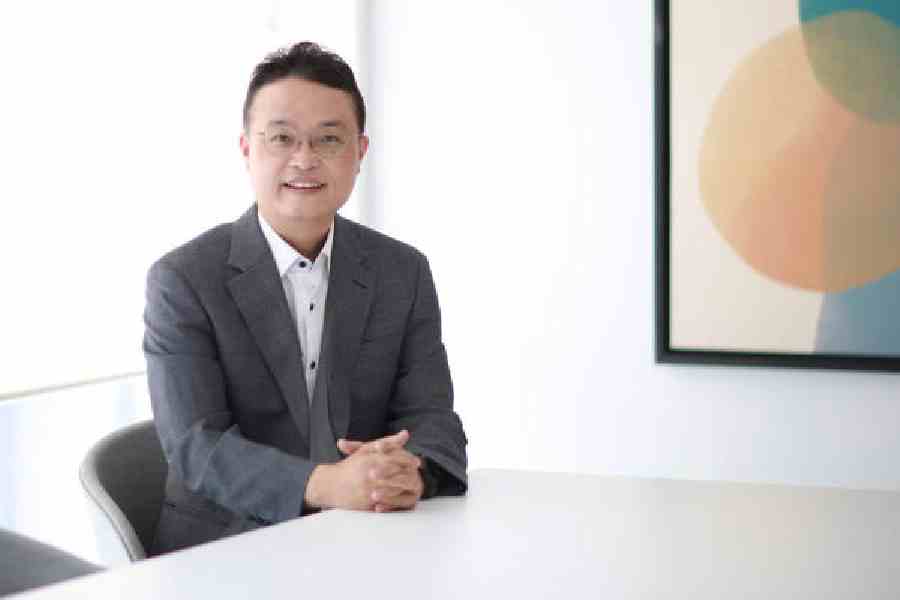
Kyungyun Roo, managing director of SRI-Noida, Samsung
Crucially, the AI offered on Samsung phones is not designed solely for an English-speaking audience. India remains high on Samsung’s priority list, and the development process reflects this. “When we developed the Galaxy AI for Galaxy S24, we started from scratch. It is on-device-based language AI. So, we first developed the Hindi language, and after that, Gujarati has already launched. At that time, we had many challenges, like a large number of dialects, or some Gen Z terms were not trained well. So, we improved a lot. Bringing anything on-device is itself a challenge because we’re taking a bigger model and making it smaller,” Roo told this newspaper.
He further noted the expertise required in data preparation, model training, and ongoing maintenance. “We have an advantage, because globally we have many teams working in different geographies and trying out their solutions. So, we can collate those things easily. There have been numerous challenges, but the best thing is that we are able to sort out those issues because of our technical expertise,” he said. Adding new languages remains a time-consuming process given the complexities that every dialect brings.
Roo has spent more than 25 years at Samsung Electronics. Instrumental in driving innovation and collaboration across global teams, he has excelled in roles spanning operations to software development. As managing director of SRI-Noida, he oversees a team focused on advanced technologies such as AI and service innovation, ensuring the centre plays a pivotal role in flagship projects while collaborating closely with Suwon R&D.
Quality as a founding principle
If one must experience AI on a smartphone, there is nothing quite like the new Galaxy S26 series, which marks a genuine turning point for the technology. Introduced in February, it has already become a shining example of what agentic AI can be. Whether ordering food or hailing a car, the agentic AI can handle tasks involving multiple steps.
Consider the case of a family group chat where everyone wants pizza. One can ask the chatbot to look at the thread, figure out what to order, and let the AI place the order with a delivery app. The user remains in full control — they still need to instruct the phone to complete the order by naming a specific pizzeria.
There are enough guardrails to keep AI in check. “Whenever we launch a feature, it has to be perfectly safe. There are lots of additional algorithms we put in just to ensure that inappropriate content is not shown,” said Roo when he met a select group of journalists at SRI-Noida.
“Coming to agentic AI — one of the things we are doing involves the Personal Data Engine and Personal Data Intelligence. It is personalised to an extent that it is completely on-device. Anything we learn from the user stays on-device, and the user has control to decide what is used and what is not. The whole feature can obviously be disabled. Quality is the most important thing and we take this very seriously. That is our main approach.”
Among the standout features, Audio Eraser — previously introduced to remove background sounds from recorded video — can now be toggled on while watching content through apps like Netflix or Instagram. If someone has filmed a YouTube Short in a noisy environment, Audio Eraser reduces background noise and boosts their voice in real time.
Document Scanner can remove fingers if you are holding up a document, erase creases, folds and shadows, and minimise distortion so the document looks clean before conversion into a PDF. Then there is Now Nudge, which has immense potential.
Context-sensitive information appears on the keyboard based on what you are doing — in a conversation where someone asks for trip photos, a button appears that takes you directly to the Gallery app and selects relevant pictures you may want to share.
A culture of global synergy
“The opinion and feedback of our users are an important part of our development. One of the key sources is Samsung Members, our users’ community, where people post feedback and ideas. We closely monitor the portal and escalate meaningful feedback. Some of it is used to adapt new features on the next release. Another channel is our service centre — the direct voice of consumers. We also get feedback from online channels, where we use AI to filter out important, insightful information,” said Roo.
SRI-Noida also ensures that enough effort goes into improving existing features alongside developing new ones. “Samsung supports seven generations of OS upgrades, and our R&D centre works on every one. Our AI team and framework team develop new things continuously, but we do not have a dedicated team for upgrades and another for new development — we all work together. One engineer is involved in the upgrade and also in creating new things. So, synergy is there.”
Understanding user behaviour is central to creating useful features, and that is where SRI-Noida plays a critical role. End-to-end validation is carried out after taking care of anomalies, with rooms full of bot-operated smartphones identifying issues before any feature rolls out globally.
“We develop together as one team. Our R&D framework team, the Suwon framework team, and other R&D centres collaborate together. Some modules are developed by us, some by Suwon, and we work together on testing too. We do not compete with each other — we play as a global One Team and develop our Galaxy phone together,” said Roo.
Deep within the facility, the final image is perhaps the most surreal: rooms containing hundreds of Samsung phones, screens glowing as they run applications automatically, capturing a slightly uncanny snapshot of what an average user’s day could look like.