Hearing loss is the third most common chronic health condition, affecting nearly a quarter of Americans. According to data from the World Health Organisation (WHO), more than 1.5 billion people globally live with some degree of hearing loss.
The majority of those affected have mild to moderate impairment and many may not even realise it. Because the changes occur so gradually, people can go years, even decades, without noticing a significant difference.
“It’s not quite the same as changes in vision,” says Dr Rajiv Kumar, clinician-researcher at Apple. “Sometimes people can go decades before they really become aware or go and get tested.”
The standard diagnostic tool is called Pure Tone Audiometry (PTA). Typically, a patient sits inside a quiet audiometric booth, puts on over-the-head headphones, and listens to a series of tones at different pitches — the aim being to identify the quietest volume they can hear across those frequencies. It’s a clinical process that, until recently, required a visit to a specialist.
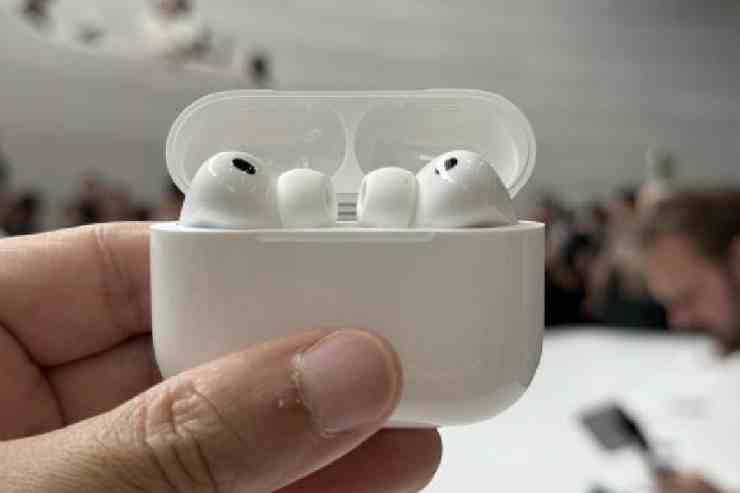
Now, with AirPods Pro, Apple has made a clinically validated hearing test available in India — one that can be taken from anywhere, without leaving home.
One clarification is worth making here. The hearing test helps diagnose hearing loss, and this feature is now available in India. In the US, AirPods Pro is additionally being used as a clinical-grade hearing aid — but that second capability has not yet launched in India.
The Hearing Test with AirPods Pro identifies whether you have hearing loss and displays your hearing ability across different sound frequencies, measured in decibels hearing level (dBHL). At the end of the test, you receive your results alongside recommended next steps.
For the most accurate result, a proper seal between your AirPods and your ears is essential. iPhone and iPad users can verify this using the Ear Tip Fit Test before beginning. The Hearing Test itself also checks your fit automatically.
The test covers a comprehensive range of tones at varying — and sometimes very low — volumes, spanning frequencies from 250 Hz to 8 kHz. It takes roughly five minutes and should be taken somewhere quiet, free from background noise, conversation, or loud fans and air conditioning.
Once complete, users receive an easy-to-understand result in the form of a personalised hearing profile, or audiogram. This can be monitored over time, either by the individual themselves or shared with a healthcare provider.
To better understand the factors that affect hearing health, Apple launched the Apple Hearing Study in 2019, in collaboration with the University of Michigan School of Public Health and the WHO. Contributions from over 160,000 consented adult participants in the US have confirmed the high prevalence of hearing loss and highlighted the common barriers to assessment and treatment.
As the test reaches more users, it stands to meaningfully change how hearing loss is detected — ideally before any long-term damage has occurred.
“Anything in health, to become really effective, first needs awareness — and the earlier that awareness comes, the more control a user has,” says Dr Kumar. “If someone is aware they have hearing loss, or are beginning to experience it, they might change certain behaviours or habits. Perhaps there’s something in their work environment, or loud exposures during their daily commute. They might consider using hearing protection to reduce that dose. They can also use the Noise app on Apple Watch to see where sound levels are highest and where their exposure is greatest.”
The feature is not designed to alarm people; it is designed to empower them. “The earlier one has the awareness, the better,” Dr Kumar adds. “We feel that hearing is definitely actionable.”
The relationship between hearing impairment and dementia has attracted growing attention in recent years. The 2024 Lancet Commission report identified hearing loss as the single largest modifiable risk factor for dementia in mid-life.
For most adults, taking the test once a year is sufficient to track any changes. “It’s similar to a vision test,” says Dr Kumar. And as with any health check — if something changes, it is always worth consulting a doctor.
The feature is available on AirPods Pro 2 and AirPods Pro 3.
Mathures Paul