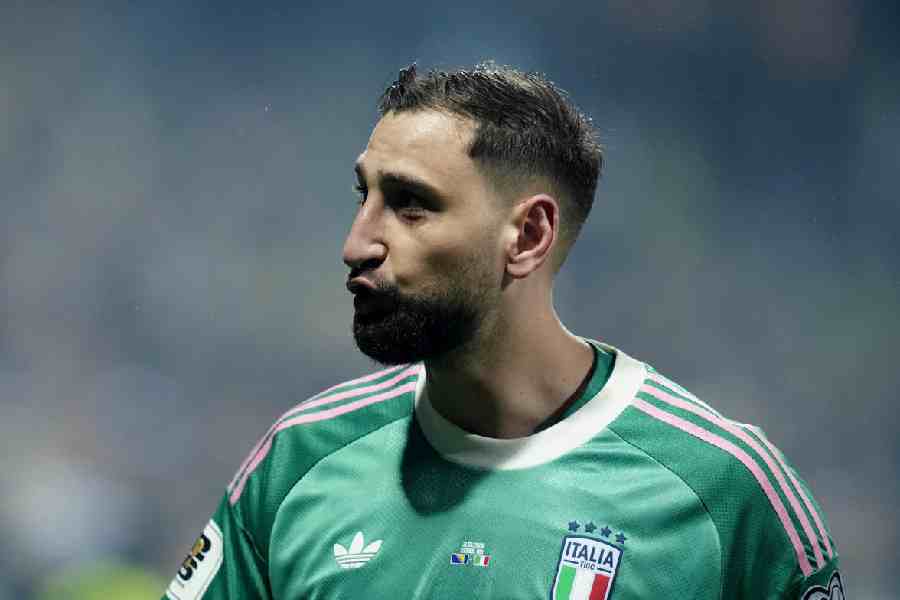
After a penalty shootout defeat to Bosnia and Herzegovina, Italy have missed yet another FIFA World Cup — a hat-trick of absences that feels almost deliberate.
In 2022, they lost to North Macedonia. In 2018, to Sweden — not traditional powerhouses you would expect the Azzurri to falter against, with World Cup qualification at stake.
If tragedy plus time equals comedy, then Italian football is now deep into its slapstick phase.
This is not the Italy that gave birth to catenaccio — a system that weaponised cynicism, bent probability, and left tournaments with silverware or, at the very least, a trail of broken narratives.
This is an Italy that dominates the ball like mansplaining: confident, expansive, and ultimately to little effect.
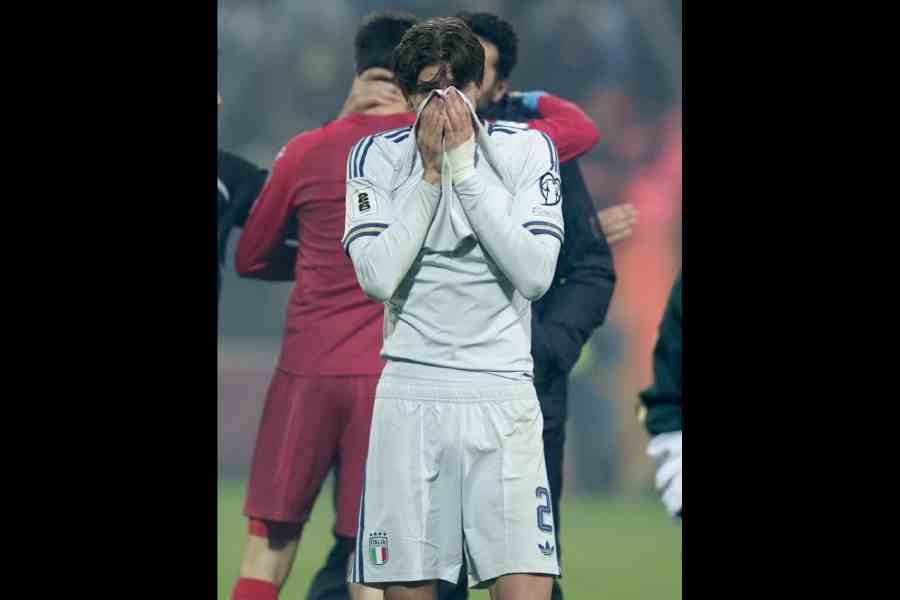
Italy's Marco Palestra looks dejected after the match after failing to qualify for the FIFA World Cup.
In their latest match, the Azzurri began as if burdened — and motivated — by legacy. An early goal, control of tempo, the illusion of authority. Then came the now-familiar pivot: a red card, a loss of structure, and a collapse in nerves.
As Alessandro Bastoni walked off, so did the illusion of control.
Bosnia and Herzegovina outplayed them — over 30 attempts to Italy’s nine, more than 700 passes to Italy’s roughly 400. They equalised in the 79th minute, forced penalties, and won 4–1.
Possession without purpose
Italy still posted respectable possession figures, often exceeding 60 per cent against sides they would once have dismissed as warm-up opposition. Their pass completion remains strong across qualification cycles.
But this reflects a fundamental misunderstanding: that possession equals control.
In modern football, it does not.
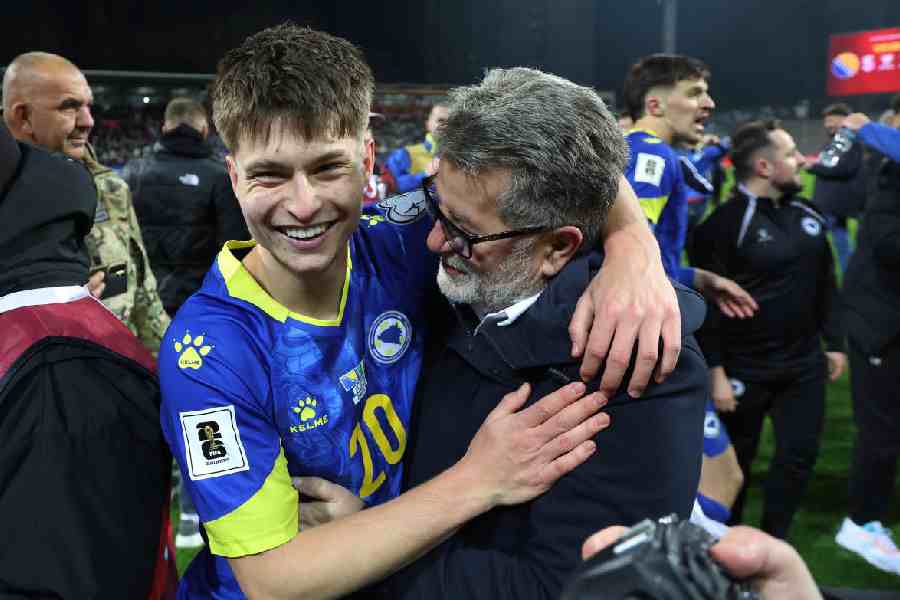
Bosnia and Herzegovina's Esmir Bajraktarevic celebrates scoring their winning penalty in the penalty shootout to qualify for the FIFA World Cup.
Even Spain — the architects of tiki-taka — have evolved beyond sterile dominance. Italy has not.
Expected goals, progressive carries into the box, and shot quality all tell a more uncomfortable story. The possession is passive.
Against Bosnia and Herzegovina, Italy oscillated between build-up and defensive retreat after the red card. Even before going down to ten men, their attack lacked incision. The early goal came from opportunism, not design.
This is the paradox of modern Italy: they appear in control right up to the moment they lose.
The death of “ugly wins”
There was a time when Italy specialised in the unwinnable — grinding out results, embracing chaos, thriving in discomfort.
That version of Italy would have relished a scrappy, low-margin encounter like this.
This side appears almost ideologically opposed to it.
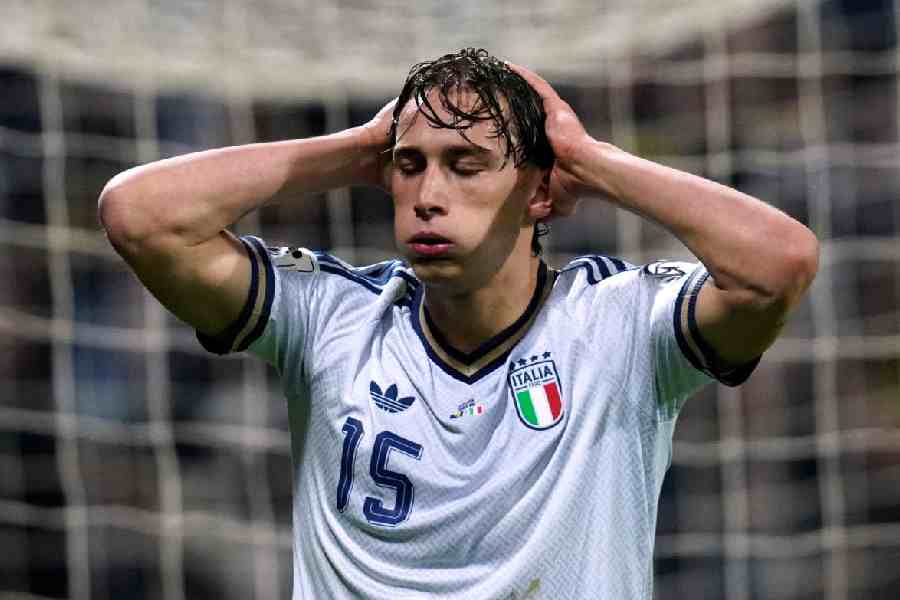
Italy's Pio Esposito reacts during extra time
When Bosnia and Herzegovina dropped into a compact mid-block, Italy responded not with invention but repetition. The ball circulated, angles recycled, tempo maintained.
No long diagonals to stretch the block. No second-ball chaos. No willingness to turn the game.
Italy once mastered the art of winning without beauty. Now they seem incapable of winning without it — and equally incapable of producing it.
Post-Euro 2020 hangover
That European Championship win now feels less like a rebirth and more like an illusion.
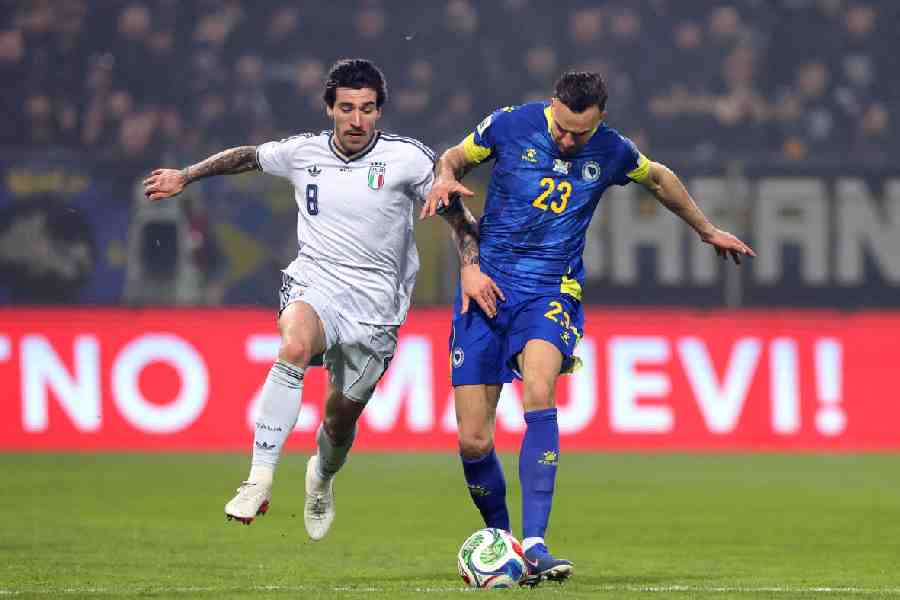
Italy's Sandro Tonali in action with Bosnia and Herzegovina's Haris Tabakovic
Even then, the warning signs were present. Their pressing was intense but fragile; their attacking patterns relied on rhythm rather than invention. When the rhythm held, they looked irresistible. When it broke, there was little beneath.
Their fortune was that it held throughout the tournament.
Since then, the regression has been steady. Chance creation is predictable, organised defences neutralise them early, and their backline is increasingly exposed. Squad renewal has lacked urgency and clarity.
System over instinct
Modern international football rewards controlled chaos. The best teams know when to abandon structure, introduce risk, and let games breathe.
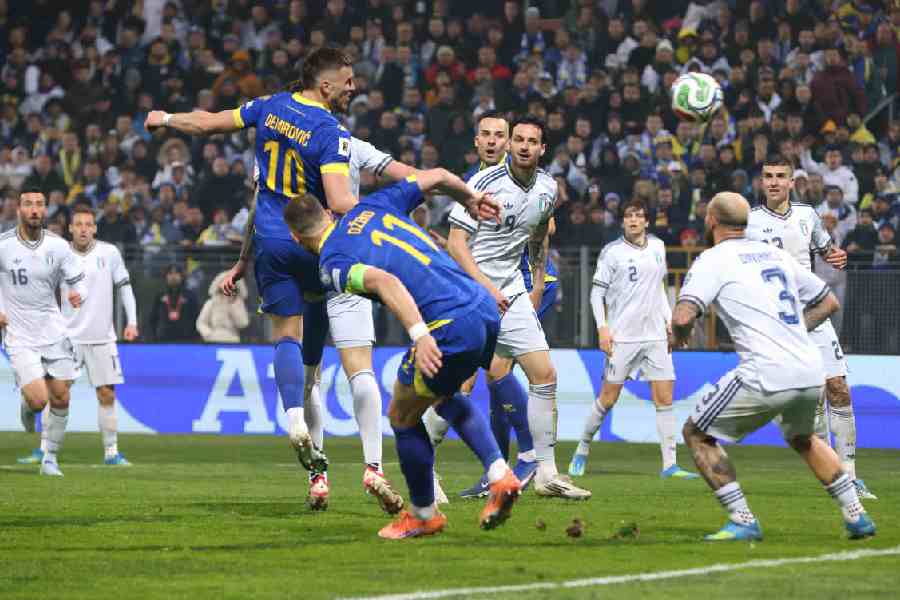
Bosnia and Herzegovina's Ermedin Demirovic heads at goal.
Italy appears committed to the opposite idea — that structure alone will eventually produce results.
It rarely does.
Football is not solved on whiteboards. It is decided in moments — moments that demand improvisation, risk, even recklessness.
Bosnia and Herzegovina understood that. Italy did not.
A crisis of identity
Three missed World Cups is not just a statistical failure. It is an existential one.
Italy’s footballing identity was built on contrast: beauty and brutality, flair and fear, art and efficiency. The current iteration offers something flatter.
Perhaps the most worrying shift is cultural. A generation of Italian players is emerging without the lived memory of World Cup football. For a nation that once treated the tournament as its natural habitat, that absence is corrosive.
What remains
There will be talk of rebuilding, of youth, of tactical recalibration. All necessary. None sufficient on their own.
What Italy needs is simpler — and harder: a willingness to win games that do not fit the script. Because right now, they are not merely being outplayed. They are being outthought, out-adapted, and, at times, out-fought.
And the most damning part?
It no longer feels surprising.