 |
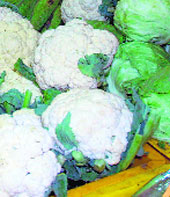
| Cauliflowers (above) increase gas. But yoghurt is helpful |
 |
| HEALTH: A graphir types of the virus |
Beans, radishes, cauliflowers and most starchy foods (except rice) increase the quantity and odour of gas, Cancer, septicaemia, abortions ? these are diseases acceptable in the course of polite conversation. But try making the simple statement, “I have gas.” It usually silences everyone else.
Gas is a part and parcel of our fast-paced life. We can attempt to delay, diminish or suppress it but we cannot prevent its formation. It is an end product of digestion, and food is essential for life. Yet, as far as disorders are concerned, it is at the bottom of the pile. Everyone has gas, very few know how to deal with it and no one wants to discuss it.
Gas is uncomfortable. It causes abdominal bloating and distension. It can be a social embarrassment, when it is released uncontrolled from the two ends of the gastrointestinal tract, either as loud belches interrupting conversation, or as malodorous wind, dispersing bystanders.
The ancient Romans were a flatulent nation and passing wind was a socially acceptable custom. The Emperor Claudius actually passed a decree stating that “all Roman citizens shall be allowed to pass gas whenever necessary!” The French too had entertainers who (unlike most of us) could not only pass wind at will but also vary the pitch melodiously. These performances were always sold out at the Moulin Rouge.
Food needs to be masticated slowly and completely in the mouth. If it is swallowed rapidly, chewing is inefficient and incomplete. The overworked stomach and intestine now have to complete the job. Large undigested particles eventually reach the large intestine. Friendly, non-parasitic, commensal bacteria living there have a field day, ingesting, fermenting, digesting and thriving on this food. During this process, they release a mixture of nitrogen, hydrogen, carbon dioxide and oxygen. These gases are actually odourless. The characteristic unpleasant smell of wind is imparted by gases such as methane, skatole, indole, and hydrogen sulphide which are present in small quantities.
The amount of gas formed and released varies from person to person and is influenced by the diet. Beans, radishes, cauliflowers and most starchy foods (except rice) increase the quantity and odour of gas. It also varies depending on the individual’s particular species of resident commensal intestinal bacteria. These may change owing to concomitant illnesses and medications.
Indians are genetically predisposed to lactose intolerance. They can efficiently digest only small quantities of milk, in which the predominant sugar is lactose.
A dietary overload, which varies from person to person, results in unabsorbed lactose reaching the large intestine. There it gets fermented by the intestinal bacteria, with disastrous and embarrassing results.
Belching is an acceptable social custom in certain parts of the world. In the Middle East, a loud burp after a succulent meal is considered a polite expression of appreciation for the hostess’s culinary expertise. Mothers pat, carry and croon to their babies until a loud and satisfactory burp is heard . Otherwise, burping is considered offensive, repulsive and impolite.
The stomach does not produce gas. Small quantities of air are swallowed with food and water and then reach the stomach. People with “aeroph agia ” habitually swallow air. Their stomachs become distended. Belching relieves the discomfort. Eventually it can become an annoying habit, as they then belch with loud attention, seeking eructations at inopportune moments.
An uncomfortable bloated feeling in the abdomen can be aggravated by lax abdominal muscle tone and poorly coordinated kinetic action of the smooth muscles of the stomach and intestine. It may be accompanied by audible bowel sounds called “borborygmi”. This also leads to early satiety and dissatisfaction with the quantity of food eaten.
It is commoner in women, precipitated by anxiety and may be accompanied by alteration in bowel habits, as part of the irritable bowel syndrome (IBS). Symptoms need to be evaluated by a physician if there is
nDocumented loss of weight.
nSudden change in long-standing bowel habits.
nConstant pain.
nBleeding from the rectum.
Helpful hints:
nReduce the quantity of legumes and underground roots (beans, carrots, beetroots, onions) consumed .
nReduce the quantity of milk, wheat, sugar.
nPartially digested milk (curd, yoghurt, buttermilk) contain beneficial lactobacilli (natural probiotics) and these may be tolerated and helpful.
nIncrease the fibre content of the food (fruits, vegetables, whole grains).
nDrink at least three litres of water each day.
nAvoid dietary indiscretions.
nKeep meal times regular.
nWalk regularly. Walking reduces stress and anxiety and regulates bowel movements.
nYoga and sit ups increase the abdominal muscle tone.
nIsabgol husk, charcoal tablets or natural charcoal in the form of burnt toast helps bind the gas and provide relief.
nAnti-motility drugs, prokinetic medications, bowel binding agents or enemas, from traditional or allopathic systems of medicine do not help.
With motivation, effort and a regular lifestyle this chronic problem can be managed.
Dr Gita Mathai is a paediatrician with a family practice at Vellore. Questions on health issues may be emailed to her at yourhealthgm@yahoo.co.in