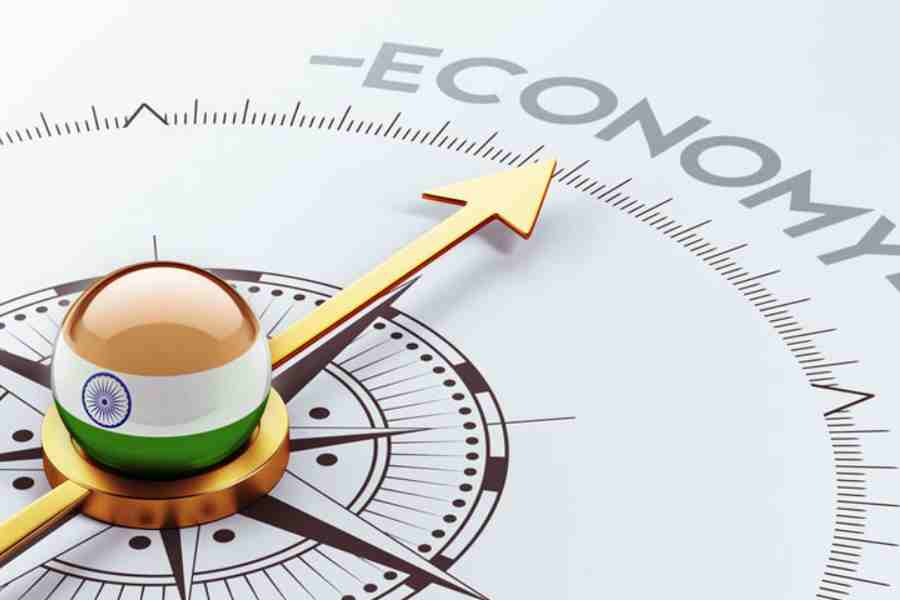
A recent research paper by the former chief economic adviser, Arvind Subramanian, and two other economists has shown that India’s macroeconomic growth in this century has been overestimated. According to the authors — Abhishek Anand, Josh Felman and Mr Subramanian — India’s growth rate from 2005 to 2011, under the Manmohan Singh government, was understated by 1 to 1.5 percentage points, while during 2012 to 2023, it was overstated by 1.5 to 2 percentage points. Hence overall growth was actually closer to 4 to 4.5 percentage points rather than the official figure estimated at between 6 to 7 percentage points. There are two reasons for this overestimation. The first relates to the assumption that India’s large informal sector behaves like the formal sector and thus its performance can be estimated by projecting the formal sector’s performance onto the informal sector. But all the major economic shocks in recent times, such as demonetisation, the introduction of the goods and services tax, and the Covid-19 pandemic, impacted the informal sector far more adversely than the formal sector. The second reason was the use of the wholesale price index as the measure to convert nominal gross domestic product to real GDP, rather than the consumer price index. During this time, the CPI was consistently higher than the WPI. The use of WPI led to a direct overestimation of GDP. Most experts opine that the CPI is a better index for the conversion.
Although governments can make reasonable assumptions about economic calculations, the motivation behind the assumptions should not be to make the government look more favourable in terms of economic performance. In this case, the underestimation and the subsequent overestimation periods reflect a change in government in New Delhi. Since 2014, the Narendra Modi government has made many changes in the way macroeconomic statistics are calculated and the frequency of their availability. India was a pioneer in using sophisticated statistical methods to estimate economic data. The data was transparently generated, reliable, and comparable over time in most cases. This valuable reputation that the nation had in the past has been eroded during the past decade and a half. The International Monetary Fund’s recent critical evaluation of India’s national income statistics reflects this erosion. There is a practical problem, too, that inaccuracy in estimations leads to. Economic policies at all levels — nation, state, and the block — need to be calibrated with reliable data for efficiency and effectiveness. Using data which is not of the best quality can lead to poor macroeconomic management. The estimation of the true condition of a nation’s economy should not be trumped by a government’s desire to look strong and competent.