For decades, the great museums of South Kensington and Bloomsbury in London have operated on a principle of high-minded, if slightly kleptomaniacal, altruism. The British Museum, in particular, has long justified its possession of half the Parthenon and a good chunk of Benin by pointing out that it serves as a 'universal' library of human history—available to anyone, from anywhere, for the princely sum of zero pounds.
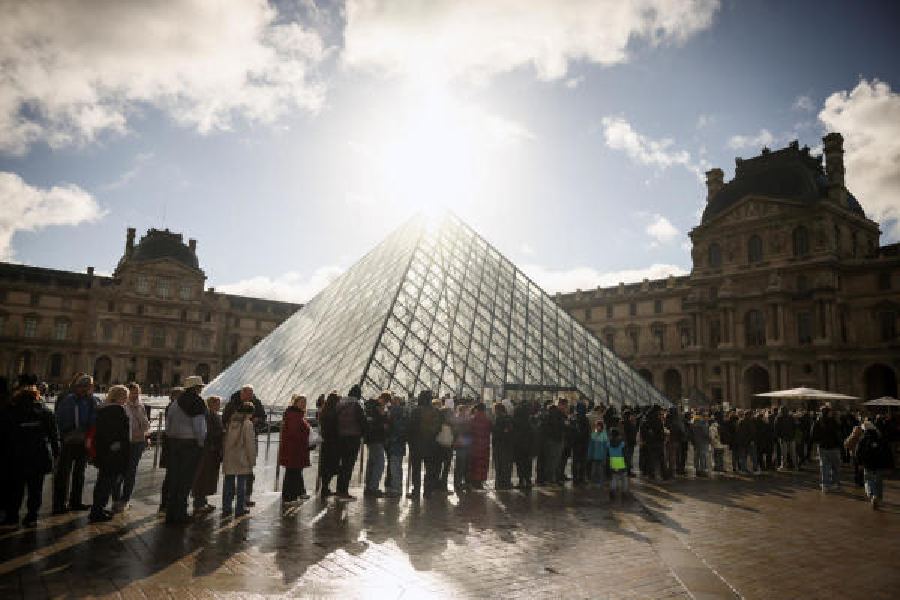
But the Treasury’s pockets are as empty as a looted sarcophagus. Facing a constant squeeze on government funding, the culture secretary has announced a policy already common from the Louvre to the Met: make the foreigners pay.
While some directors are salivating at the prospect of £20 tickets, others, like the head of the Victoria and Albert Museum, are horrified. The fiscal argument is, on the surface, watertight. Overseas visitors accounted for 17 million trips to major UK galleries in 2023/24. At £20 a head, the British Museum could stop rattling its tin and start repairing its roof. Proponents point to New York ($30) or the Louvre (€22) as proof that people will pay for prestige. Additionally, the 'crowd control' argument carries weight. The Natural History Museum, which saw 7.1 million visitors in 2025, is frequently bedlam on weekends. A price tag acts as a convenient, if elitist, filter.
However, the fiscal architecture of the Global South offers a more seasoned menu of pragmatism. In India, the pay-to-play model is not a radical proposal but the settled status quo. At the National Museum in New Delhi, an Indian citizen pays a nominal Rs 20 while a foreign tourist is charged Rs 650 — a 32-fold 'foreigner tax' accepted with a shrug and a swipe of a credit card. This tiered logic ensures that a student from Kerala or a daily labourer from Bihar can see his/her own heritage without financial ruin, while international visitors provide the hard currency needed for conservation. Britain could borrow from this subcontinent strategy. The Archaeological Survey of India even extends 'domestic' rates for non-world heritage monuments to visitors from SAARC and BIMSTEC nations. If London were to follow suit, it might offer discounts to Commonwealth citizens — a poetic, if belated, gesture of 'heritage sharing' for nations whose artefacts currently reside in Bloomsbury.
Yet, the moment a ticket collector stands between a Greek tourist and the Parthenon Marbles or an Indian visitor and the Amaravati Marbles, the British Museum’s sturdiest shield begins to crack. By slapping a £20 cover charge on these 'acquisitions', the museum effectively turns a universal gift into a profitable warehouse. A passport-based entry fee is an admission that these treasures are British assets rather than global heritage — a dangerous game to play when Cairo and Athens have their lawyers on speed dial. This shift toward the 'customer' model also threatens the delicate ecosystem of the London holiday. The city is already prohibitively expensive; its free museums are the last remaining fig leaf covering the naked cost of a weekend in the capital. By stripping away the ease of access that defines the London brand, the city risks becoming merely a rainier version of Manhattan with worse Underground seating. Furthermore, the logistical theft of a Londoner’s spontaneous afternoon at the Tate (now complicated by the bureaucratic nightmare of proving one’s residency) feels distinctly un-British. The V&A Museum’s preference for an overnight hotel levy offers a cleaner exit, capturing revenue without the indignity of a checkpoint at the entrance to the Enlightenment.
Ultimately, the government must weigh the immediate windfall against a fundamental shift in the nation’s cultural identity. Once you start charging, visitors are no longer guests; they are consumers. Consumers, unlike guests, are prone to asking for their money — and their stolen diamonds — back.
Krishnan Ranganathan is an investment banker and an alumnus of Harvard Business School