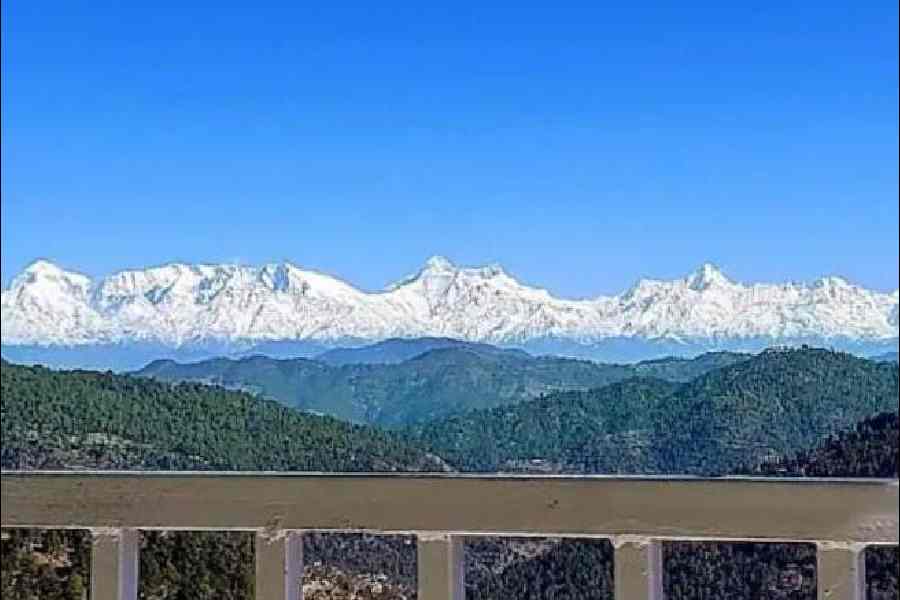
Silence still arrives here on schedule, pine trees lean over zigzag roads and clouds embrace snow-capped peaks. But beneath this postcard charm, anxiety courses through this once-sleepy mountain settlement.
Mukteshwar is slowly becoming unrecognisable.
Over the past few years, this Kumaon town has encountered an aggressive tourism activity, driven primarily by the “workation” culture. Boutique stays, luxury cottages and homestays sprouted in tandem with the demands of urban travellers, especially from Delhi-NCR and other metros. The transformation has fuelled an identity crisis.
“Earlier, tourists used to come here for a short visit and leave. Now, people come here as if to own the hills,” said Neeraj Mehta, a taxi driver who ferries tourists across Kumaon. “Land prices have shot up so much that buying property or houses has become out of bounds for locals.”
The sentiment “against invasion” echoes across roadside tea stalls and village shops on the Kathgodam-Mukteshwar route.
Along with the rising prices, people here are concerned about a changing social atmosphere. Apparently, Mukteshwar and its surrounding villages are slowly turning into investment zones.
“Look anywhere, and you will see huge advertisements for villas and cottages,” said Kamla Devi, a resident of a village near Mukteshwar. “Once, we were famous for apple orchards. Those orchards used to feed families. Now, they are disappearing, and resorts are coming up in those places.”
Most residents are troubled by the way the hills’ character is changing along with the landscape.
“There was a time when Mukteshwar used to become completely silent in the evening,” said Mahesh Bisht, who runs a small grocery store near the main market. “Now, it’s a different scenario, especially during weekends. Cars parked everywhere, traffic snarls, cafes playing loud music, remote workers engrossed in laptops and reel-makers roaming around. Tourists come searching for peace, but ironically, they bring along the noise of the cities.”
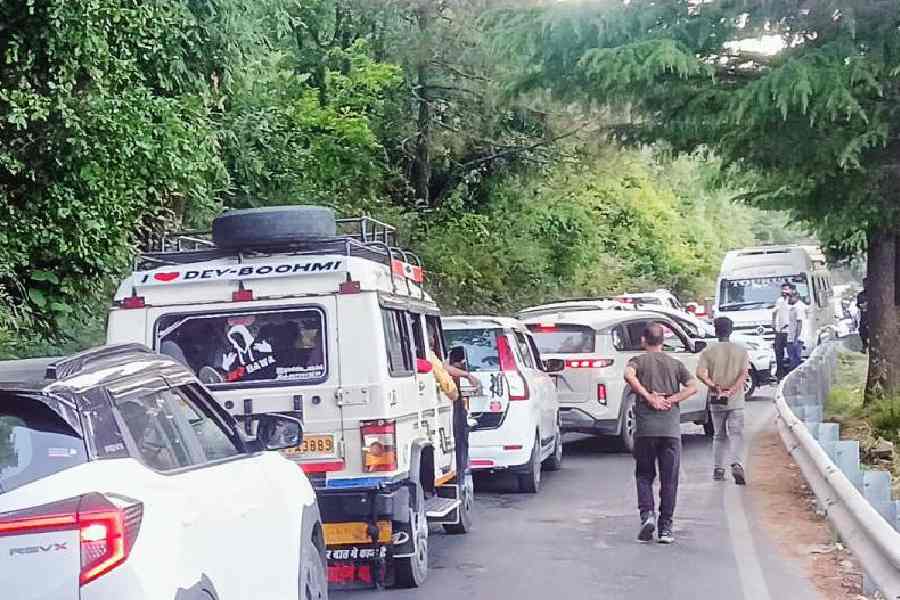
A 4km traffic snarl on the road to Mukteshwar on Saturday. Picture by Rajendra Singh
Nevertheless, tourism remains the mountain’s economic lifeline, making the issue complicated. Many younger residents believe that the influx of visitors might have changed the social rhythm, but it has also created income avenues. What they want is balanced development.
“If tourism stops, people here will suffer,” said Tara Singh Bisht, owner of a homestay overlooking the Himalayan peaks. “Hotels, cafes, cabs — almost everyone depends on tourists. But development should take place in a controlled way. Or else, Mukteshwar will become another overcrowded hill station.”
That fear — of becoming “another hill station” — dominates local conversations. Residents cite Manali and Mussoorie as cautionary examples of unbound commercial tourism. Their worst fear — it is gradually overwhelming the mountain ecosystems and local culture.
Environmental concerns spill into practical problems such as water scarcity during peak tourist months, said many residents. “In summer, some villages have already started facing water shortage,” said a schoolteacher in the area who did not wish to be named. “We understand that the new resorts boost local tourism. But has anybody asked how much pressure these mountains can take?”
The rise of the homestay culture has further complicated the debate. While the primary intention is to benefit local families, many residents allege that outsiders are increasingly dominating the business.
“There is a difference between locals running homestays and outsiders turning entire villages into hospitality projects. We must sustain our communities,” said Ravinder Singh Nayal, who works in a homestay at Shasbani village off the town.
Overtourism has not yet been able to gobble up Mukteshwar, unlike larger Himalayan destinations. Long, quiet afternoons and pine-scented breeze still hold out a promise of stillness, which feels increasingly fragile to many locals.