The recently-concluded, four-day tour of the US secretary of state, Marco Rubio, marked a major effort on the part of the United States of America to assuage India’s unhappiness at Donald Trump’s cavalier approach to India-US relations since the beginning of his second presidential term. As part of this endeavour, Rubio assured India that the US wanted to elevate its comprehensive global strategic partnership with India to higher levels. He also emphasised that the Trump administration’s decisions on trade and tariffs and migration and its coercing of Indian companies to invest in the US were part of its global approaches and not specifically directed against India.
These messages were par for the diplomatic course. While conveying them, Rubio would have known that his host would substantially discount the latter. Rubio would have also known that as a mature power, India would understand that the US is pursuing its interests without caring for its consequences on others. What he and the US ambassador to India, Sergio Gor, should realise though — and tell their boss too — is that India would not forgive gratuitous insults, such as its inclusion among countries described as ‘hell holes’.
Gor, in particular, should understand that Indians see through his inane gestures. They may be too polite to point out that it is undiplomatic to constantly show that he is close to Trump, but surely the state department’s professional diplomats should do so. Gor getting Trump to address the US ‘Freedom 250: Independence Day Reception’ by phone on May 24 was more to display his own closeness to the president than for its impact on India.
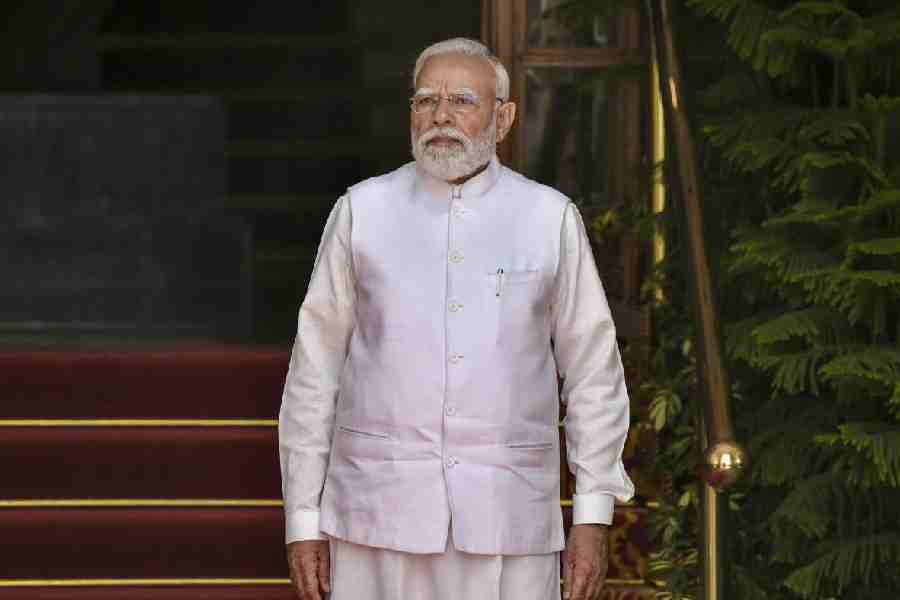
Trump said, “I love India. I love India… I love the prime minister. Modi is great. He’s my friend… we’ve never been closer to India, and India can count on me 100 percent and our country. If they ever need help, they know where to call. They call right here… And anything India wants, they get. And I’m a big, big fan of Prime Minister Modi.”
This Trumpspeak is patronising to India and its prime minister. Indians, including the external affairs minister, S. Jaishankar, attended the reception. Jaishankar spoke on the occasion. He ignored Trump’s remarks in his own scholarly speech. Given his felicity for words, he could surely have indicated in a non-offensive way that India does not need the “love” of the holder of the world’s most powerful office but an understanding of its compulsions and requirements and a true comprehension of the congruence of the two countries’ interests.
An issue which is leading to unhappiness among many Indians is the US’s reliance on Pakistan, specifically on Field Marshal Asim Munir, as an interlocutor between Iran and the US. Trump has handsomely praised Munir, and Rubio too has done so. Before coming to India, Rubio said, “The primary interlocutor on this has been Pakistan and they have done an admirable job. We have been working with them on all this and that will be the case.” In India, he did not repeat this but implied that the US’s relationship with India is strategic while that with Pakistan is tactical. Only the gullible would be taken in by such a distinction. It would have been better if he had been upfront about the restoration of US-Pakistan relations.
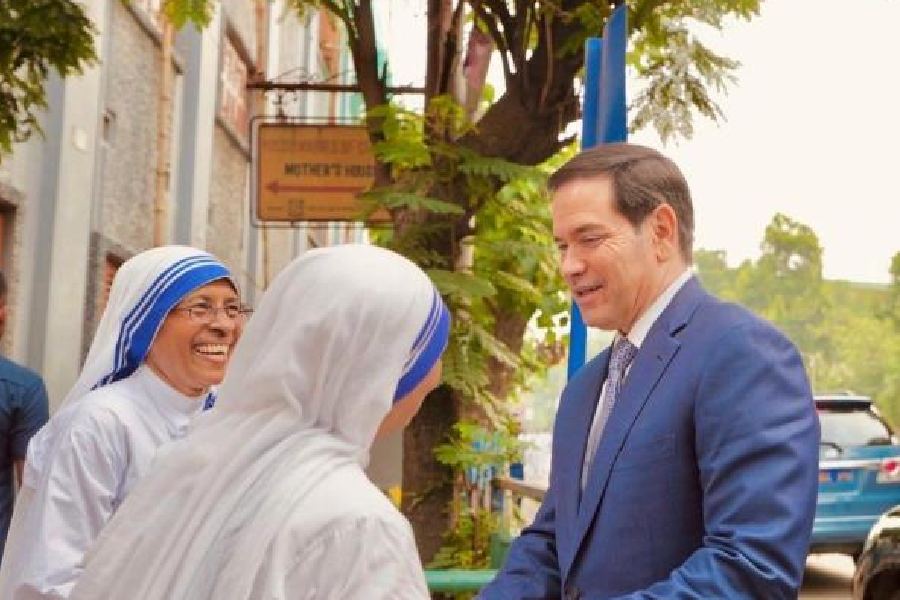
In diplomacy, signals and actions speak loudly. Rubio’s deliberate signal at the very beginning of the visit would not have pleased the ruling dispensation. Flying in from Sweden, Rubio made it a point to first visit Calcutta. His primary purpose was to go to places associated with the life and the legacy of Mother Teresa who was canonised by the pope in 2016. Mother Teresa’s life of selfless service to the poor and the diseased is an inspiration to all. Welcoming her canonisation in 2016, Modi had said, “Mother Teresa devoted her whole life serving the poor and destitute people in India. When such a person is conferred with sainthood, it is natural for Indians to feel proud.” He also sent an official delegation led by the then external affairs minister, Sushma Swaraj, to the Vatican for Mother Teresa’s canonisation ceremony. But Modi’s comment and gesture fell in the realm of diplomacy.
Rubio’s purpose to meet the Missionaries of Charity was to show that the Trump administration and he have an interest in the welfare of the Christian minority in India. This also needs to be seen in the context of the consistent criticism of India by the US Commission on International Religious Freedom on what it considers as the Modi government’s record on the conditions and the treatment of minorities in India. On its part, India has consistently rejected these reports as being motivated and biased.
In Calcutta, Rubio said, “Mother Teresa left a tremendous legacy of compassion and service. I was honoured to visit the Missionaries of Charity today to pay homage to her legacy and to see the living example of the Catholic faith in action.” Thus Rubio, while praising Mother Teresa, demonstrated his commitment to his Catholic faith. This was a clear message from the Trump administration, whose constituency has Christian conservatives, that it wants this Indian minority to be treated fairly. Obviously, incidents of intimidation and violence by members of right-wing groups against Christians have not been overlooked in the US. This is distinct from the manner in which Islamic countries have largely ignored their co-religionists in India.
Rubio also visited the Victoria Memorial in Calcutta. It is the most important monument built by the British. Architecturally, it is not in the same league as the monuments of Agra and Jaipur which he also visited. At the Munich Security Conference this year, Rubio had urged Europe not to be apologetic about colonialism. Did he, therefore, go to the Victoria Memorial to see a symbol of British colonialism? He could have chosen to go to the Ramakrishna Mission in Calcutta to pay homage to Swami Vivekananda whose historic speech in Chicago in 1893 can be considered as a foundational landmark in India-US ties. But by choosing to go to the Victoria Memorial instead, Rubio, unfortunately, sided with the colonialists.
Vivek Katju is a retired Indian Foreign Service officer