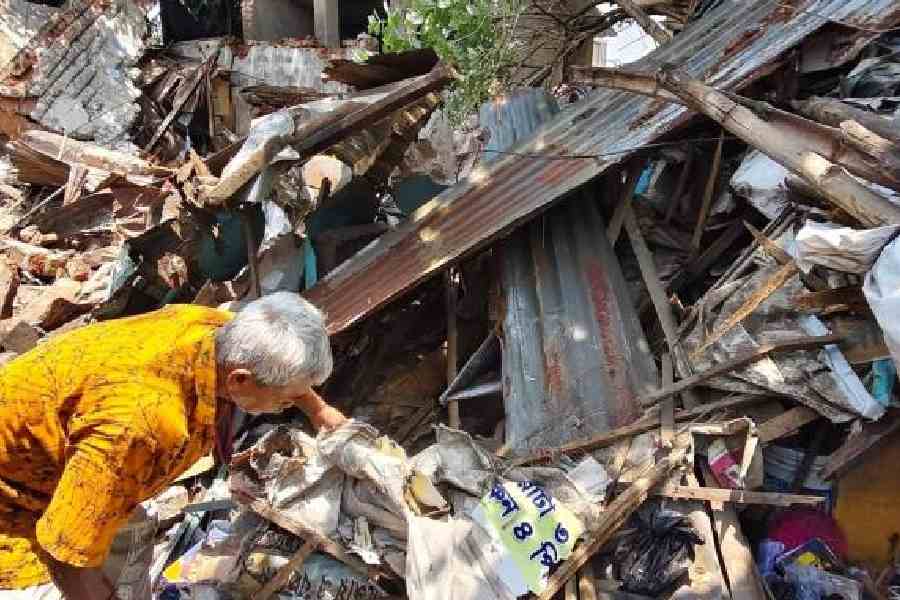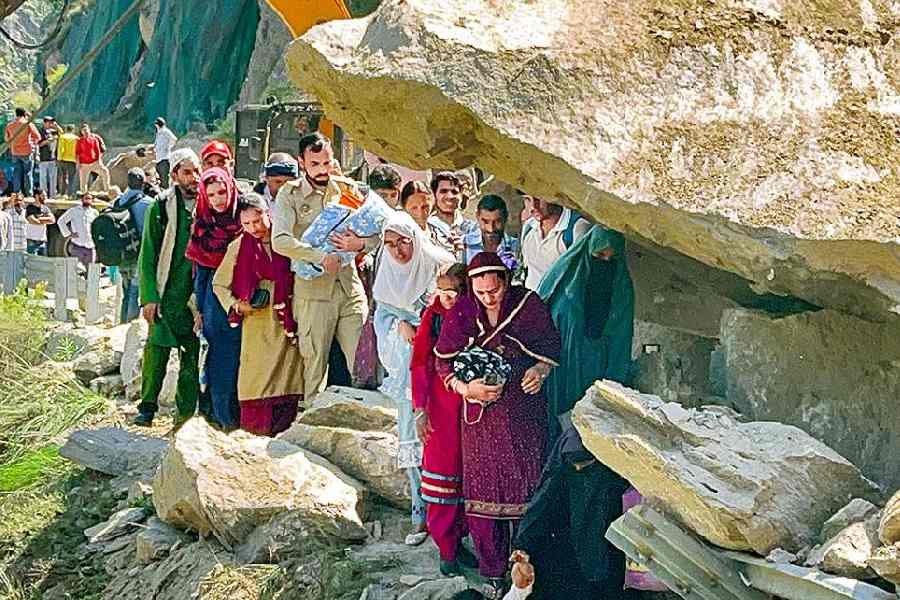
The Indian Himalayan stretch is no stranger to natural disasters. The International Centre for Integrated Mountain Development, comprising India, Bangladesh, Bhutan, Nepal, Pakistan, Afghanistan, Myanmar and China, recently released a report that says that nearly 36% of the 115 natural disasters in the Hindu Kush Himalaya region in 2024-25 occurred in India. These include floods, landslides, and other hazards owing to the debilitating impacts of climate change; the rate of glacial melting has nearly doubled over the last 25 years. The consequences are alarming. Asia, the report shows, accounted for a significant share of global environmental disasters, displacing about 1.2 million people. More specifically, 9.5 million people were affected by floods and landslides in India’s northern and northeastern states with the worst-hit being Himachal Pradesh and Uttarakhand. At least 100 people died in these two states due to flash floods and cloudbursts in 2024-25. What is alarming is the frequency of these disasters and the institutional predilection towards explaining them away as acts beyond human control. For instance, the National Highways Authority of India recently told the National Green Tribunal that the landslide — caused by unusually heavy rainfall — which damaged orchards and agricultural land near Shimla in 2025 was an “act of God” and that it bears no liability for compensation. Incidentally, the orchard lies below an under-construction, four-lane project on the Kalka-Shimla National Highway-5 that is being overseen by the NHAI and its agencies. The plea filed by the orchard owners claimed that the heavy construction work being undertaken without properly strengthening a slope had damaged agricultural land, leading to landslides.
The role of climate change in the rise of extreme weather events is undeniable. Yet to invoke the divine or nature’s wrath to evade accountability, as the NHAI seems to have done, is morally untenable. Disasters in fragile mountain ecosystems are rarely the result of deteriorating natural settings alone. Human intervention — reckless slope-cutting, indiscriminate road widening, deforestation and poor debris management — often aggravates triggers that lead to natural tumult. The NHAI has agreed to pay compensation in this instance; but its initial response is likely to deepen public distrust in its accountability. In an era of climate instability, aggressive infrastructure expansion comes with attendant risks. These must be identified and acted upon.