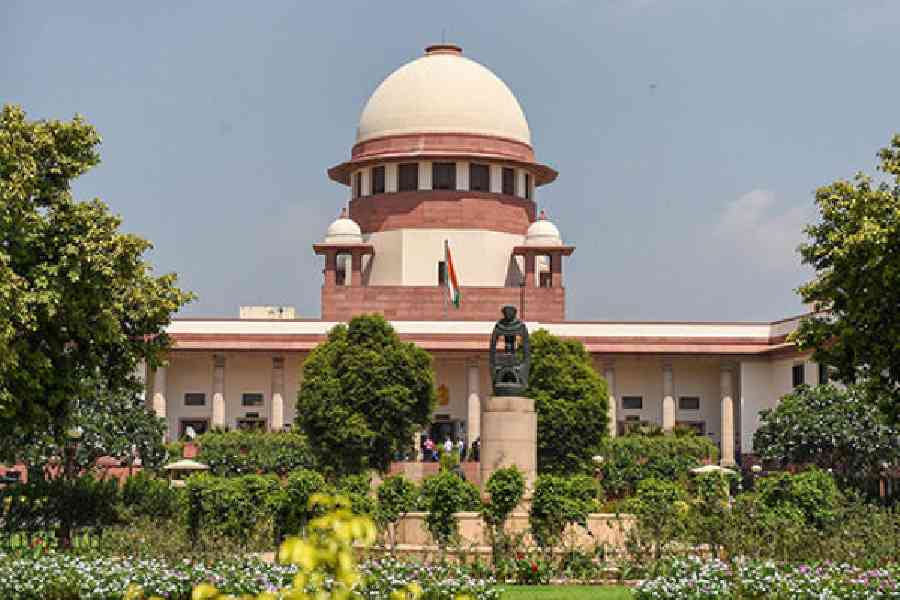
Two recent judgments of the Supreme Court were especially welcome. The court stayed the bail of Kuldeep Singh Sengar, convicted in the Unnao rape case, after the Delhi High Court had suspended his life sentence on a technicality. The Delhi High Court had released him because it perceived that Sengar, the former Bharatiya Janata Party legislator, was not a public servant. The Protection of Children from Sexual Offences Act makes rape by a public servant an aggravated offence. The Supreme Court’s judgment is unusual because it does not normally stay an order passed by a trial court or a high court without hearing the accused. However, in this case, accepting the high court’s interpretation of a public servant would have meant that a village constable would be considered a public servant but an elected legislator or member of parliament would not. Besides, this case was invested with unique circumstances since Sengar had also been convicted and sentenced with relation to the death of the survivor’s father. The Supreme Court took an exceptional step to ensure justice.
Perhaps even more unusual and outstanding was the Supreme Court’s stay on its own earlier order of relaxing mining restrictions in the Aravalli range. There had been widespread concern and protests caused by fears of the destruction of the delicate ecological balance of the area and the loss of green space. A three-judge bench led by the chief justice of India, Surya Kant, stayed the order of another three-judge bench and said that no mining would be allowed in the Aravalli area until further orders. The judgment cited ambiguities in the definitions of ‘hill’ and ‘range’ in the earlier judgment that might leave fragile ecological stretches free to be mined. The court shall await an independent expert opinion. This is extraordinary. The country is truly fortunate in having a judiciary which can review its own order with wisdom and understanding and is above the conviction of always being right. The judgment is also unprecedented — there are only two such recalls in recent times — because a later bench, as a point of law, is bound to follow an earlier bench of equal or higher strength. By treading exceptional ground, the Supreme Court has shown itself as the just and unbending champion of the environment.