
INDIA'S BROKEN TRYST By Tavleen Singh, HarperCollins, Rs 699
Anyone reading India's Broken Tryst, would probably expect Tavleen Singh to use her decades of experience as a political reporter and dwell on the shortcomings of policymaking in India. Not that she has not. But, the book seems more of an eulogy to Narendra Modi than a substantive discussion of the country's problems. As a case in point, the author considers Modi's ascension to power "as significant as that moment in 1947" when India got Independence.
Tavleen Singh's disapproval for the Nehru-Gandhi dynasty has also come out strongly in the book. She holds the Nehru-Gandhis singularly responsible for the lack of equitable growth in the country. Now, that is her opinion; and she has every right to have an opinion. But what is objectionable is her use of the language of excess. She has called a senior woman Congress leader from Andhra Pradesh, known for her closeness to Sonia Gandhi, a "genial buffalo". Whereas, a minister in Manmohan Singh's cabinet has been given the sobriquet of "Sonia Gandhi's hatchet man". These instances, in addition to wild allegations against Sonia Gandhi, give the impression that the book might have to do with a personal grudge. This cannot be good for Tavleen Singh. For 'impartiality' is the principal clause for any political commentary to be taken seriously.
However, it would not be right for us to reject outright all that the writer has to say. Although Tavleen Singh can be accused of bias, there are certain important points that she goes on to make. She is critical of the role played by some senior editors, especially those from the English-language media. The author counsels media persons against developing a Delhi-centric view of India. She warns that it is rather easy to lose sight of the issues affecting ordinary Indians, while one hobnobs with the political and bureaucratic elite in Lutyens' Delhi: their tenuous relationship with common folk made many veteran journalists fail to gauge the extent of the 'Modi wave' before the last general elections.
The lucidity of the prose is also one of the better things about the book; the narrative has a feel of reportage which makes it an easy read. Tavleen Singh's sense of humour (when not bordering on the parodic) brings out the little joys of everyday lives of the destitute.
For young reporters, the anecdotes mentioned in the book should be of particular interest. Through her retellings, the seasoned journalist has provided a rare glimpse into that world of journalism which existed prior to the advent of 24x7 news channels and online media. There is this portion in the book where Tavleen Singh shares her experience of interviewing Phoolan Devi, just before the latter was to surrender. During that interview, Phoolan Devi was wearing a faux police uniform. So, when the piece came out along with a black and white picture of the two - that of the interviewee and Tavleen Singh - many readers thought that the latter was the dacoit, and Phoolan Devi a policewoman arresting her. In those days of limited media access, no one was "ever really sure what anyone looked like".
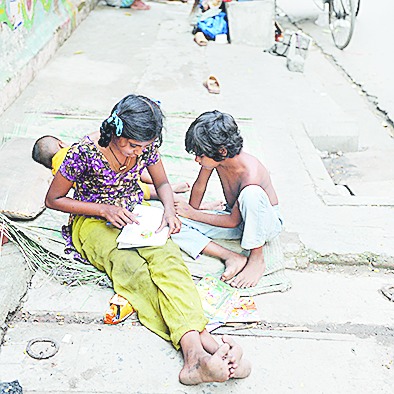
Although the author has spoken at length about politicians such as Modi, Sonia Gandhi and even Atal Bihari Vajpayee, for me, the real stars of the book are the author's pet beagle, Julie, and the children who grew up on the pavements near Tavleen Singh's apartment in Mumbai. Julie's tantrums and idiosyncrasies have been used to broach important issues. But whether that is reason enough for dedicating a chapter to the pet, is debatable. Surely, Tavleen Singh did not set out to write a book on her life. The hardships faced by the street children, who flit in and out of the story, have been employed to show how the political leadership has failed the people. The author contends that the 'Tryst with Destiny' that Jawaharlal Nehru so eloquently spoke about has remained unfulfilled even after 68 long years.
Tavleen Singh's personal grievances creeping into India's Broken Tryst restrict the book from achieving its true potential. Strangely, she lacks the sense of balance to distinguish between the private and the public.