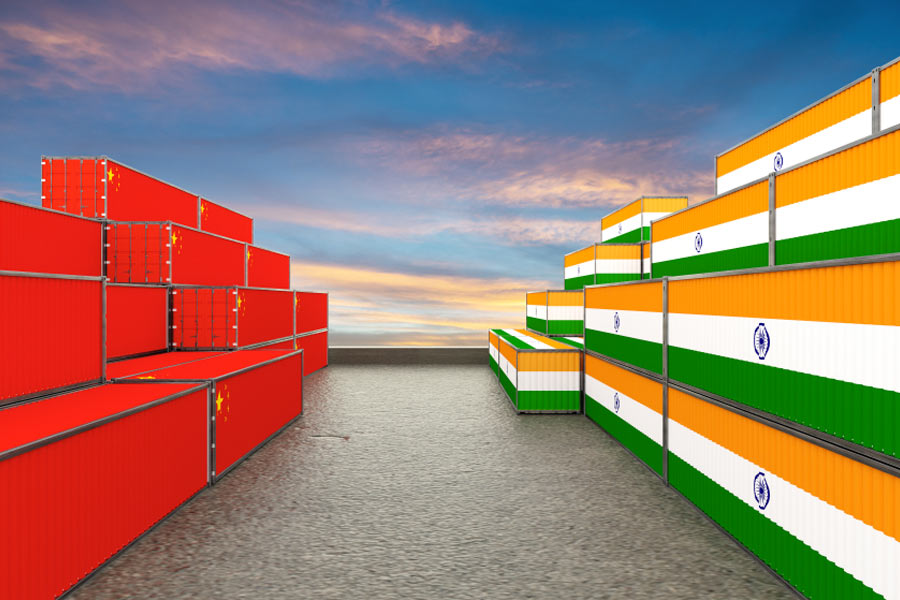
A report in a national daily has claimed that New Delhi is apparently deliberating on a “graded” — incremental — opening of the Indian economy to China. If this, indeed, is the case, it would signify the consolidation of a thaw in the bilateral relationship that
had witnessed seismic shocks in light of Chinese incursions on the Indian border as well as the violence in Galwan in 2020. New shoots of calm have been sprouting for a while. In 2025, New Delhi and Beijing agreed upon a series of mechanisms — restoration of direct flights, resumption of the Kailash Mansarovar Yatra, visas for scribes and researchers and so on — to encourage normalcy. But there is another important factor that may compel the proverbial elephant to consider a tango with the dragon: shifts in the global order brought about primarily by the mercurial Donald Trump and his weaponising of tariffs against New Delhi. Given Mr Trump’s unpredictability and his transactional approach towards the ties between the United States of America and India, it makes sense for New Delhi to not place all its eggs in one diplomatic basket. In fact, New Delhi should bolster its attempts to pursue bilateral ties on the basis of pragmatism, merit and national interest; traditional engagements and alliances are vulnerable to contemporary tides sweeping the global polity. An economic engagement with China in which India is not placed at a disadvantage is not undesirable.
But such an engagement is not shorn of risks either. This is because of inherent
asymmetries. New Delhi’s trade gap with Beijing was expected to exceed $100 billion in 2025; exports, it was estimated, would improve last year but imports have surged much faster — from $87.7 billion in 2021 to $109.6 billion in 2024, according to data from the Global Trade Research Initiative; India’s domestic manufacturing sector remains heavily dependent on Chinese inputs and so on. So even a graded opening of India’s domestic economy has to be done without exposing critical and vulnerable sectors to adversarial impacts. Much like India’s trade talks with the US, India’s re-engagement with China in economic terms will be a stern test of Indian diplomacy
as well as of the Narendra Modi government’s rhetoric of muscular nationalism. The consequences would be felt within India and outside.