Two and a half years after ethnic violence between Meiteis and Kuki-Zo tribes exploded in Manipur, claiming more than 260 lives and displacing 60,000 people from their homes, the conflict is coming to resemble a war on quicksand. The warring parties as well as those tasked to mediate are left helplessly frozen and in danger of sinking deeper into the marsh should any of them try to agitate.
For close to a year since the imposition of president’s rule in the state, the guns have fallen silent, by and large, but the conflict can hardly be said to have concluded. Hostilities still persist, but they mirror what Johan Galtung had called a “frozen conflict”. This frustrating stagnancy is also evident in the rather sombre celebration of Christmas and New Year this year. Good wishes and prayers for peace were exchanged and parties were still held widely, but the magical mood of a sense of change, hope, and optimism that once characterised these celebrations remained subdued.
Instead, a subterranean sense of guilt burdening the communities at war was unmistakable. The knowledge that around 60,000 of their compatriots were still languishing in makeshift relief camps, many of them on the verge of despair, ensured this.
The government has made it clear that the first condition for a return to normalcy will have to be the facilitation of the return of all the displaced people to their original homes, both in the hills and the valley, homes that they have had to abandon under tragic circumstances in many cases.
There are, however, forces that are reluctant to admit that reconciliation is the only way forward. As the adage goes, wars have domestic uses, for there is nothing like the spectre of a threat of external aggression that can divert the attention of the people away from the failures and the personal agendas of their leaders.
These vested interests come in different hues. Some seemingly want to keep this strife simmering for the material gains they get, or can get, out of it. These would include those prospecting the real estate values of conflict in the form of abandoned lands and properties as well as those who have been profiting from the disbursement of relief to the displaced.
There are also self-righteous populists on either side who made demagogic and militant public posturings to consolidate their hold on their constituencies, even at the cost of communal hatred getting entrenched. They now find that they cannot shift their stances openly, even though hostilities have cooled down considerably, lest the people turn against them.
In the past few months, while there have been encouraging stories of neighbouring Meitei and Kuki-Zo villages in the foothills coming out to tend to their respective paddy fields in plain sight of each other without discomfort, there have also been depressing stories.
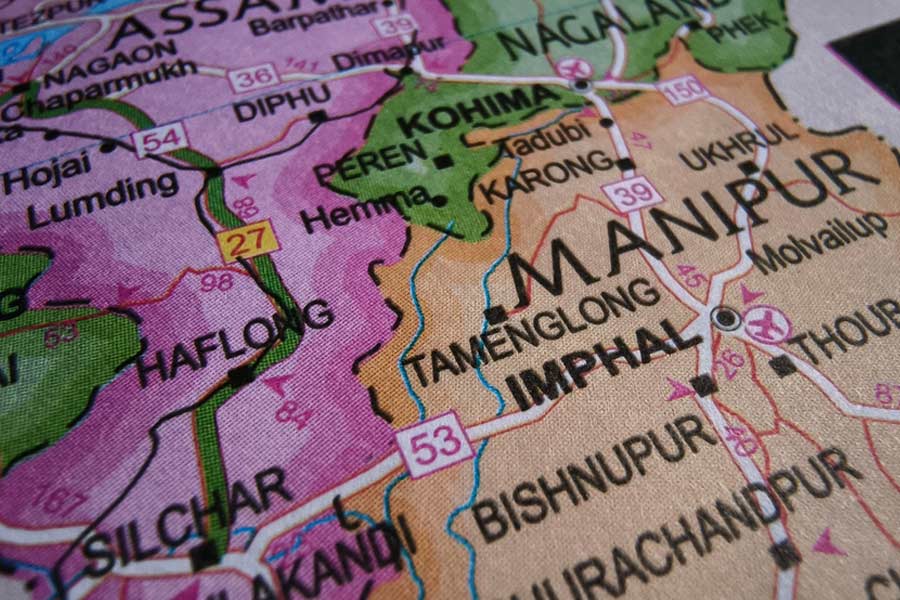
Last fortnight, in its effort to start its promised process of resettlement by year-end, the government allowed 67 Meitei families of 386 people to return to their abandoned village, Torbung, in the southern foothills in Bishnupur district adjoining Churachandpur. But on the night of December 16-17, the village was fired upon with automatic weapons from the hills, causing panic. The situation was easily brought under control. But in the following days, Kuki-Zo civil society leaders organised rallies to reiterate that there cannot be any reconciliation before their demand for a Union territory carved out of Manipur is granted. This conflict cannot be treated as a bilateral matter between Meiteis and Kuki-Zos. Manipur is a multi-ethnic state with a complex maze of fault lines among its communities. For instance, the Nagas claim all of the
hills where Kukis are now settled except for Churachandpur.
On this quicksand, any concession will open the proverbial Pandora’s box. The way forward must involve efforts by all to come out of the quicksand. All this reminds one of Leon Trotsky’s words: “You may not be interested in war but war is interested in you.”
Pradip Phanjoubam is editor, Imphal Review of Arts and Politics