|
|
| Spontaneous action |

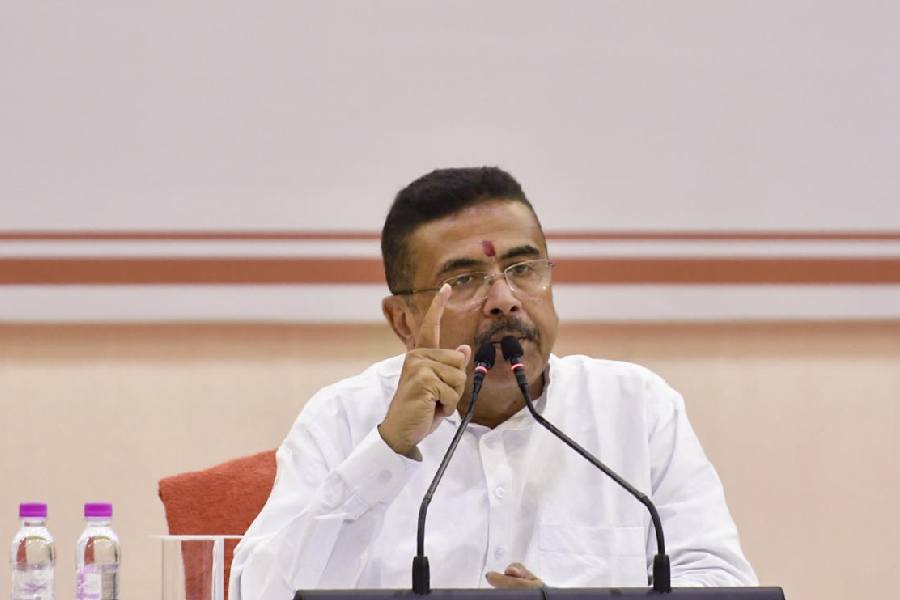
Like any action that is inspired by belief and promises no gain, Bhaichung Bhutia’s gesture “of standing by the people of Tibet and their struggle” cannot but command admiration. What the Bible calls “a still small voice” also highlights the gulf between the individual and the State. The dilemma arises when personal conviction cannot be reconciled with official policy or even with what might be called the greater good. In a country where everyone is a political commentator, the distinction is especially relevant to journalistic hacks who comment on affairs of State without looking to the State (or any party) for guidance or recognition.
More of that later. The immediate concern is that in the hurly-burly of soccer politics, Bhutia’s refusal to carry the Olympic torch because he “sympathizes with the Tibetan cause” and feels the need to show his “solidarity” with his Buddhist kin does not hurt his prospects in any way. He could have agreed, like Aamir Khan, to carry the torch while salving his conscience by saying he was doing so “with a prayer in (his) heart for the people of Tibet”. Instead, he has taken an unambiguous stand to show the world he believes that “what is happening in Tibet is not right”. There is no pussyfooting here about proclaiming “the highest regard for the struggle that the people of Tibet are going through” while doing exactly the opposite of what they pleaded.
Such balancing acts will not satisfy Tibetans or appease the Chinese who must be infuriated by the disruption of the fancy-dress mumbo-jumbo at the Athenian Temple of Hera. Some might derive wry satisfaction from the knowledge that no dedicated priestess but an actress playing the part appealed to Apollo, “god of the sun and the idea of light”, to send his rays to light the torch. Of course, the phony rays were only a trimming for the hi-tech lighting. Similarly, the pseudo-metaphysical rhetoric of the international Olympic committee’s Gianna Angelopoulos-Daskalaki will not fool anyone into supposing that the driving force of the games is sport and not commerce.
Beijing’s expectations are even more political than Berlin’s in 1936. China feels that the unease with which its rise is viewed, not just in the United States of America but even in parts of southeast Asia, where its soft power is most diligently exercised, will be allayed if it hosts glittering international jamborees in which all the world and his wife participates. The naïveté of this delusion exposes a total inability to understand the thought processes and reactions of non-Han peoples. Despite its boast of 4,000 years of unbroken civilization, China is like a nouveau riche adventurer who is convinced he can break into society (read the comity of nations) if the parties he throws are sufficiently alluring. The rationale is that if other nations wine and dine in Beijing, win medals and earn fortunes, they will no longer object to the Chinese one day seizing all the Spratly Islands as they did the Paracels, or if they crush the entire Tibetan and Uighur nations into annihilation. China’s self-esteem will not allow it to realize that even flattering references only reflect the anxiety to appease that prompted the ancient Greeks to call the Furies the “the kind ones” (Eumenides). Perhaps China even relishes the fear that underlies euphemism.
In the long run, the world’s response will be shaped not by the dazzle of the Beijing Olympics but by a sober assessment of how Chinese actions at home and abroad affect the world order. No one wants opposition that might provoke the bloodbath of another Tiananmen Square. Instead, the world hopes that as China forges ahead to fulfil the Goldman Sachs prediction of a GDP as big as America’s by 2030 or five or ten years after that, it will also mature into a law-abiding status quo power whose wealth and military might are not used to recreate the Middle Kingdom. Governments cannot afford to say so because it is in their interest to avoid confrontation and promote trade with and investment in China. In another sphere, the weight of official responsibility even forced Jawaharlal Nehru to end a beautiful friendship with Soong Mei-ling, Madame Chiang Kai-shek.
Bhaichung Bhutia is free of such obligations. But the privilege of regular media space carries with it a certain restrictive responsibility. Someone who enjoys that privilege cannot but be conscious that readers view even commentators who do not take their cue from the government (or opposition) as a link between society and State. Pranab Mukherjee’s reminder (warning?) to the Dalai Lama that “he should not do anything that harms India’s diplomatic ties with China” may apply to them too. An Indian column is expected to inform and instruct. Abroad, journalists from the France-based media rights watchdog, Reporters sans frontières, who disrupted the Athens ritual and have called for a boycott of the opening ceremony, are committed only to a cause that is an end in itself and makes no pretence to dispassionate judgment. The former New York Times correspondent in India who held, apropos of a story on Kashmir that the Pakistanis exploited, that the consequences of what she wrote did not concern her, typified American journalistic values — abroad. In contrast, an Indonesian editor once confessed that if a bus collided with a bicycle, he could not say that the driver was Chinese and the cyclist Javanese.
This is not a problem that Xinhua employees face for they are government officers, like the Novosti agency staff used to be in the old Soviet Union. The problem in a free country is that private morality is not always synonymous with public pragmatism. What I think right may not be most rewarding for the country. Myanmar, with its repulsive ruling junta, is an obvious example. Iran is another. Asian self-respect demands Iran be saved from the fate that befell Iraq but some Indians are petrified that another Islamic nation might acquire the bomb. The splendour of Israel’s achievement in making the desert bloom deserves admiration just as its abominable treatment of Palestinians demands censure. But the national interest vests Israel with inestimable strategic value.
It is not always easy to reconcile these pluses and minuses. Some may have the knack of subsuming personal viewpoint in official policy. Some have no qualms about taking direction. But the independent commentator who denounces Myanmar’s junta with bell, book and candle knows that will not weaken its authority or restore democracy. In the unlikely event of New Delhi heeding his advice and boycotting the regime, a huge material and strategic advantage will be lost to China. Journalism, like politics, is ultimately the art of the possible.
A private person faces no such choice. Bhaichung Bhutia’s is the simple, spontaneous action of a man whose surname proclaims him a child of Bhot — Tibet — who cannot repudiate ancestral loyalty. Even so, realists might ask what his protest will achieve. It will not prompt a boycott of the games. It will not even scuttle the global march of the Olympic torch. More police will be inducted if resistance mounts, the 136,000 kilometre route will be shortened, some welcoming ceremonies will be modified or scrapped, more Aamir Khans will be recruited and the torch will travel more in the safety of aeroplanes than in the hands of runners. The torch ritual can be dispensed with altogether. But Tibetans can hail the reduction of the Indian route from 10 km to three and the decision to deploy 10,000 policemen on April 17 as some kind of victory. More such gains may lie ahead. Even if there are not, Bhutia’s refusal demands respect. The world would be a poorer place if individual men of courage and conviction did not make symbolic gestures, knowing them to be exercises in futility.