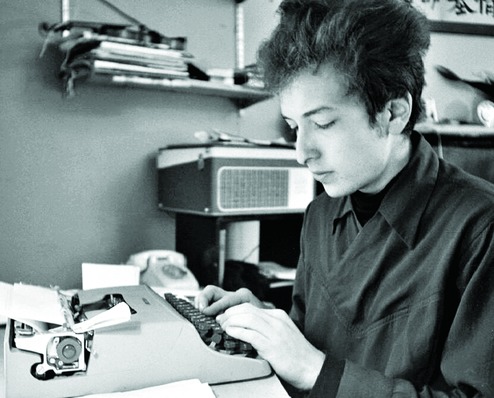

WHY DYLAN MATTERS By Richard F. Thomas,William Collins, Rs 599
What happens when a contemporary icon is perceived in a classical light? How do the songs of ancient Roman bards strike a chord with our modern lives through a North American voice? The book, Why Dylan Matters, seeks to answer some such questions. In this project, the expert classicist and Harvard professor, Richard F. Thomas, traces Bob Dylan's artistic career and attempts to place him alongside literary giants like Virgil and Ovid by dint of his craft.
An accomplished scholar, Thomas presents a meticulously researched analysis of Dylan's verses, comparing his poetic technique with that of famous poets of the past, be it the theme of yearning borrowed from Catullus or the appropriation of Robert Burns's lyrics. The author's expertise on classical literature shines through in several instances. Thomas's enthusiasm for the icon is understandable: he is, after all, a 'Dylanologist'. But such excitement often leads to digressions. For instance, biographical comparisons between the likes of Rimbaud or Virgil and Dylan do not make for strong arguments. However, these loose ends are somewhat redeemed by unexpected turns that the book reveals, with references made even to an otherwise inconspicuous Japanese gangster novel. This, along with excerpts from innumerable songs and poems from old and well as contemporary lyricists, makes this work comprehensive. Part of the content may resonate with a discerning readership.
For those who find it difficult to reconcile the candidness of Dylan's songs with his cultivated appearance, Thomas offers a perspective. He attributes this contradictory trait to the artist's constant exploration of his own identity. He also touches upon Dylan's evolution as an artist, starting from the beginning of Robert Zimmerman's musical journey to the remarkable sound of his early albums. Thomas also focuses on Dylan's changing styles, covering his experiments with hip Americana music as well as folk and country rock.
From the outset, the author challenges the popular assumptions about Dylan's intent. He relates the artist's disavowal of the roles thrust upon him, like that of a political messiah, to this end. This is also reflected in the musician's tendency of purposefully varying lyrics and renditions with every performance. Thomas, thereby, projects Dylan as a man out of his time and inside it, or, as Joan Baez put it, 'the original vagabond'. He does not fail to note how Dylan's own idea of being born to "wrong names, wrong parents" substantiates this claim.
The book is a treat for all Dylan enthusiasts, rich in revelations, new material and humorous exchanges. In his characteristic zealous tone, Thomas discloses to his readers the "five-by-three-inch blue spiral notebook" which records the drafts of some of the most popular Dylan songs. His ardour is almost contagious. The reader is likely to be drawn into the discussion on the rivalry between the Beatles and Dylan in which Thomas presents the lyrics of "Norwegian Wood" and "Fourth Time Around", highlighting - in customized fonts - the competitive rhythms of the two songs. The conversational tone of the narrative makes it easier for the reader to engage with the book. For some, it is like one Dylan fan speaking to another.
The detailing and presentation are impressive. The hardcover edition with a young Dylan strumming his guitar and gilded strings running down the middle would delight a collector. The complete discography, spread out across the first verso and recto pages, also makes it easier for lay readers to realize the expanse of Dylan's oeuvre. Most of the chapter titles are accompanied by lines from Dylan's songs or some witty wordplay. The first-hand accounts of concerts and Thomas's interviews with people who were a part of the artist's early life make the book richly anecdotal.
What is missing is an intensive scrutiny of Dylan's music. The charm of the rustic, carefree voice that makes Dylan's renditions special is lost under the weight of what seems like a desperate attempt to justify the choice of Dylan as a Nobel laureate. Dylan's appeal stems from an unapologetic simplicity and compassion. But these aspects remain underexplored. The book raises more questions than it answers.
.jpg)