
HOLY CANCER: HOW A COW SAVED MY LIFE, A MEMOIR By Amit Vaidya,
Healing Vaidya and Aditya Prakashan, Rs 495
Holy Cancer, is the memoir of an Indian-American, Amit Vaidya, who gives up his life of comfort in the United States of America and settles down in India. It is an account of his personal life, the tragic turn of events in it, individual choices and subjective thoughts. Memoirs are interesting only if they step out of the arena of the self. If the narrative of a memoir manages to maintain a level of objectivity and say something that readers can relate to, it remains popular for a long time. Vaidya's passionate narration, of the unhappy circumstances that he faces, hold us in its thrall. The plot develops through dramatic sequences that only life can offer. Vaidya, however, fails to go beyond the unique tale that is his life, thereby losing the confidence of a section of his readership.
Vaidya had been diagnosed with cancer while living in the USA. The doctors there told him that he had only a few months to live. Only a sensitive reader can feel the psychological condition of such an individual. From the unforgettable moment when Vaidya was given the verdict by his doctors, to his efforts to cope with the disease, especially at a time when both his parents succumbed to cancer, have been captured in the book. A weak-hearted man might have given in to the grief. Vaidya deserves to be admired for the courage with which he fought the disease all by himself. Since the best of modern medicine only managed to aggravate his condition, Vaidya decided to come to India.
It is thus the story of a man's solitary journey to India in order to find solace in the unfamiliar world of alternative medicine. Vaidya takes a risk because he has nothing to lose. Some of the choices that he makes, when the use of alternative medicine is proposed to him, are ones he would never have made in ordinary circumstances. The book holds up the helplessness of a man caught between a prognosis of death and the natural urge to live. Not only will patients who are affected with cancer and terminally ill be able to connect with it, but people interested in knowing how individuals struggle against odds and wage a battle against death will also find the impassioned narrative engaging. It is Vaidya's will to live and his quest to find meaning in his existence that add a different dimension to the book. Although Vaidya's writing is about himself and his family, in a way it is also about the tremendous potentiality that is hidden within a human being. It is this which ultimately helps him survive unthinkable circumstances.
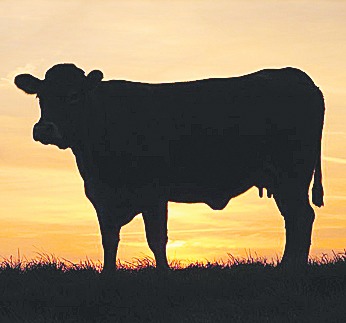
The title, Holy Cancer, probably comes from the 'cow therapy' that Vaidya undergoes in a hospital located in a remote village, Sevak, in Gujarat. Since it is cancer that brings him closer to the cows, he uses the adjective 'holy' in the title. The book is also about Vaidya's personal losses and his relationship with his family members in India. When Vaidya decides to come to India and stay with his extended family, he gets a cold welcome because of his disease. Vaidya receives help and support from strangers and people who are not related to him. Often in life, when our own forsake us, help comes from unexpected quarters. Vaidya is shown such kindness from strangers over and over again, be it in Delhi, at the hospital in Sevak or in other remote places.
Cow therapy is not restricted simply to the partaking of food. Minute details of how the hospital authorities practise this form of alternative medicine, which aids Vaidya's recovery, are given. It is a combination of rigorous discipline, exercise, singing of hymns and stringent diet that makes the therapy work. Vaidya refers to it as a miracle, he believes that it is the cow therapy which helped him combat the incurable disease. It must be noted, that such a therapy may not be advisable for everyone given the dangers and pitfalls, especially in case of terminally ill patients. The therapy has not been medically proven and can have dangerous consequences.
The therapy does not seem to be for people from all religions, or so it appears from the patients in the hospital. Religious groups that are allowed in the hospital also may not appreciate the therapy due to personal likes and dislikes. What may be perfectly acceptable to someone may be disagreeable for others, like the consumption of gaumutra, or the application of gobar all over the body. There are other practices too, that patients might find impermissible. Of course, what appears as superstition to one, may be faith for another. Vaidya's recovery can be attributed to a number of factors. The most important of which is his immense faith in the hospital. In spite of his upbringing and familiarity with modern medicine, he did not hesitate to commit whole-heartedly to the therapy. Amongst other things, the rigours of a routine life, discipline and living amidst nature, helped his recovery. Vaidya also lives in a village for sometime, helping him recuperate faster.
The human factor in the book attracts the reader's attention. A number of people help Vaidya in ways he could not have imagined. They are proof that even when everything goes wrong, people will always rally round and help. The book illustrates the devotion of ordinary people and how men always help each other in times of need. The book may inspire some readers to take recourse to alternative medicine. Such a route, however, should be treaded with an element of caution.