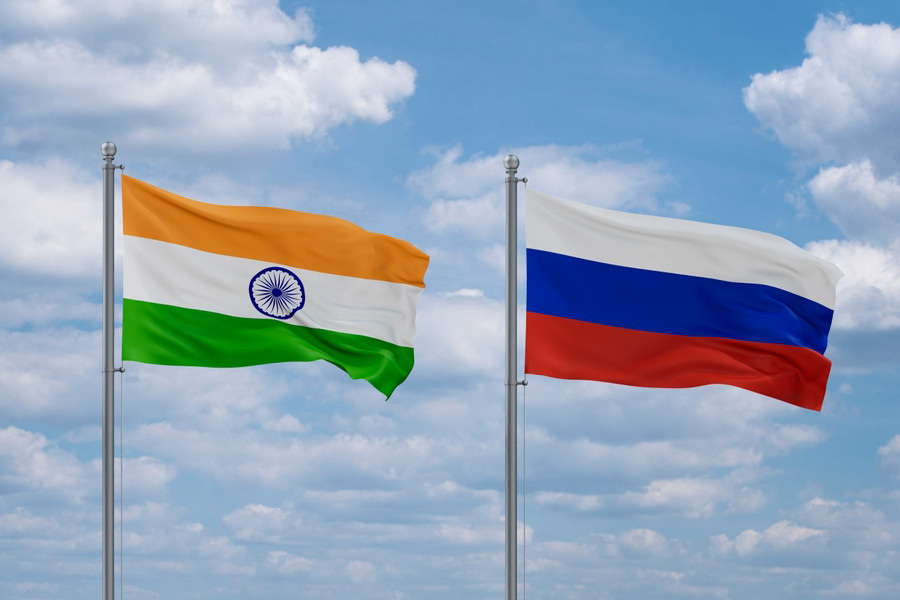
The Reciprocal Exchange of Logistics agreement between India and Russia, now in force, marks a major moment not only in bilateral relations but also in New Delhi's strategic architecture. True to its multi-aligned foreign policy, India has firm defence ties with a range of countries, from nations it buys weapons from, to countries it shares intelligence with, to those with which it conducts military exercises. India also has other logistics exchange agreements, most prominently the Logistics Exchange Memorandum of Agreement with the United States of America. However, the RELOS stands apart in what it offers, and the depth of trust it represents. India and Russia can each station up to 3,000 troops, five warships, and 10 fighter jets in the other's country under the pact. No other Indian military agreement with any other nation has such provisions — not even the LEMOA. This is in addition to the standard terms of logistics exchange agreements under which countries allow each other to use their military facilities for refuelling, maintenance, and other similar activities, especially in peacetime.
The RELOS was under negotiation for eight years before it was signed last year. It became operational in January. But the details of the agreement have only become public in recent days. Whether that is by design or accident, the timing is significant. In recent years, India — in part because of pressure from the US — has looked to diversify its military needs away from Russia, historically its largest arms supplier, to instead buy more from America and Europe. The US has even threatened sanctions on India for buying missile defence systems from Russia. The pressure to weaken strategic ties with Russia has only mounted under the presidency of Donald Trump. Against that backdrop, the RELOS agreement is a reaffirmation of the India-Russia strategic partnership, and of how both Moscow and New Delhi view it as a central pillar of their security doctrine.
That recommitment to the strategic relationship with Russia comes at a time when multiple wars are roiling the world, traditional rules of international law are routinely being violated, and historical American promises mean little. This is a world where the country that shaped the post-World War II order is taking a sledgehammer to dismantle it. It is a world where international institutions meant to uphold global justice are toothless, their powers limited to delivering sermons. It is a world where country after country that counted on the US as a reliable security partner knows it no longer can. Europe and NATO countries have learnt that, as have Gulf nations. Japan is arming itself like never before, unconvinced that the US will come to its defence if it is attacked. India's new agreement with Russia must be seen in the context of these major transformations. It is about more than sharing logistics and military installations. At its heart, the RELOS is about cementing trust in a world plagued by distrust.