When the Mughal empire began to unravel after the death of Aurangzeb in 1707, Hyderabad, Awadh (with Faizabad and, thereafter, Lucknow as its capital), and Bengal (centred on the nawabs of Murshidabad) emerged as autonomous ‘successor states’, energetically redirecting elements of Mughal culture in those regions and marrying them off with local elements to spawn distinctive traditions of arts and culture and — most importantly for this column today — food. The enduring richness of the culinary traditions of two of this trio has now been vindicated by UNESCO’s recognition of Hyderabad (2019) and Lucknow (2025) as Creative Cities of Gastronomy. Murshidabad, by contrast, fell prey to the inexorable march of British imperialism, especially after the Battle of Plassey in 1757, and was quickly supplanted by Calcutta, which emerged as the new hub of activities from the last quarter of the 18th century onwards.
But the purpose of this column is not to lament the passing of Murshidabad nor to rehearse Calcutta’s celebrated cultural and intellectual history. It bears remembering, however, that Calcutta has always been at the confluence of cultures — Hindus (of different castes) of western and eastern Bengal, Muslims, Anglo-Indians, non-Bengali communities, Chinese, Tibetan, Jewish, and many others — each with its own distinctive influence on its landscape of food, not to speak of its status as perhaps the queen of the world’s desert universe, thanks to the exquisite creative efflorescence of Bengali mishti. With those stellar credentials, isn’t it high time it made a pitch for UNESCO recognition as India’s next Creative City of Gastronomy?
Nobody, of course, would have any grouse with the recognition granted to Hyderabad and Lucknow, two luminaries on India’s culinary map. The former’s culinary identity emerges from centuries of multicultural exchange in the Deccan, blending Turkish, Iranian, Arabic, Mughal, and local ‘Dakhni’ influences into a distinctive tradition marked by the earthy flavours of Telangana and Marathwada. Its global brand — dominated by Hyderabadi biryani, haleem, kebabs, and a thriving street-food culture — is rooted in royal kitchens as well as the dense urban marketplaces of the Old City. This combination of aristocratic technique and resilient popular food systems supports large artisanal networks, from potters to spice merchants. UNESCO’s recognition highlights Hyderabad’s strong documentation of its culinary heritage, its preservation efforts, and the presence of concrete policies and infrastructure aimed at supporting gastronomic hubs.
Lucknow’s case rests on the depth and the refinement of the Awadhi cuisine, which emphasises slow-cooking methods like dum pukht, subtle spicing, and dishes perfected in nawabi households —galouti, kakori, and tunday kebabs, nihari, kormas, and an array of breads and sweets. Lucknow’s appeal also lies in its courtly etiquette, its ritualised dastarkhwan culture, and its layered repertoire of specialities upheld by a diverse community of artisans and cooks. Its
UNESCO nomination foregrounded these qualities along with city plans to safeguard traditional techniques and involve vendors and craftspeople. The famous Awadhi biryani is not GI-tagged, but the 2025 recognition affirms that even a less globally-marketed cuisine can meet
UNESCO’s standards when supported by rigorous documentation and policy commitments.
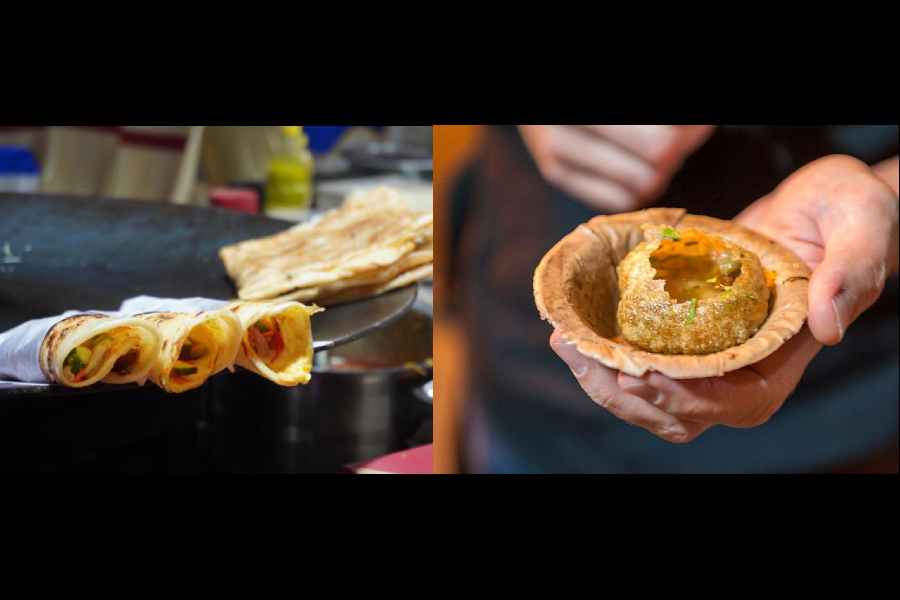
Together, these two cities exemplify the practical requirements of successful nominations — documented traditions, cohesive culinary communities, and policy measures linking gastronomy to sustainable tourism, employment, and cultural education. What, then, does Calcutta need to do to convert its immense culinary capital into a UNESCO-ready nomination? It already possesses raw material that few cities can match — a culinary legacy of several centuries, especially rich with myriad, distinctive styles of cooking fish, a glorious tradition of sweets, with rosogolla, sandesh, and myriad other confections, a syncretic, colonial-era coffeehouse and confectionery scene, and a bustling street-food economy fed by phuchka, jhalmuri, telebhaja, kathi rolls, and so on. But how does one translate this cultural abundance into a UNESCO-trumping dossier?
For a starter, through the documentation and the packaging of distinctiveness. Calcutta must produce a rigorous inventory of its culinary heritage, including ethnographic documentation of techniques (ranging from fish-gutting and cooking methods to the use of distinctive mediums like mustard oil and spices like panch phoron), oral histories of confectionery families, archival evidence of colonial-era hybrid dishes (much of it still devoured in the city’s ‘cabin’ eateries), and the mapping of gastronomic clusters — ‘sweets lanes’, traditional Mughlai food enclaves, Old and New Chinatown restaurant clusters, street-food bazaars and so on — things that heritage walks and the annual ‘City as a Museum’ initiatives do in any case. UNESCO looks for evidence that intangible practices are known, recorded, and recognised by local custodians, and here the treasures of Bengal/Calcutta are matchless. It has an array of culinary texts from the 19th century onwards and a glut of classic books from the more recent times, including a few by literary stalwarts like Buddhadeva Bose and Leela Majumdar, culinary references in medieval Bengali literature, including the mangalkavyas and Chaitanya biographies, cookery columns in colonial-era periodicals, pioneering and consistent research on Bengal’s food history — visible in abundance in both academic and trade publications — enchanting culinary memoirs enabling the intergenerational transmission of recipes and so on. Archiving heft, a critical component of a strong pitch, is thus already there. Added to this, there is a large body of digital media, including online blogs and vlogs, some of them immensely popular, like the video tutorials on ‘Bong Eats’.
A strong nomination should also ideally showcase a united coalition among municipal authorities, state tourism and culture departments, culinary schools, chef associations, vendor unions, and community elders from cooks’ guilds. Programmes like the Young Chef Olympiad exist, but we need a larger number of programmes to train younger cooks, support women-led food micro-enterprises, regulate and improve food-safety in a way that preserves traditional methods, and create incubators for products capable of supporting livelihoods, like, say, packaged, homemade sweets and artisanal pickles. The women’s cooperative named Suruchi started the first Bengali restaurant in Calcutta in 1972, and there are now many smaller enterprises run by women, as is clear from their presence on social media.
Another good action point could be to design measurable safeguarding and sustainability projects that fit UNESCO’s criteria. These should tie the culinary heritage to education (school or college projects on local food history and its greater social linkages), research (collaborations with culinary institutes and universities), responsible tourism (guided food trails that benefit local vendors), and environmental sustainability (sourcing river fish responsibly, promoting seasonal eating, reducing single-use plastics in street vending and others). Bengal’s own farm-to-table movement, led by Amar Khamar and several other organisations, are doing their best for the preservation of culinary cultures, biodiversity, and natural farming. In recent years, the West Bengal Heritage Commission, INTACH, heritage walk organisers, and social entrepreneurs have come together to support culinary documentation projects by college students. More such collaborations, in which the State acts as an ‘aggregator’ and facilitator of various stakeholders, would be particularly welcome.
I end by venturing an additional note on narrative. UNESCO recognitions are as much diplomatic-cultural projects as technical ones, and Calcutta’s case would doubtlessly be strongest if the city tells a compelling story that marries its irresistible sensory identity (involving fish, sweets, tea and adda culture, among others) with social values (inclusion of small-time vendors, women’s work in sweet-making, syncretic Indo-Chinese and other ethnic food traditions) and concrete sustainability goals. If Calcutta packages its centuries of culinary creativity into a programme that safeguards techniques, supports communities, and fosters sustainable gastronomic tourism, it will have all the ingredients — in my view — to be India’s next City of Gastronomy. The global animal rights organisation, People for the Ethical Treatment of Animals, has just recognised Calcutta as India’s ‘most vegan-friendly city’, and that seems to me like the portents of greater things.
Now that’s a salivating thought in search of some real hard taskmasters!
Jayanta Sengupta is Director, Alipore Museum; jsengupt@gmail.com