
WIND/PINBALL: TWO NOVELS By Haruki Murakami, Harvill Secker, £16.99
Haruki Murakami, the global phenomenon and critically acclaimed, award-winning author, might not have written at all. Not without the smash of a baseball bat, at any rate. In his introduction to Wind/Pinball - an illuminating and perceptive glimpse into his work and creative journey - he reveals that the sharp sound of a bat hitting a ball at a baseball game (the Hiroshima Toyo Carp were playing the Tokyo Yakult Swallows) aroused in him the desire to write. "In that instant, for no reason and on no grounds whatsoever, the thought suddenly struck me: I think I can write a novel." Hear The Wind Sing was that novel, which Murakami, funnily enough, began writing in English. It won the Gunzo literature prize, a triumph without which Murakami admits he may never have written another book. Now, Hear The Wing Sing, along with his second novel, Pinball, 1973 , have been translated into English by Ted Goossen, and are out as part of a single volume called Wind/Pinball.
Reading the preface gives you the feeling that Murakami is not particularly keen for you to read either of the two novels. It seems to be a matter of embarrassment for him that the first two books he ever wrote were properly translated into English more than three decades after their publication in the original Japanese. And yet, readers will recognize the characters in both books, in the form of The Rat and the unnamed narrator. Both novels constitute the first two parts of an informal series called the Trilogy of the Rat that concluded with the surreal cult hit, A Wild Sheep Chase, in which the characters develop and grow even more bizarre. True to form, Murakami fills his pages with misfits and oddballs. The narrator goes out with a girl who has nine fingers, has sex while the weekend edition of a newspaper lies underneath him, sees Trotsky's reindeer in his dreams and grows increasingly preoccupied with a pinball machine - but cannot bring them together as a cohesive unit. However, Murakami's later works have rarely, if ever, tread the path of the realist novel - his first two books are no different in this respect.
It is entirely possible that lovers of Murakami's writing might want to approach Wind/Pinball like they would a beloved musician's audition tapes, but Hear The Wind Sing and Pinball, 1973 are astonishingly clever, and reveal the author's self-assured, skilled voice. And even though nothing worthy of note occurs in either book, they adroitly bring forth Murakami's distinctive voice and his love of the strange (for example, the recurring motif of wells is seen first in these two books). Both novels are set in the same watering hole - called the J Bar - and follow The Rat and the narrator as they meander in the direction of adult life through a weirdly captivating chain of sexual and philosophical experiences.
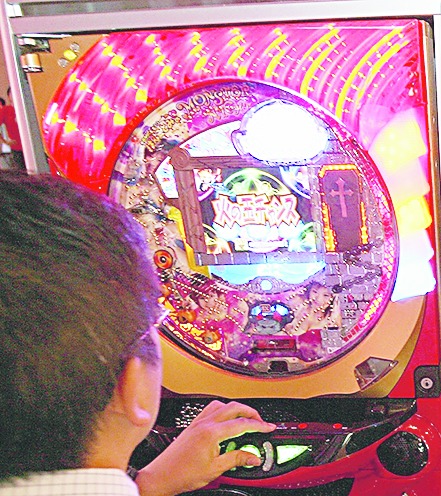
In Hear The Wind Sing, the unnamed narrator is a science student in his twenties. He talks of his relationship with a girl who lay comatose when he chanced upon her in a bar. And much like Murakami's other female characters, she is volatile, mystifying and as unpredictable as quicksilver. Woven into this tale are the narrator's musings on popular music, the essence of writing, student politics and the demises of relatives and lovers. Most importantly, the narrative contains his thoughts on a world that is defined by the impermanence of everything. This sense of ephemerality, and the subsequent feelings of isolation and loneliness, are also found in Pinball, 1973, where the narrator furnishes an account of his love of pinball and his desire to find the machine (called The Spaceship, or "the machine of misfortune") at which he used to play. He also holds forth on his time as a translator, before moving on to talk about the relationship he ends up having with two women who inexplicably show up at his home one day, and happen to be identical twins ("They were perfect copies... they responded to the same stimuli in precisely the same way"). The narrator, alongside this story, also speaks of the travails of The Rat, who is no longer the spirited, plain-spoken character he was in Hear The Wind Sing, but a forlorn being who appears "as powerless and lonely as a winter fly".
Murakami deals with these bizarre, fluid, shifting narratives with a zest and light-heartedness that will make the volume entertaining even for people who have not read his work in the past. Moreover, there is certainly enough here to keep his enthusiasts hooked, not least in the form of his preferred motifs and themes - love, bereavement, enigmatic women, constant change and sinister wells. However, if you pick up the volume hoping for particularly polished literature, you will not get what you are looking for. The text by the translator is brisk and sharp, but stumbles owing to frequent, laboured colloquial usages and clichés. The people in the novels have "time to kill" and "sweat like [pigs]"; they have to brave downpours that are "freezing cold", and moan that they are "dead tired". They find themselves in vehicles that are "stifling hot", on a day that is "a real scorcher". Certain excerpts from books of philosophy are deemed "cool in the extreme" by the unnamed narrator, who often feels "out of whack". Readers will have no trouble placing these colloquialisms alongside Murakami's well-known penchant for slipping the names of famous books and jazz music records into his writing - as the notes of the saxophone from yet another Stan Getz composition are heard from the record player, one cannot help but think that the author, in both theme and expression, is attempting to please a certain, 'cool' section of his readership.
But then one discovers that this was probably Murakami's aim right from the start, at least in terms of expression. In the fascinating introduction, he reveals that it was a translation experiment that helped him hone his surprisingly lucid artistic voice. At first, he wrote the opening passages of Hear The Wind Sing within the constraints of his broken English. Then, he rendered that stilted English back into Japanese. This method gave birth to a strange linguistic clarity. Words and lines came together, breezy and unimpeded, and were imbued with a delicate simplicity. This revelation will hold particular meaning for the author's loyalists, for it implies that the reasons for his global popularity were to be found in his writing right from the start. He needed to free Japanese prose from its affectations and traditions in order to ably 'translate' the notion of the Japanese novel to sections of his readership who were unfamiliar with it, and he did so.
Even though he is without a name, readers will have no trouble recognizing the narrator of Hear The Wind Sing and Pinball, 1973. He is contemplative, adrift, goalless, and caught between sickness and adulthood: he is, at once, Norwegian Wood 's Toru Watanabe, The Wind-Up Bird Chronicle's Toru Okada and Colorless Tsukuru Tazaki and His Years of Pilgrimage's eponymous protagonist. One can identify with him, but also recognize that he is very much like the reader for whom Murakami wrote these books. He is, much like all of Murakami narrators in his early works, Nick Carraway with a ringside view of his own narrative, while The Rat, in his agony over his torrid affair with a girl whom he suddenly abandons, reminds one of Gatsby gazing across the bay, his eyes fixed on the light twinkling from Daisy's abode: "He stood at his window and looked down at the flashing beacon, tracing the black pier back to where her apartment had stood. He remembered the pounding of the waves in the darkness..." The fluid prose in the two books moves back and forth between clandestine love affairs and meandering friendships, from game parlour to game parlour and from bar to bar, steered only by Murakami's natural talent for suffusing social stagnation with an intangible excitement. It almost seems as though Murakami is searching for answers to his own, important questions: The Rat and the narrator talk about writing and women in equal measure. The Rat wishes to pen "a good novel. From where I stand, anyway. I doubt I have any special talent for writing, but if I stick with it at least I can become more enlightened. Otherwise, what's the point, right?... So the novel will be for myself. Or maybe for the cicadas."
If one takes into account the technical aspects of skilled writing, Hear The Wind Sing is the pick of the two. But Pinball, 1973 is certainly more entertaining. Much like Harper Lee's Go Set a Watchman, published a few months ago, Murakami's first novels stand ably on their own as stories, while providing illuminating insights into the early years and literary development of a writer. As is to be expected from early works, Wind/Pinball is nowhere near as emotionally complex as, say, Norwegian Wood. And in spite of the links between the books in the Rat trilogy, Wind/Pinball is not as deftly woven and skilfully imagined as After Dark, a stellar piece of literature for its fascinating characters and uncanny, surreal, yet wholly plausible subplots set in the seething blackness of Tokyo's nights. Even so, Murakami's avid fans must read Wind/Pinball if they want to gain access to the complete picture of his evolution. Most importantly, the books have the power to turn readers into loyalists simply on account of the discovery that a man like Murakami, too, feared failure and defeat once upon a time.