
There is a lot in common between beef and alcohol. Even past their probable pairing on a dinner table, both seem to have turned from items of consumption to items of legislation. While the law has in recent times regulated their consumption, there almost seems to be a new, sudden feeling of restriction. This is not without reason. Statutes that completely prohibit the production, sale or consumption of beef and alcohol have gained ground across the country. New stringent laws are being proposed as pre-existing legislations are beefed up.
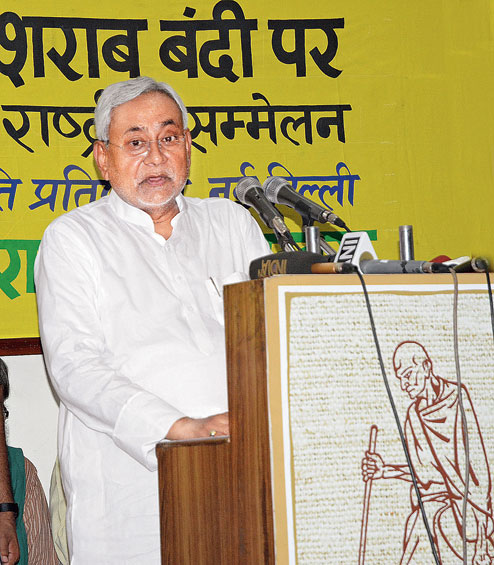
A recent illustration of this is the Bihar Excise (Amendment) Act, 2016, or the BEA Act. This law imposes complete prohibition on alcohol in the state of Bihar. Tied to the electoral promises of a recently sworn-in government, there seems to be a sense of democratic legitimacy to this law. But any statute, irrespective of its social desirability is to be tested against the protections for individual liberty, as they exist under the Indian Constitution.
Friction between the BEA Act and the Constitution gives rise to a striking similarity with statutes and court challenges to beef legislations. This is plain in two core areas of legal analysis. The first is such laws exceed the objectives set out under the directive principles, and second to achieve them they contain draconian penalties under which an accused is presumed guilty until proven innocent. Both damage individual liberty and are of concern even to vegans who only drink cold-pressed juices.
Social extensions of constitutional mandates
The Constitution of India arranges not only for the function of government but also its purpose. These objectives are defined beyond the Preamble, in a chapter titled Directive Principles of State Policy. Even though there is no necessity to make laws for achieving these policy objectives, the state is under an obligation to fulfil them. Provisions on prohibition of alcohol and preservation of cattle are contained as a state directive. However, even when making such a prescription, the need to fulfil these objectives is indicated. Such express reasons should ordinarily act as a limit on the law that seeks to implement them. However, this is not the case in practice.
Article 47 of the Constitution of India requires the prohibition of intoxicants that are injurious to health. The objective ties in expressly with a need to raise the level of public health. Drawing from this, a clear line of judicial precedent emerges upholding state power to completely regulate or prohibit a trade in alcohol. Notably contained in the 1994 judgment of the Supreme Court in Khoday Distilleries vs State of Karnataka, it has been restated recently in the Kerala Bar Owners case. The focus of the constitutional analysis in both cases remains limited to public health. The text as well as the surrounding statements on the BEA Act show that the principal concern of the state government goes much beyond it.
The BEA Act addresses demands for prohibition from women who face daily abuse and harassment by an intoxicated spouse or other male members. Speeches, publicity materials and even a video on YouTube are conspicuously displayed alongside the text of the law on the Bihar excise department website, announcing this as the objective for the recent change in the law. Expectedly, this results in provisions that go beyond serving the need for prohibition. For instance, the law criminalizes a person allowing the assembly of “unsocial elements” even when there is no consumption of alcohol.
There is no statutory definition of “unsocial elements” and given a tendency for abuse of law, it will result in prosecutions that have no nexus with public health. Though demands by women to ban alcohol arise from widespread instances of abuse, the legislature exceeds constitutional permissiveness by making vague provisions to fulfil them.
Unjust burdens and draconian penalties
India’s first solicitor-general C.K. Daphtary once said, “A republic without a pub is a relic.” While Bihar can do without a pub, it will surely need more jails for its BEA Act contains draconian penalties under loosely worded offences, all of them being non-bailable. For the offences of production, distribution or even allowing another person to consume alcohol in their premises, a convict can receive a minimum punishment of 10 years that can even extend to life imprisonment. Far from making a legal provision within the law for rehabilitation, a minimum five-year jail term is prescribed for consumption. To put this in perspective, the punishment for causing a dowry death is a minimum imprisonment of seven years.
Such high penalties are telling in the approach of the legislature — it is demanding obedience through a fear of the law rather than respect towards it. It gives a modern justification for the phrase “draconian”, a phrase that owes its origin to the harsh laws made by a Greek lawmaker named Draco. One of the laws is said to have prescribed the death penalty for the theft of a cabbage. We surely seem to be regressing into a relic.
One of the most egregious provisions of the BEA Act is in Section 48 that reverses the presumption of innocence. It contains an evidentiary presumption that puts the burden of proof on an accused to show his or her innocence. Abhinav Sekhri, a Delhi-based criminal lawyer, has explained the effect and permissiveness of such reverse onus clauses on the Indian Constitutional Law and Philosophy blog. Commenting on the separate opinion of Justice S.C. Gupte of the Bombay High Court in a recent judgment which struck down provisions of Maharashtra’s cattle preservation law, he says, “We are now in a time when legislatures resort to such egregious provisions at the drop of a hat, exhibiting a numbness to the severe curtailment of liberties they entail.” His comment is not without reason. As Justice Gupte’s opinion clearly draws out a four-part test to gauge the permissiveness of such a clause and hold it unconstitutional, similar provisions exist in the cattle preservation laws of Delhi and Haryana. We can now add Bihar to this list.
To conclude, various policy considerations intersect in the formulation and implementation of a prohibition law. These are beyond the comment of courts, properly within the domain of legislatures. But a sober hand must guide any formulation of policy into law. Legislatures should not drown individual liberties in the ferment of electoral politics. Irrespective of whether they seek to prevent alcohol consumption or cow slaughter.
The author practises law in New Delhi