Stand-up comedy in India sits at an uneasy intersection of conviction and commerce. What once passed as personal belief has, for many performers, become a carefully curated brand — particularly on questions of feminism and gender justice. In a digital economy that monetises identity as efficiently as humour, this alignment generates what might be called woke capital — a form of cultural currency built on performance of progressive values.
But the real test of any position lies offstage/off camera. And it is here, away from the safety of scripted sets and sympathetic rooms, that the logic of that capital becomes visible.
Take Kunal Kamra, among the few who collapse the distance between stage and life. His political satire has repeatedly invited first information reports, show-cancellations, and institutional pushback; yet he has consistently refused to apologise. Whatever one makes of his politics, his stance suggests a willingness to spend that capital, to convert speech into consequence.
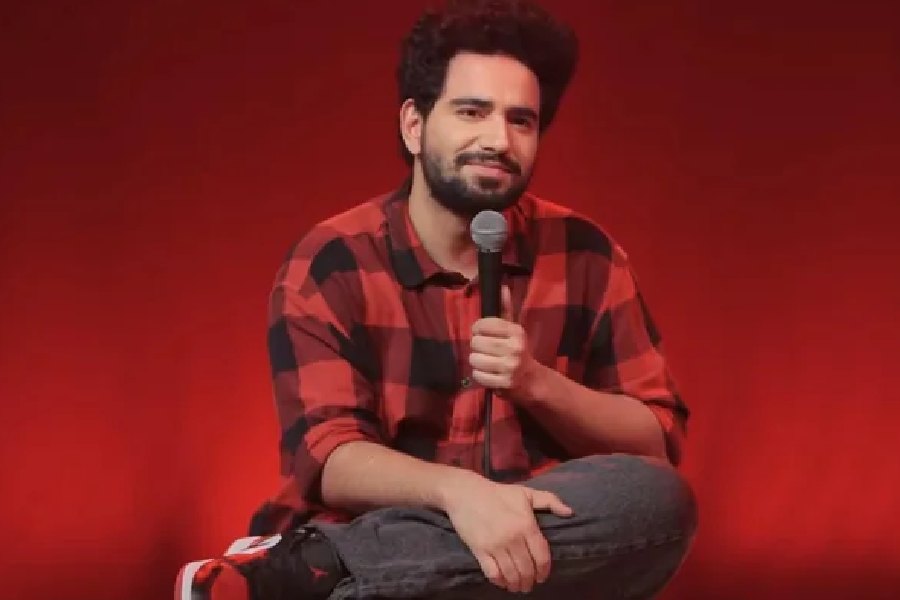
On the other hand, Samay Raina, following backlash against his show, India’s Got Latent, faced police action before issuing an apology and promising greater sensitivity. Here, the instinct is not to spend capital but to preserve it.
Neither response is neutral; both are instructive. They reveal a spectrum between those willing to risk their accrued capital and those who manage it carefully, deploying it where returns are high and exposure is low. This is where the distinction between safe targets and risky targets becomes central. Safe targets are abstract, distant, or already delegitimised — faceless systems, generic patriarchy, or figures who carry little immediate consequence. They allow comics to accumulate woke capital with minimal risk. Risky targets, by contrast, are proximate and powerful: industry peers, collaborators, gatekeepers. To speak against them is to spend capital — risk access, opportunity, and professional relationships. In an ecosystem governed by algorithms, ticket sales, and brand partnerships, conviction is a managed asset sometimes bypassing ethical positions. Woke capital thrives where articulation is visible but accountability is optional. What results is a form of selective outrage. Nowhere does this become more uncomfortable than in the industry’s own reckoning with misconduct.
Consider Utsav Chakraborty, accused during India’s #MeToo wave. The fallout extended to AIB, which faced scrutiny for failing to act despite prior awareness. Or Sanjay Rajoura, accused of sexual misconduct, even as his public persona was rooted in politically-aware commentary and in being a ‘trusted’ ally
of feminism. In such cases, the contradiction is immediate. These were not performers outside the discourse of gender justice; they were fluent in it. Which is precisely what makes the silence, and the cautious distancing that followed, more revealing. Risky targets here were professional peers. Yet woke capital, so easily accumulated on stage, proved far harder to spend.
On stage, the language is expansive: solidarity, justice, equality. Offstage, it becomes conditional: due process, complexity, silence. The shift marks the point where conviction yields to calculation, where the question is no longer what is right, but what is sustainable to keep the ecosystem from collapsing. Call it an epidemic of performative routine. It persists because the conditions reward it. Audiences applaud alignment but are less comfortable when it implicates familiar figures.
And yet, when someone like Kamra continues to hold his line despite institutional pressure, he demonstrates that woke capital can, in fact, be spent. That risky targets can be named without retreat. In doing so, he renders the silence of others more conspicuous.
What we are left with, then, is not a crisis of comedy but a crisis of conviction. When belief is endlessly performed but never risked, it loses all moral weight. Safe targets keep the machine running; risky ones expose its limits.
Meenakshi Jha is an educator and a freelance writer