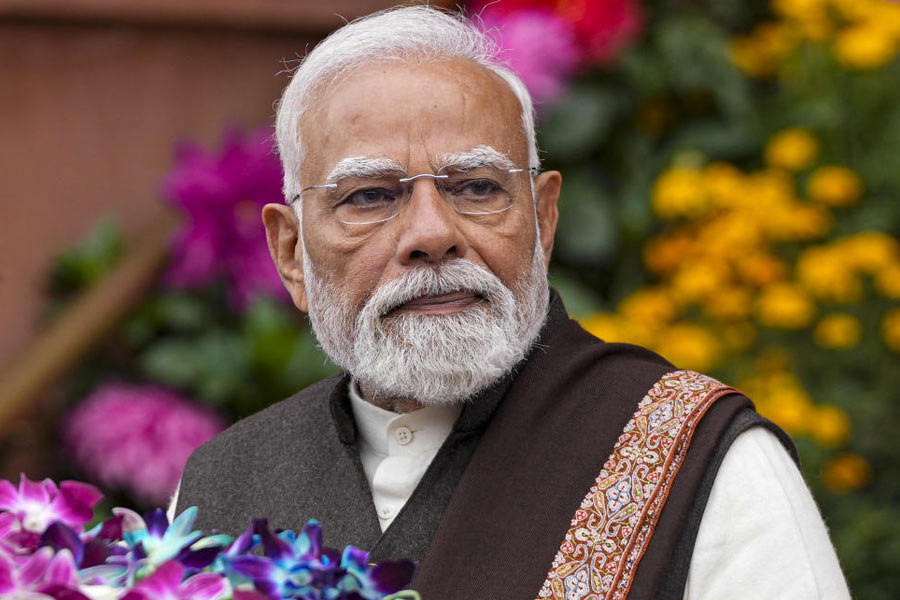
Narendra Modi has described the recent international trade deals with the European Union and the United States of America as milestones in India’s trade history, claiming that it was his administration’s policy reforms that have helped the nation attain a position of significant bargaining strength in global forums. He also mentioned that economic and social reforms would continue, towards Viksit Bharat, and that the attention of government policies would be on facilitating structural reforms that enhance competitiveness and productivity. Innovation and the simplification of governance, the prime minister underlined, were the other elements of this thrust in the direction of reform. The introduction of the two-slab structure for the goods and services tax, new labour codes as well as the supposed easing of the burden of households and the micro, small and medium enterprises, Mr Modi argued, were evidence of his government’s commitment to reform and transformation.
The need for political messaging perhaps explains Mr Modi’s need to be economical with facts. The original reform process was begun in 1991 by a Congress-led government. In fact, Mr Modi’s world view on economic matters has been quite similar to that of earlier dispensations, a playbook dictated by the neoliberal Washington Consensus, comprising liberalised industries, free international trade, fiscal discipline, and monetary policy focused on inflation control. His other claims merit closer inspection as well. The GST reform in terms of slabs was warranted earlier: the Centre’s obduracy cost time in this context. Labour unions, anxious about the weakening of workers’ rights, are already up in arms against the new labour codes. Household debt in the country has risen to approximately 41.3%-43.1% of GDP as of early 2026, exceeding the five-year average of 38%-39%. India’s MSME sector remains saddled with such problems as fiscal constraints manifest in terms of access to formal credit, technological challenges, and wobbly infrastructure. Taking cognisance of the challenges, this year’s Union budget sought to introduce a number of measures to alleviate the pains of MSMEs that employ over 32.82 million people. The headwinds of international trade, rising automation, climate change-induced loss of labour are the other prickly issues that demand urgent reformatory measures.
Reform is a continuous process. Its accomplishment cannot be isolated achievements of governments. They need to be understood in terms of a policy continuum. So Mr Modi’s claim of monopolising reforms is specious, just as his penchant for christening everything, including mundane tweaks, as reform is revealing.