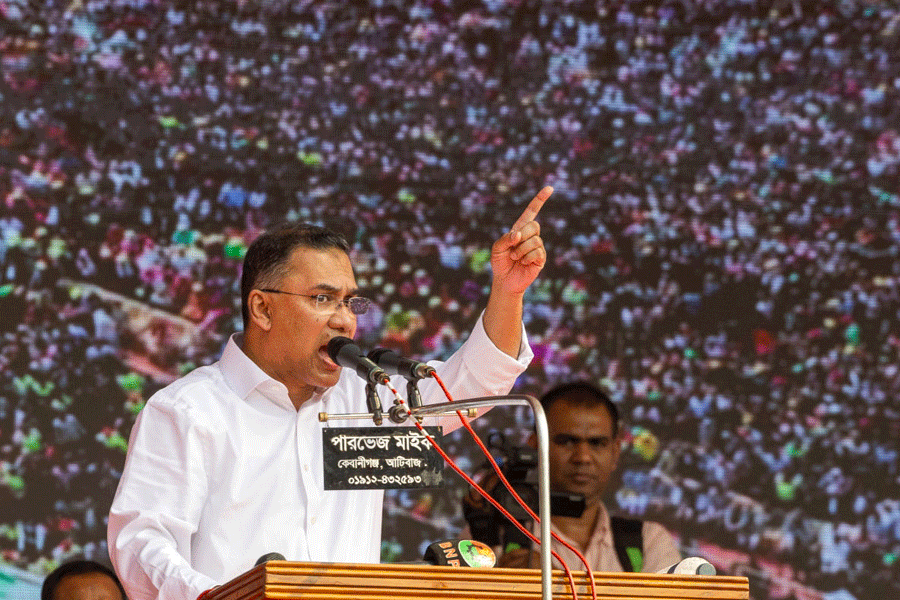
Bangladesh’s new prime minister, Tarique Rahman, has taken charge of the country at a time when it faces a series of challenges. The wounds of 18 months of chaos following the ouster of the former prime minister, Sheikh Hasina, a hawkish Opposition, as well as a low tide in the relations with India count among these. But Mr Rahman’s biggest challenge will be to reignite the economy. Until a few years ago, Bangladesh was drawing comparisons with the so-called Asian tigers on account of its booming GDP, soaring exports soaring, falling poverty rates and improved per capita income. But over the past two years, Bangladesh’s economy has struggled: inflation is high, the GDP growth rate has shrunk to 4%, and foreign investment has fallen.
Fortunately, Mr Rahman appears to grasp the problem. He has made fixing the economy his top priority along with ensuring social amity within the country. His insistence on rebuilding the economy is critical for Bangladesh to be able to fully stand on its feet again after a period of instability. His campaign promised to double the country’s GDP by 2034, create millions of new jobs, and issue welfare benefits to some of the most vulnerable sections of society. So far, however, he has not laid out any clear plans on how he intends to deliver on those ambitious promises — doubling the economy by 2034, for instance, would need an annual GDP growth rate of 9%, more than twice the country’s current growth rate. Where Mr Rahman has been clear is in his articulation that Bangladesh’s foreign policy will be driven by its economic needs: Dhaka is pursuing a membership of the Association of Southeast Asian Nations. That is a position that will bring calm to the country’s ties with its neighbours and to the broader South Asian region. Bangladesh will need stable and strong ties with India, China and the United States of America to deliver on its vast economic potential. Mr Rahman must ensure that the same approach also guides his domestic policies. Investors — whether Bangladeshi or international — do not like chaos, political instability, or social ferment. The protests that dethroned Ms Hasina had started over concerns about jobs. Given the massive mandate in favour of the Bangladesh Nationalist Party in the recent elections, Mr Rahman now has a historic opportunity to revive Bangladesh’s economy through changes that can inspire investors, bring jobs to the youth, and increase remittance flows. These, ultimately, are the reforms Bangladesh needs the most.