|
|
| Interview with god |

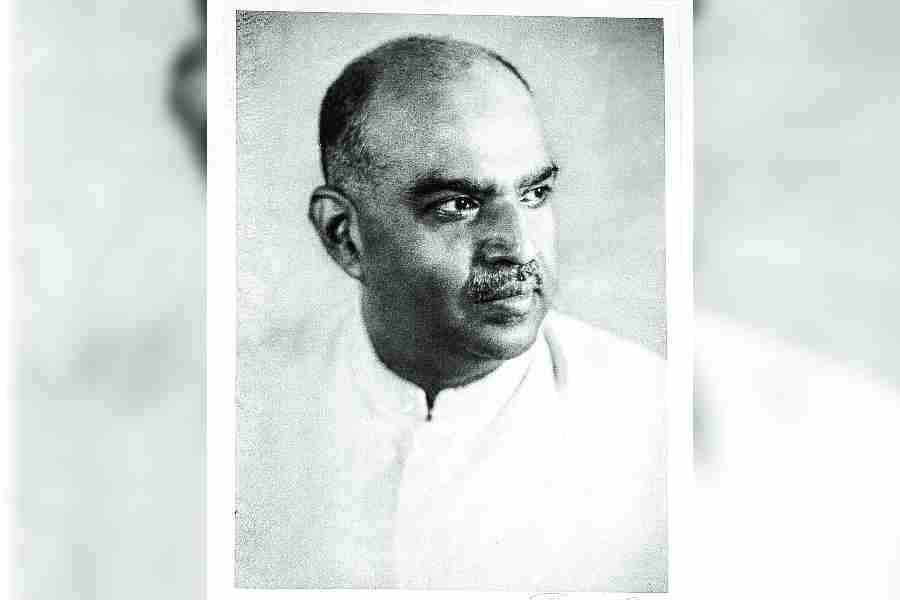
Professor Sir Peter Frederick Strawson passed away on February 13, at the age of 86. Kierkegaard was not Strawson?s most favourite philosopher. But Kierkegaard?s chosen epitaph ? ?That individual? ? seems to capture best the spirit of this last great apostle of clearness, distinctness, common sense, and light-footed realism. It is also an apt description of the author of the 20th century philosophical classic: Individuals: An Essay in Descriptive Metaphysics (1959). In a philosophical milieu where ?logical positivists? and ?ordinary language philosophers? in Cambridge and Oxford were trashing ontology as at best bad grammar and at worst gibberish, this work, describing the common basic structure of our thought and talk about the world of objects and persons around us, gently brought back the prodigal sons of linguistic philosophy to their metaphysical home.
Strawson started his studiedly quotidian metaphysics by talking about the ineluctability of our reference to substantial particulars in space ? material objects and persons, the subjects of our conversation and empirical judgments. In the last months of his life, he was working on a co-edited volume on controversies regarding the meaning of predicates. Thus his seminal work revolved round the themes of subject and predicate in logic and grammar, which was the title of his smallest, dearest ? and, he felt, unduly neglected ? book.
A couple of days before he died, he wrote a short light-hearted piece about truth for his grandchild. In his youth, Strawson had twice played a formidable David against such philosophical Goliaths as his own teacher, J.L. Austin, and the towering Bertrand Russell. On the first of these occasions, also, the topic was truth.
In an Aristotlean Society meeting, Austin had defended the hoary correspondence theory of truth with unmatched cunning and complexity of examples. With a slew of trenchant objections, Strawson argued that that theory needed not to be emended but eliminated. Strawson?s own proposal, influenced by Frank Ramsey, was that ascribing truth to a statement simply amounts to asserting, conceding, granting or endorsing a statement with a ?ditto?. (Here we could reflect on the trivium that the word in Sanskrit for ?Yes, I agree? is ?Om? ? the clich?d name of Gandhi?s god.) The Austin-Strawson debate on truth has since become canonized as part of basic training in philosophy.
On the second occasion, the target of attack was Russell?s theory of description. That theory, first published in 1905, was designed to clear up two millennia of muddle-headedness starting from Plato. The problem, nicknamed ?Plato?s Beard? by W.V. Quine, was this: what is it that we refer to when we intelligibly use the name or description that stands for an unreal or impossible entity, to say, for example that Pegasus flies or that the square-circle does not exist? Russell showed that ?Pegasus? or ?The square-circle? does not denote or mean anything by itself. Rather it introduces a (false) existence-claim (conjoined with a uniqueness claim) into whatever sentence we construct using it. In order to call such a sentence false, we don?t need to first identify a thing (a nothing?) for the sentence to be false about.
Russell would have argued that the sentence, ?The present king of America is a Texan?, is neither true nor meaningless, therefore it must be false, because the subject-phrase introduces a false existence-claim, and because a sentence is either true, or false, or meaningless.
In his slow but devastating essay, ?On Referring? (Mind, 1950), Strawson rejected this bogus trichotomy. Sentences can be meaningful or meaningless, but only statements made by the use of sentences can be true or false. Is the graffiti-sentence we may find: ?Aishwarya loves me? true or false? We don?t know what statement is made by it until we know who says it, when, and whom does he refer to by the name. Thus, that America has at least one and at most one king is not part of what is asserted usually by the use of that funny sentence, but a presupposition of that sentence being usable to make any statement at all. Since the presupposition is not true, the statement is neither true nor false, but the sentence remains meaningful.
When Russell was at the zenith of his fame and the theory of description was taken to be the ?paradigm of philosophy?, a 30 year old Strawson demolished it in one clean stroke, proving it itself to be muddled-headed. ?On Referring? led to a new line of research in logic and linguistics about presuppositions and truth-value gaps. What was the big deal? we may wonder now. Strawson would have responded, quoting Austin here: ?Importance is not important, truth is?.
When I was working under his supervision on a similar ?unimportant? topic of philosophical logic, I had asked him how I should face the likely objection that the conclusions we draw in analytical philosophy or Navya Nyaya, after such complex argumentation, were trivial. He told me that I should welcome that charge (what in Nyaya is called ?ishtaapatti?) and respond ?I hope it is trivial?.
Even if Strawson?s theory of truth and reference is regarded as too technical to be of abiding and wide-ranging philosophical interest, his work on causation, perception, actions, universals, the mind-body problem, and the problem of other minds will be remembered as having changed the shape of the field. With subtle yet limpid argumentation against the Cartesian obsession with the first person?s privileged access to her own subjective states, he proved that a mental state cannot be self-ascribed unless it is ascribable to others. About ?my depression?, which often even the non-philosopher imagines to be too private to be knowable by another, he said, ?If only mine, then not mine at all?. We can benefit by meditating on this principle in all sorts of different contexts.
Out of his ten books, The Bounds of Sense is 20th century?s most widely used English commentary on Kant?s Critique of Pure Reason. Apart from making Kant?s notoriously difficult ideas accessible, this ?commentary? contains some of Strawson?s most delightfully vehement criticisms of Kant. At one point he calls one of Kant?s arguments about the self ?a non-sequitur of numbing grossness?. He also audaciously clips off Kant?s transcendental idealism, as unnecessary revisionary metaphysics!
Quite independently of his enormous published work, Strawson?s impact on philosophy spread through his untiring teaching at Oxford, first at University College and then at Magdalen College. Paul Snowdon has compared his tutorials to interviews with god. I personally remember those fortnightly 90 minute sessions of his reading my essays, more thoroughly than I could ever read them myself, exposing their errors and bringing out their unsuspected potentials, polishing their grammar and style, and through it all, his entrancing demonstration of how to think for the sake of getting it right, rather than to appear clever.
Outside of analytic philosophy, and especially in the social sciences, his paper, ?Freedom and Resentment? remains the most widely read and used. In it, Strawson shows that abandoning the reactive attitudes towards each other in favour of a ?cold? scientistic determinism is not an option to us humans who live through personal relationships. It is not enough for us to ?explain? each other?s conscious conduct with Dennett?s dangerous idea or Zizek?s Marxist-Lacanian gaze at the economic-sexual causes and effects. Amidst all our ?cool? philosophies, we must remain human by being attracted or indifferent to or repulsed by other humans. And when we do that, we cannot but ascribe a certain ability to have acted otherwise to those very humans who live and act within the causal realm of animate and inanimate nature. This was Strawson?s nuanced solution to the toughest problem of the metaphysics of morals: the issue of freedom versus determinism.
Professional philosophers in the world are now divided between the continental types and the analytic types who often shun each other. Strawson?s greatness lies in the fact that like his philosophical heroes Aristotle and Kant, his profound influence straddles both camps. Contemporary analytic stars like John Searle, Hilary Putnam, and John McDowell confess to deriving their content and method of thinking from Strawson. Such continental philosophical giants as Jurgen Habermas and Paul Ricoeur explicitly built their theories of communicative acts and the moral phenomenology of othering the self on foundations laid by Strawson.
At the Boston World Congress of Philosophy in 1998, Donald Davidson, W.V. Quine, P.F. Strawson and a couple of other living greats were honoured for their lifetime contribution to philosophy. Someone from the audience asked an obvious question to this exclusively white galaxy of great minds ?Have any of you ever made a serious study of or been influenced by any non-Western philosophy?? The deafening silence in response was broken by Peter Strawson?s modest confession: ?I have been exposed to Indian philosophy, regrettably late in my life, and some of it, especially the ideas of the Nyaya school of thought has influenced my metaphysics?. When the greatest living Oxford philosopher (and a successor of Gilbert Ryle who had publicly said that nothing worth a philosopher?s notice arose out of the East except the sun) confessed to this incriminating cognitive contagion from the East, he was not showing off his cosmopolitanism, he was fearlessly speaking unadorned truth.
Of all the English speaking philosophers who were hosted and celebrated in India in the 20th century, Strawson was the only one who truly, deeply, and honestly interacted with the philosophers in this country and loved always to come back (Once he playfully described himself as an ?Indiaddict?) Apart from the late Pranab Kumar Sen and Rooprekha Verma, who were his close friends and edited a wonderful collection of essays on his philosophy with his ?replies?, he was particularly fond of Ramchandra Gandhi whose doctoral dissertation on the presuppositions of human communication he had supervised. Gandhi?s metaphysical views have moved far apart from his teacher?s, but his brilliant and powerful idea of taking addressing rather than referring to another human being as the more fundamental speech-act bears the stamp of a frontal attack on his own stand-point that Strawson, typically, would have nurtured in his research student.
Towards death we are not supposed to take a reactive stance, for death is not a person or a voluntary act, unless it is a killing. Natural death just happens in the causal order of things (Wittgenstein decreed that it is not even an event in life). No one does it, hence no one can resent it. Yet, perhaps testing the limits of my rational adherence to unintelligent design, I cannot help claiming a certain freedom to resent the death of such an irreplaceable teacher, such a dazzlingly sharp and incredibly honest philosopher, such a kind man.