Free spirit
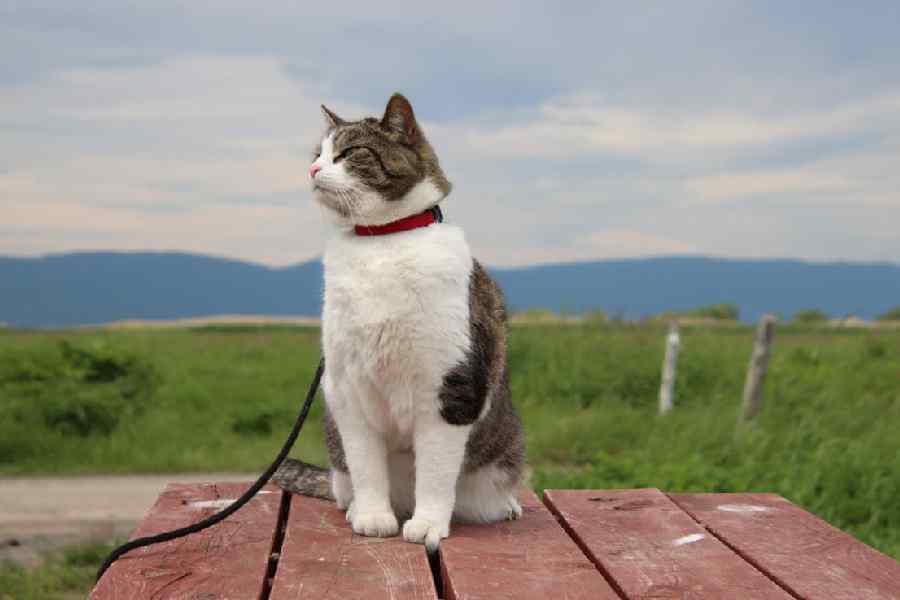
Sir — Cats usually go about unbothered, self-assured and defiant, as if rules were meant for others. Take the instance of Louis Vuitton, a cat who lives along the Canada–US border and has been found to routinely wander between the two countries. During his cross-border adventures, he charms residents on both sides while remaining blissfully unaware of passports or checkpoints. Louis, his owner has said, even has a habit of smuggling things across the border, such as treats. There is humour but also a quiet irony in his story. At a time when borders are being increasingly fortified, Louis moves about untouched by such restrictions. It seems that the Donald Trump-led administration's desperate attempts to seal the border have been checkmated by a feline.
Lovely Mitra,
Calcutta
Strategic silence
Sir — Sushant Singh's article, "Island of silence" (Mar 20), offers a sobering assessment of the perceived erosion of India’s strategic autonomy under Prime Minister Narendra Modi. Singh's sharply-framed critique reflects a broader concern about India’s evolving posture amid intensifying geopolitical tensions.
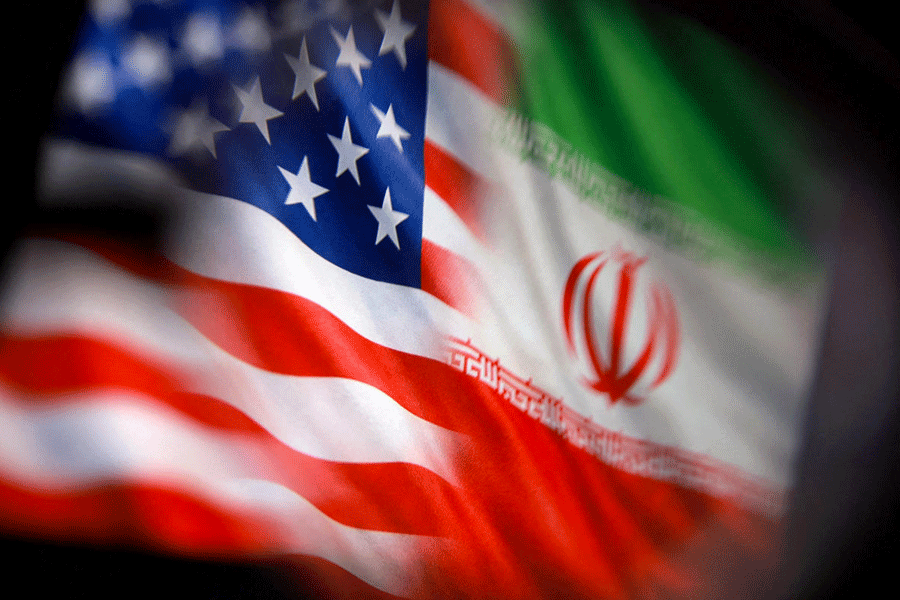
Recent developments lend urgency to this debate. Escalating hostilities between Iran on one side and Israel and the United States of America on the other have risked energy flows through the Strait of Hormuz, a lifeline for India’s crude imports. New Delhi's muted response to the US sinking an Iranian vessel near Sri Lanka, shortly after participating in a naval engagement hosted by India, has raised questions about India’s ability to assert its interests in its own neighbourhood. Further, critical remarks by senior US officials underscore the asymmetries within the current partnership. India’s foreign policy today operates in a far more complex global environment than during the era of Indira Gandhi. A clearer articulation of priorities, coupled with institutional preparedness and diplomatic balance, is essential if India is to navigate this volatile geopolitical moment.
Vidyasagar Reddy Kethiri,
Warangal, Telangana
Sir — Mukul Kesavan's column, "A grey silence" (Mar 22), criticises both India’s silence on the Iran conflict and Shashi Tharoor’s position that New Delhi's restraint reflects responsible statecraft. However, it is too provocative to write that "Narendra Modi and his partymen are violently attracted to Israel’s fanatical, anti-Muslim Zionism because it has achieved the disenfranchisement and apartheid that Hindutva aspires to." Such assertions, without substantiation, weaken the larger argument.
Kesavan argues that India should have condemned the attack on Iran by the US and Israel. But can India afford the consequences of such a stance? What if such a position inadvertently draws India into direct involvement in the conflict? The long-term repercussions could be severe. At present, India’s diplomacy maintains a balanced relationship with multiple nations. If long-term national interest is the priority, silence and restraint can sometimes be the most effective tools of diplomacy.
Sourav Ash,
Calcutta
Deeds, not numbers
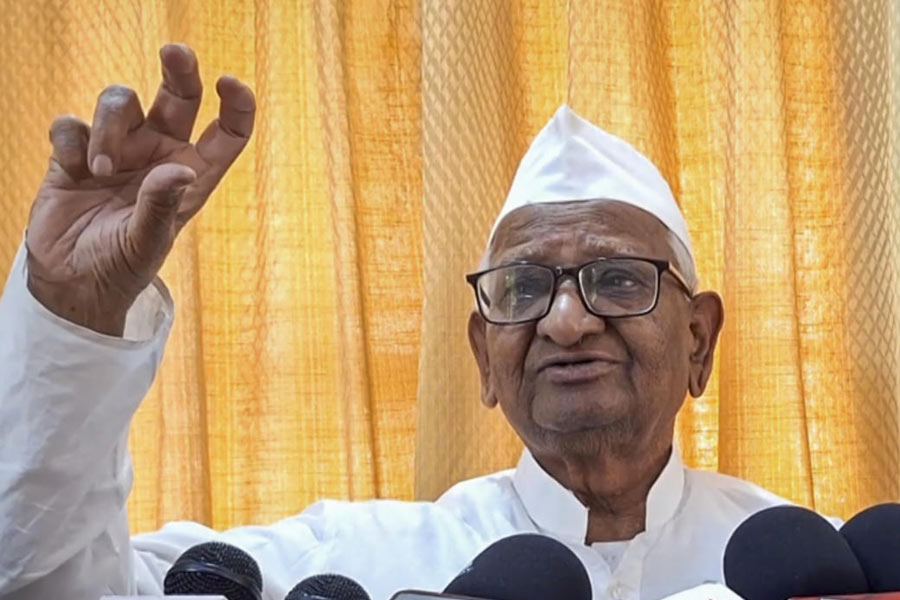
Sir — Prime Minister Narendra Modi has set a historic record by becoming India’s longest-serving head of government, completing 8,931 days in office on March 22 ("Tenure 'record' for CM-PM Modi", Mar 23). This includes his tenure as Gujarat’s chief minister and as prime minister. Modi has surpassed the record of 8,930 days held by the former Sikkim chief minister, Pawan Kumar Chamling. Whether this is really worth a celebration depends on which side of the political divide one stands. I wish to respond by quoting the lines from Philip James Bailey's poem, "Festus": “We live in deeds, not years; in thoughts, not breaths".
Avinash Godboley,
Dewas, Madhya Pradesh
Sir — The Bharatiya Janata Party has highlighted Narendra Modi as India’s “longest-serving head of government”. This projection appears to be an attempt to overshadow the legacies of the former prime ministers, Jawaharlal Nehru and Indira Gandhi. “We live in deeds, not years”, goes the saying. Only history will determine how Modi’s tenure is judged.
Jahar Saha,
Calcutta
Sir — The combination of Narendra Modi’s tenure as chief minister of a state with his tenure as prime minister to create the label of “longest-serving head of government” is an example of flawed terminology. What matters is not the quantity but the quality of governance. Modi’s legacy will be judged by history. Events such as the Gujarat riots, demonetisation, the abrogation of Article 370, the handling of the Covid-19 crisis, and the controversies surrounding the National Register of Citizens and the Citizenship (Amendment) Act must be taken into account in such an assessment alongside broader indicators like the decline of India's democratic standards under him.
Kajal Chatterjee,
Calcutta
Sir — It is heartening that Narendra Modi has become the longest-serving head of government in India’s history. This is a testament to Modi’s decades of uninterrupted public service and political leadership. But it is also important to shed light on the gaps in his governance.
Jayanta Datta,
Hooghly
Anonymous art
Sir — Anonymity is an act of calibrated resistance to a culture that equates presence with worth ("Anonymous ink", Mar 22). Most artists today operate within an ecosystem where authorship is intertwined with branding. Yet, a few choose to defy this system. Figures like Banksy and Elena Ferrante do not merely avoid the limelight; they interrogate its necessity. Herein lies the paradox: anonymity in a hyper-visible age acquires its own visibility. The less the artist offers, the more the audience seeks. Art cannot fully escape the frameworks that seek to define it.
Vijay Singh Adhikari,
Nainital