King of fruits
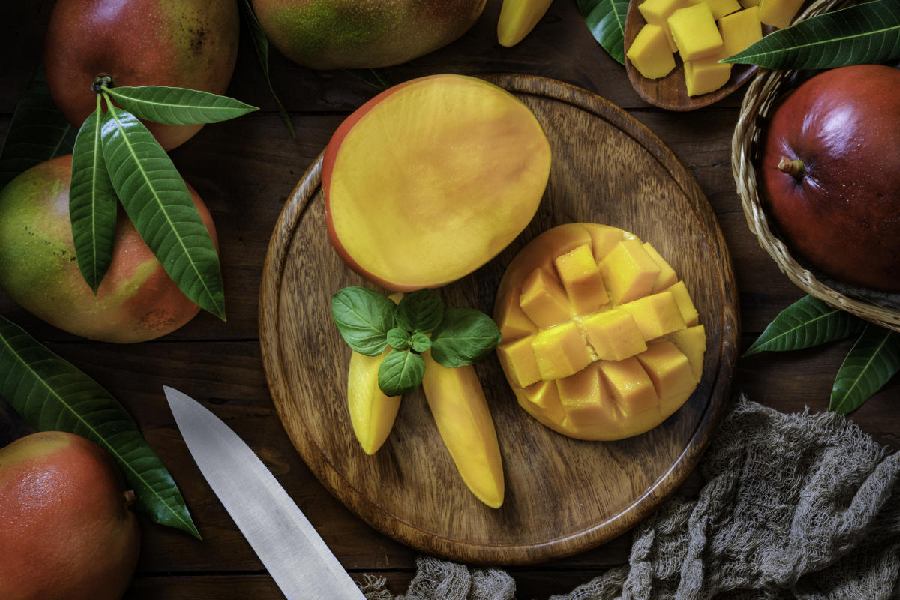
Sir — Indians these days are contending with many paucities. There is a shortage of LPG owing to the Iran war; Diet Coke is in short supply; now, the beloved king of fruits too is hard to come by. Farmers of alphonso mangoes report an 85% fall in production. Karnataka, too, lost produce owing to climate change. Arguably, one can live without Diet Coke and an induction cooktop can replace a gas, but how will Indians live without mangoes? The fruit is so dear to Indians that even though India is the world’s largest producer of mangoes, accounting for around 50% of total global production, its exports only about 1% of its total produce, merrily chomping down the rest.
Pratima Chakraborty,
Calcutta
Jumped ship
Sir — Raghav Chadha’s desertion of the Aam Aadmi Party, along with six others, has revived debate about the party’s internal democracy (“Chadha, 6 other MPs join BJP”, April 25). While it drew attention, it was hardly unexpected. The concentration of decision-making power in one hand had concerned many insiders. Critics say the lack of internal democratic processes and limited space for collective deliberation created growing dissatisfaction. Earlier too, poet and a founding member of AAP, Kumar Vishwas, left the party citing differences in vision and style of functioning. Such exits underline the need for adaptability, inclusivity, and institutional resilience if any political organisation hopes to sustain itself over time.
Arvind Dinkar Tapkire,
Mumbai
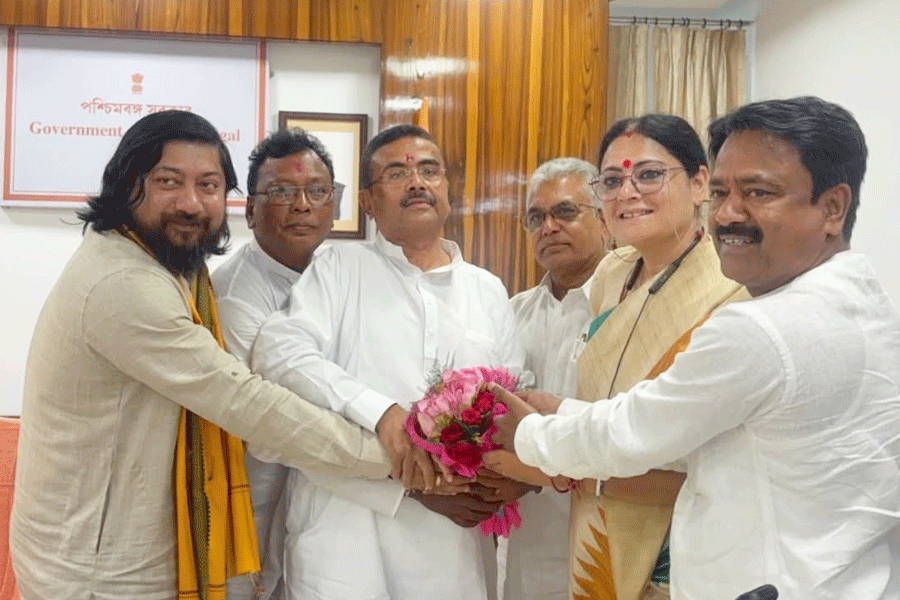
Sir — In a big blow to the AAP, seven of its Rajya Sabha members quit the party and joined the Bharatiya Janata Party, reducing its strength in the upper House from 10 to three. Raghav Chadha’s shift was expected as he was recently removed from the role of deputy leader of the AAP in the Rajya Sabha by Arvind Kejriwal. Of the seven MPs involved, six are from Punjab and one from Delhi. As such, the exodus has come at a crucial time, with Punjab set to go to the polls in 2027. On the other hand, the BJP’s strength in the Rajya Sabha would rise to 113. In the 245-member House, where the majority mark is 123, this leaves the BJP just 10 short of a majority on its own.
S. Sankaranarayanan,
Chennai
Sir — The defection of seven parliamentarians has left the AAP in dire straits barely 10 months before the Punjab assembly elections. Raghav Chadha, once seen as a prominent face of the AAP’s next-generation leadership, has justified the drastic step by accusing the young party of abandoning its foundational ideals. The saffron party, which has already poached several Punjab Congress leaders in recent years, is now looking to boost its poll prospects in the border state.
S.S. Paul,
Nadia
Sir — Raghav Chadha has, for long, had issues with the AAP. He had made videos criticising many decisions taken by the party and Arvind Kejriwal. Although it is alarming to see this seeming exodus from the AAP, such behaviour has become increasingly common across political parties. Whether this helps the Bharatiya Janata Party secure votes in the Punjab assembly polls remains to be seen but it will certainly strain the AAP. It is time the party prioritised intra-party democracy.
Jayanta Datta,
Hooghly
Sleepless lot
Sir — Women have always sacrificed their own rest at the altar of their family’s comfort (“Blood boiling”, April 24). Climate change has only sharpened this crisis. It is shocking to think that this is happening in the same world where bio-optimisation tools like Whoop and health evangelists like Bryan Johnson toy with elite sleep engineering. Sleep, a biological necessity, is being redistributed by class, gender and infrastructure. Any serious climate policy must treat rest as a public good, not a private luxury.
Harsh Pawaria,
Rohtak, Haryana
Sir — The discussion on rising night temperatures and women’s sleeplessness deserves to be seen as a labour issue, not merely a health concern. Women like Janabai Sonawane work two shifts: as a paid agricultural labourer in the fields and unpaid domestic labour at home. Sociologists have described this as the ‘double burden’, where women remain responsible for care work regardless of employment outside the home. Climate change sharpens that burden by stealing the only recovery time the body has: sleep. Poor sleep results in irritability, anxiety, and strained family relationships, which are conveniently blamed on “women’s moods” rather than structural inequality. A hot night is not just weather. It is gendered exhaustion made invisible.
Shreya Basu,
Nainital
Sir — Virginia Woolf asked for a room of one’s own; many women would also settle for a cool night of uninterrupted sleep. Women are often the last to sleep and the first to wake. Charlotte Perkins Gilman’s The Yellow Wallpaper showed how women’s distress was dismissed as temperament. We risk repeating that mistake by calling this irritability “women’s moods” instead of recognising it as environmental injustice. Sleep is not a luxury. It is a matter of public health, gender justice, and climate policy.
Yashodhara Sen,
Calcutta