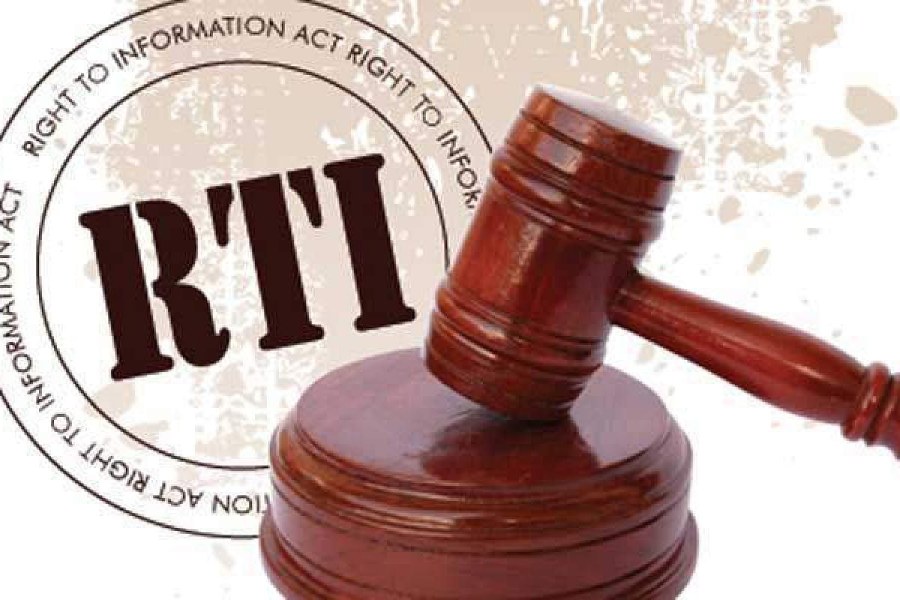
The Economic Survey’s suggestion that the Right to Information Act should be reviewed, coupled with its characterisation of information-seeking as idle curiosity, places unmistakable institutional pressure on a law that lies at the heart of India’s democratic architecture. The Survey, it must be pointed out, is not a detached policy note; its arguments signal the government’s priorities and legitimise future interventions. This adds an ominous element to the Economic Survey’s take on the RTI. Notably, any evidence showing that the RTI Act has impaired decision-making is absent from the Survey.
But then scepticism towards transparency is not new. Governments in India have rarely embraced the spirit of the RTI with enthusiasm. Even the United Progressive Alliance, which had enacted the law, expressed misgivings about its use. The former prime minister, Manmohan Singh, warned that “frivolous” and “vexatious” requests could drain administrative resources and served little public purpose. The National Democratic Alliance, the UPA’s successor, has been only too happy to continue with this culture of assault. In 2019, the Narendra Modi government brought out an amendment that permitted the Centre to set the terms, salary and tenure of the chief information commissioner and his/her lieutenants, thereby striking a blow at the autonomy of these office holders. There is thus a deep unease within the political executive about the redistributing of informational power from the State to citizens.
What explains the persistent attempts to weaken the RTI is perhaps its centrality to democratic practice. The law operationalises the constitutional promise that citizens are not passive recipients of governance but active participants in its oversight. Democracy depends on informed consent. Elections lose much of their meaning if citizens are denied the information necessary to assess how decisions are made, how resources are allocated, and whether power is exercised fairly. The RTI Act addresses this by enabling citizens to trace policy evolution, detect arbitrariness, expose corruption, and demand explanations for administrative action or inaction. In doing so, it strengthens accountability mechanisms beyond courts and legislatures, which are often distant or slow-moving. Equally important, transparency under the RTI Act fosters institutional discipline. Officials, aware that records may be scrutinised, are incentivised to adhere to procedure and reasoned decision-making. This is the opposite of weakening governance. The Economic Survey risks normalising the idea that democratic scrutiny is expendable when weighed against administrative convenience. Such an approach misunderstands — misconstrues — the role of transparency in a constitutional democracy. The RTI is not an indulgence granted by the State but a mechanism through which sovereignty is exercised by citizens. Any attempt to dilute it weakens the democratic compact itself.