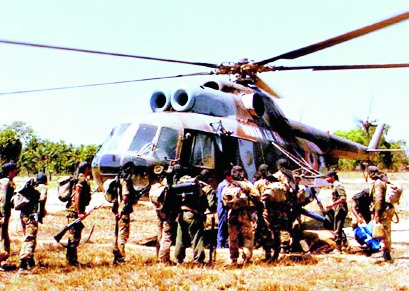

Thirty years ago, this month, fighting broke out in Jaffna between Indian peacekeepers and militants of the Liberation Tigers of Tamil Eelam. It was not meant to be so. Units of the Indian army had been sent to Sri Lanka in July 1987 to keep the peace between militants fighting for an independent State - Tamil Eelam - and the Sri Lankan army. An inadequate understanding of the dynamics of the Tamil-Sinhala conflict, underestimation of the resolve of the two belligerents and naïve as well as wishful policy of the Indian government had brought us to such a pass. The then chief of the army staff had assured his political bosses that his troops would be able to neutralize the Tamil Tigers in a couple of weeks. He was not alone in his assessment. The intelligence agencies and our high commissioner in Sri Lanka had all misread the intentions of the Tigers' supremo, Velupillai Prabhakaran.
As weeks stretched to months and years, war weariness seeped into civil and military policy-makers in Delhi. Finally, in March 1990, a changed government withdrew the Indian Peace Keeping Force after we had lost more than 1,200 soldiers. More than twice that number were wounded and maimed. The reputation of the Indian army had been tarnished and the Tamil problem in Sri Lanka had become even more intractable. It took the Sri Lankan army some 20 more years to vanquish the LTTE. The IPKF misadventure was a sorry episode in the history of our country. I was an active participant in these events, having commanded a brigade for two eventful years in the citadel of the Tamil Tigers in Mullaitivu district in northern Sri Lanka. The memory still rankles.
My brigade was a small but significant part of the IPKF. We were to dominate our allotted areas so that elections could be held to the yet to be constituted North Eastern Provincial Council. Its aim was to delegate power to the Tamils as envisaged in the Indo-Sri Lanka Accord, which had been signed in July 1987. The treaty required the Sri Lankan army to remain out of the fray. We thus found ourselves in a hostile situation with little information, against an alphabet soup of Tamil militant organizations of which the LTTE was the most dominant and vicious. Its goal was to achieve eelam, under its authority. To realize this, the LTTE was prepared to fight anyone who stood in the way, Sinhala, Indian or Tamil.
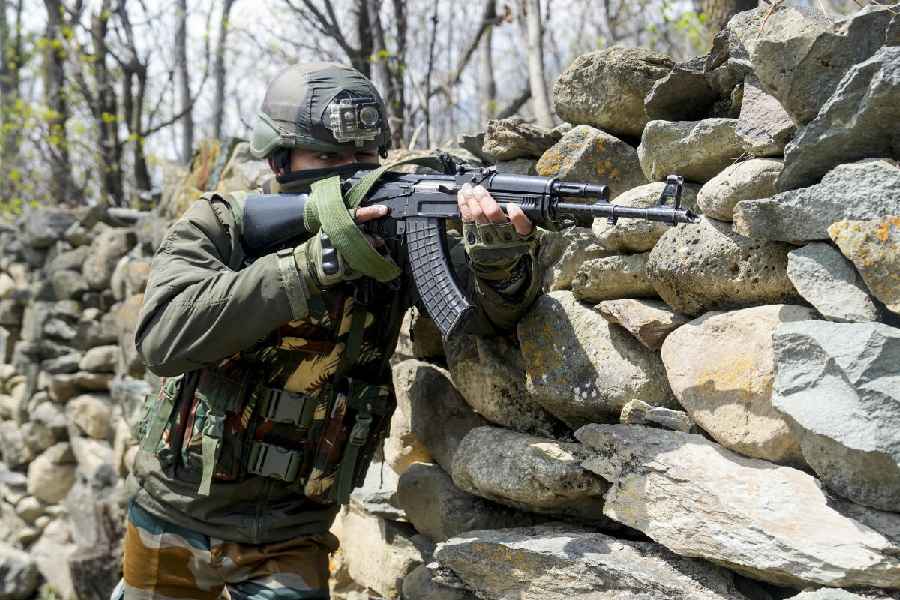
The LTTE supremo, Prabhakaran, had built a superb organization of committed, fanatical cadre consisting of men and women who were prepared to give their lives - they often did - to achieve their goal. Their training, initially abetted by Indian intelligence agencies, had been raised by them to unbelievable proficiency. They had modern weapons and communications which they used with great skill and improvisation, and they were careless of death. In this battle, as a soldier I often felt that they were the professionals and we regulars the amateurs. They were also adept at manipulating public perceptions and opinions. They also had the unwavering support of politicians of Tamil Nadu. In this dismal picture, we had a few major advantages - brute force of numbers, air and sea capability for transportation and the backing of all the power of a big country should it ever be required. This last had its own restrictions. In the fight against insurgents, we could never use the full weight of fire power at our disposal because the situation demanded propriety and restraint on our part. We could not harm non-combatants. We could not afford collateral damage, nor could we stoop to cruelty and barbarism that the LTTE often displayed. It was not an easy task.
The fighting followed a predictable pattern. Our larger strength allowed us to carry the fight to the LTTE's strongholds but it came at the price of soldiers' lives. The LTTE soon realized that howsoever long they resisted the IPKF, they could not defeat us militarily. So they played a master stroke. They made common cause with the new Sinhala president, Ranasinghe Premadasa, who was elected in January 1989, and both demanded that the IPKF be withdrawn. There was a new dispensation in Delhi too and V.P. Singh's government ordered the IPKF to withdraw. This was completed by March 1990.
What did the IPKF intervention achieve? Very little. It only served to sour relations between the two countries. The LTTE went back to fighting for an eelam and were decisively defeated after many vicissitudes in May 2009. Peace has now returned to Sri Lanka but the Tamil grievances continue to smoulder. The IPKF remains forgotten in our country but is commemorated by an impressive war memorial erected by Sri Lanka in Colombo. For those of us who fought there, only memories remain.