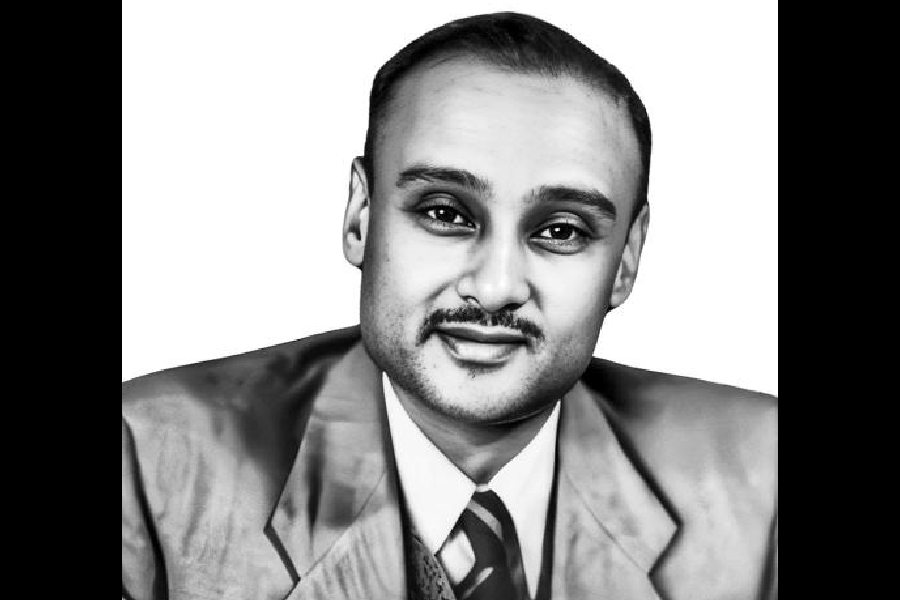
The great founding figures of the Republic have each of their birth anniversaries commemorated in public and on social media. However, landmark anniversaries of less famous but nonetheless admirable servants of India often go unnoticed. This column is inspired by the birth centenary of one such patriot, named Har Mander Singh. Born on June 27, 1926, he was an outstanding member of the Indian Frontier Administrative Service, a daring experiment in nation-building that should be better known than it currently is.
I myself first heard of the IFAS in the early 1990s, while working on a biography of the anthropologist, Verrier Elwin. Of British descent, Elwin spent two-and-a-half decades living with and writing about the tribes of central India. After Independence, he took Indian citizenship, and in 1954 was appointed Anthropological Adviser to the North-east Frontier Agency, as the state of Arunachal Pradesh was then known. Elwin had been handpicked by Prime Minister Jawaharlal Nehru as “a recognized authority in regard to tribal affairs”, who, thought Nehru, would bring to his new assignment a “sympathy and understanding which is most unusual and most helpful”.
Nehru and Elwin were instrumental in setting up the IFAS, whose first recruits came from an army or air force background, which meant that they were used to arduous physical work, getting along with people of different backgrounds, and building a spirit of camaraderie and teamwork. In mentoring the IFAS officers, Elwin was guided by what an educated Mishmi tribal had told him: “Remember that we are not by culture or even by race Indian. If you continue to send among us officers who look down on our culture and religion, and above all look down on us as human beings, then within a few years we will be against you.”
The prime minister himself took a close and continuing interest in the IFAS. One officer recalled Nehru telling them: “The staff must go along with the flag and the typewriters can follow later on”; i.e., the officers must first make human contact and befriend villagers before taking the formal State apparatus to them. In her book, Shadow States: India, China and the Himalayas, 1910-1962, the scholar, Bérénice Guyot-Réchard, writes that the emphasis of the frontier administrators was “on expressing state presence in benevolent terms”. Unlike the British officials who preceded them, members of the IFAS travelled into the interior villages without an armed escort, and often with their wives, which helped in developing rapport.
In the course of my research on Elwin, I interviewed some half-a-dozen IFAS officers. Har Mander Singh was the first, and the others included Rashid Yusuf Ali, R.N. Haldipur, T.S. Murthy and N.D. Jayal. All were now long retired, yet all recalled with feeling the excitement of those early years in NEFA, building trust among remote villages and little-known tribes that had, through an accident of history, now come under the formal territorial jurisdiction of the Republic of India.
Sadly, there is not (so far as I know) a book or even a doctoral dissertation devoted to the IFAS. We do however have an informative essay on the IFAS written by Claude Arpi, a French scholar of the Indo-Tibet borderlands long resident in our country. Arpi’s website also contains many useful documents relating to NEFA/Arunachal Pradesh.
Among the pioneering group of IFAS officers was Ralengnao ‘Bob’ Khathing, who played a key role in bringing the ancient monastery town of Tawang under Indian control. Then there was S.M. Krishnatry, the first Indian government official to make contact among the Tagins of the Upper Subansiri valley, adjacent to the Indo-Tibet border. Krishnatry was to write that his aim was to replace the “bloody culture of armed legacy of British expeditions against our own people” with “a human rights approach of love, humour and patience.” This indeed was the approach adopted by other IFAS officers, as endorsed and articulated by Elwin and Nehru as well.
Har Mander Singh himself is a major figure in Rani Singh’s book, An Officer and His Holiness, which revolves around the flight of the Dalai Lama from Chinese-occupied Tibet to seek refuge in India. When the Dalai Lama chose to go into exile in 1959, he entered the Kameng Frontier Division, of which Har Mander was Political Officer, with his headquarters at Bomdila. The Tibetan leader was met at the border by the Assistant Political Officer, T.S. Murthy, while Har Mander made his way from Bomdila to the monastery at Tawang, a distance of some 140 miles which had to be covered slowly on horseback in the absence of a motorable road. The Political Officer had meanwhile made arrangements for a doctor, Tibetan-speaking officials, and an armed escort to bring the Dalai Lama to Tawang, where they halted for a few days.
It was at Tawang, on April 6, 1959, that Har Mander read out the message Prime Minister Nehru had sent for the Dalai Lama. It read: “My colleagues and I welcome and send greetings on your safe arrival in India. We shall be happy to afford the necessary faculties to you, your family and entourage to reside in India. The people of India, who hold you in great veneration, will no doubt accord their traditional respect to your personage.”
From Tawang the party carried on to Bomdila. Along the way the two young men — the Tibetan still in his early twenties, the Indian in his early thirties — conversed with the aid of an interpreter. Har Mander was to write feelingly of the stoic optimism of the Dalai Lama even though he had been exiled from his homeland and separated from his people. The Buddhist god-king and the secular civil servant developed a deep affection for one another and remained lifelong friends.
The Indian Frontier Administrative Service was formally disbanded in 1968. Its officers went on to play further parts in nation-building. Har Mander became chief commissioner of Andamans and Nicobar; Bob Khathing served as ambassador to Myanmar; R.N. Haldipur was appointed lieutenant-governor of Pondicherry; K.C. Johorey became chief secretary of Goa; Murkot Rammuny served in Nepal and Bangladesh and also wrote an interesting book on the Nagas.
In my biography of Verrier Elwin, I wrote of the IFAS that it constituted “a cadre of capable and massively committed young men, almost unique in Indian political history for their readiness to live with and think like the people they had been sent to govern.” To these words let me append the judgement of Claude Arpi, who writes that “the fact remains that these officers who decided to sacrifice their careers to join the IFAS were all remarkable personalities and still today, even though the cadre does not exist anymore, they should be role models for young IAS/IPS officers.”
Arunachal Pradesh today suffers from problems of state corruption, the dominance of the politician-contractor nexus, and galloping environmental degradation. On the flip side, however, unlike the other states of the North-east, there has been no insurgency in Arunachal Pradesh, for which the visionary policies of Nehru and Elwin and the selfless work of the IFAS officers surely deserve credit.
ramachandraguha@yahoo.in