The India-Russia relationship is a unique one. There was a brief period of neglect in the 1990s, but a convergence of regional and global interests soon brought the two together again. This relationship is coming to terms with its limits in a significant manner in recent times.
Russian leaders often come to India for a few hours and return with defence deals worth billions. In 2012, the Russian president, Vladimir Putin, was in India for less than 24 hours and the two nations ended up signing deals worth $4 billion dollars. Moscow and Delhi signed contracts for the delivery of 71 Mi-17V 5 helicopters and 42 technological kits for SU-30 MKI aircraft. The two nations will jointly develop a fifth-generation fighter aircraft and multirole transport aircraft over the next decade. These are flagship Indo-Russian projects based on the Brahmos cruise missile programme.
But the defence partnership is not entirely free of wrinkles. There is the issue of inordinate delays in the delivery of Russian defence systems, which result in considerable cost escalation. For instance, India is paying Russia $2.34 billion for the delivery of the aircraft carrier, Admiral Gorshkov, now finalized for the end of 2013, compared to the original price of $974 million agreed upon in 2004.
Russia has agreed to further expand defence ties with India, both in content and range, and has also given its nod to cooperation in sophisticated spheres of technology that the United States of America and other Western nations seem reluctant to share. Yet Russia’s privileged position as India’s defence supplier of choice has come under pressure as India has shifted its priorities to the purchase of smart weaponry, which Russia is ill-equipped to provide. India’s increasing defence ties with Israel and the gradual opening of the US arms market have diminished the appeal of Russian-made weapons systems.
New doubts
Nevertheless, Russia remains the only nation willing to share defence technology of a strategic nature with India. Civilian nuclear energy cooperation between the two countries has also gathered momentum.The rapidly deteriorating security situation in Afghanistan has also been instrumental in bringing India and Russia closer. As New Delhi looks at alternative policy options to secure its interests, the partnership between India and Russia is likely to strengthen.
That India’s ties with Russia need a recalibration was underlined by the Indian prime minister when he suggested during his latest visit that bilateral ties should adapt to changing times to address new challenges. New Delhi was confident that contracts on the construction of the third and fourth nuclear reactors at Kudankulam would be finalized during Singh’s visit but a breakthrough could not be reached amid Russian concerns about the right to recourse clause of the Civil Liability for Nuclear Damage Act.
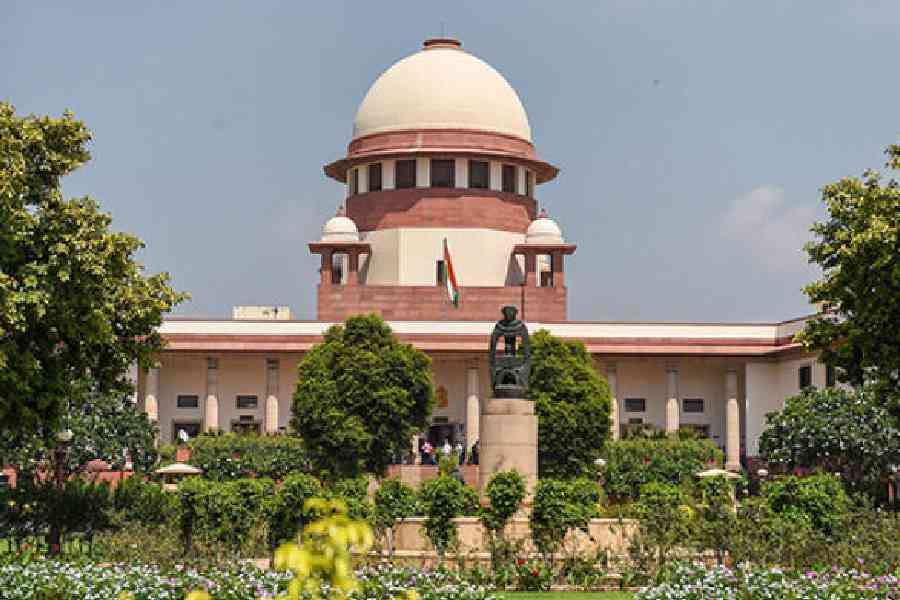
The rhetoric of ‘age-old ties’ notwithstanding, the two nations are not putting in enough effort to lend a momentum to this partnership and they continue to evade tough questions. There was no clarification on how the two nations propose to boost their abysmal economic ties. Bilateral trade is struggling to cross the $11- billion mark. Russia remains concerned with Sistema as it has a 56.68 per cent stake in Shyam Sistema Teleservices. Twenty one out of its 22 licences were cancelled by the Supreme Court as part of its 2G spectrum order. India’s nuclear liability law is preventing greater civilian nuclear energy cooperation. Even as India moves closer to the West, Russia is making overtures to Pakistan and its growing closeness with China is also troubling. Unless there is mutual effort to solve these issues, there is a danger that Indo-Russian ties will become devoid of any substance and turn into a pale shadow of their glorious past.