
BULLETS AND BYLINES: FROM THE FRONTLINES OF KABUL, DELHI, DAMASCUS AND BEYOND By Shyam Bhatia, Speaking Tiger, Rs 599
The words of a news report often fail to convey adequately the horrors experienced by the conflict reporter. Such reportage, when it takes the shape of a book must go beyond being just a chronicle of the atrocities that conflict reporters usually witness first-hand. Bullets and Bylines does exactly that by interlacing the author's experiences with the understanding that he has gained in hindsight. The time when Shyam Bhatia was a foreign conflict correspondent for The Observer coincided with the beginning of the crisis plaguing the Middle East. Bhatia recollects some of his most significant assignments, placing them in the context of the existing situation in world politics.
As the subtitle suggests, the canvas of the book is vast. There are two recurring themes that tie the disparate chapters together. One is Bhatia's Indian origin that makes blending in in West Asia easier for him than his fellow British journalists. His connection with India and knowledge of languages like Hindi and Urdu also save his life on several occasions. The other theme that links Bhatia's varied experiences is that of humanity, which, surprisingly, survives even amidst the hatred and the violent wars. It is often humane gestures from strangers in a foreign land, coupled with sheer luck, that become the difference between life and death for Bhatia.
One such instance when Bhatia escaped almost certain death was in Afghanistan. To Bhatia's then untrained eye, the Soviet entry into Afghanistan was the most significant international crisis in decades. In his attempt to get as close to the frontlines as possible, Bhatia took a bus from Kabul to Kandahar. Minutes after the bus began its journey, Bhatia was woken by a "sharp pop, pop noise". The mujahidin, a group of so-called revolutionaries with the backing of the Central Intelligence Agency, had waylaid the vehicle. The driver and all other passengers save Bhatia were shot dead. While Bhatia stood next to a pile of lifeless bodies expecting to be shot, his British passport ensured that he was taken captive. The mujahidin even made Bhatia an offer to join them in their holy war against the Soviets. "Don't worry, if you get killed, God will send you to Paradise," one of them informed him in a throwaway line that invoked what would later become the credo of the Taliban.
As a "visiting fireman" - the journalist who is sent to cover wars, bombings, assassinations and so on - Bhatia was also sent to India in 1984. Bhatia recalls stumbling around in a mortuary in Delhi for about twenty minutes. After counting 119 bundles of clothing and hair, which was all that remained of the Sikhs who had been torched, Bhatia, sick from the smell of burnt flesh, came out of the mortuary only to come across a parked lorry with more bodies. The smell of burnt tyres continues to haunt him. Barbarity, as Bhatia learnt in the course of his long career, is universal in nature.
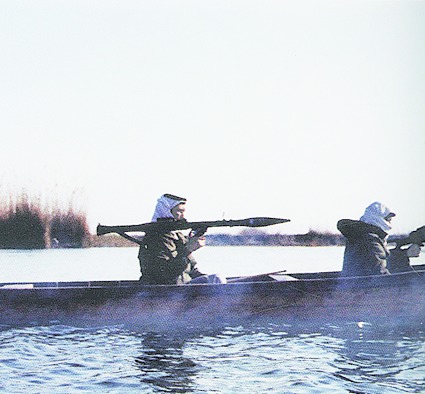
Bhatia's narrative also reveals his scathing dislike for Saddam Hussein. While this can easily be seen as part of the popular sentiment prevalent in the West, the chapter on the Marsh Arabs shows why Bhatia calls Hussein and his sons "monsters". Part of the reason Bhatia chased a story on the Marsh Arabs - one of the world's oldest ethnic communities now on the verge of extinction - was the historic allure of the marshes, hailed by believers as the site of the Garden of Eden. The Marsh Arabs, however, were too busy trying to survive the chemical bombing being carried out against them by Hussein for daring to go against him to be bothered about their ancestry.
The skill to utilize seemingly mundane details for his benefit bears testimony to Bhatia's skills as a foreign correspondent. He writes that the first time he managed a long interview with Yasser Arafat - with whom Bhatia maintained a life-long friendship - was by exploiting the Palestinian president's weakness for honey. Bhatia also writes of the one time when he had to babysit for the Arafats. At other times, it is close acquaintances who are the secret behind a good story. Benazir Bhutto, whom Bhatia calls Shahzadi, was one such friend from Bhatia's Oxford days. Bhutto once revealed to the author, on the condition that he would not write about it while she was alive, that India and Pakistan could never think of nuking each other as there is not "enough space or time" to not expect retaliation.
"I believe all the stories ever told, religious or otherwise," says Bhatia. This eagerness to believe is an antithesis to the harsh surroundings that Bhatia worked in. This naivety meant that Bhatia was often misled by those he considered reliable sources, like the time he was deceived by a young Greek waiter. The Greek convinced Bhatia that he would lead the latter to the forgotten grave of Alexander the Great. Bhatia, ever-willing to learn from his shortcomings, took such incidents in his stride. In spite of all the peculiar perils of conflict reporting, it was curiosity that kept Bhatia going.