The book under review is a novel written in Hindi in 1949. It was penned by a young Dharamvir Bharati, who was yet to make a mark in the world of Hindi literature. The novel has been translated into English by Poonam Saxena.
Saxena says she translated the work because of the overwhelming power of its story, and the spell that the setting and the characters had cast on her. But it remains unanswered how Gunahon Ka Devta could be translated to Chander & Sudha. The original Hindi title referred to the darker side of the hero’s character. But the title given to the English translation makes it seem like a prosaic affair.
The story is set in Allahabad, where a young man falls in love with the daughter of his mentor, who is also his professor at the university, but cannot muster courage to propose to her. He rather helps his mentor in finding a groom for the girl, which creates more complications. Thereafter, the trajectory that the story takes makes it seem more like a Bollywood potboiler.
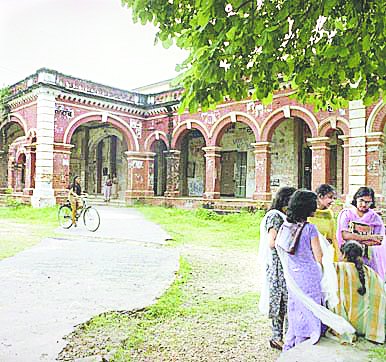
From the quiet and idyllic beauty of Allahabad University campus of the late 1940s, Bharati weaves a tale of love that should be enjoyed for its own sake. One should not be bothered about facts like what made Chander leave his family and come to Allahabad. For such questions do not bother the novelist in Bharati. Or questions like what made his professor allow Chander to spend long hours with his daughter in his absence, without giving a thought about how the conservative society of that time would react. One has to suspend such a questioning attitude and accept Sudha and Chander as two innocent souls trying to bask in their adolescent love, with Chander keeping a distance. It is a different question that the same Chander gets involved in a sexual relationship with another girl called Pammi, who teaches him the importance of sex in one’s life. Do these intimate moments transform Chander into the ‘god of sin’?
There is also Bertie, Pammi’s brother, whose eccentricities give a different twist to the plot but raises the same old questions about love, lust, marriage and the position of women in the society that the novel seems to deal with.
The novel raises a lot of pertinent issues about social customs and that might appeal to the younger generation. Allahabad in those days was steeped in conservatism and marrying outside one’s caste was considered a big taboo. At a time when stories used to invariably end on a happily-ever-after note, Bharati despatches Sudha to become another man’s wife. And in the end kills her.

If, on the one hand, the Sudha-Chander relationship hinges on platonic love, Bharati also depicts a different kind of love through the Chander-Pammi relationship. Chander’s relation with this Anglo-Indian girl is more about the body than the soul. However, there is one similarity between the two relationships in that neither ultimately gets the sanction of marriage. Sudha dies in the end and Pammi leaves Chander and goes back to her husband. But his relationship with Pammi makes Chander realize the meaning of true love and it transforms him into a better man.
The novel is more about the women than the men. Bharati was possibly trying to paint the helplessness of the women characters. They all struggle against society and their circumstances. The institution of marriage also fails to provide them with any succour. Whether it is Sudha or Pammi, irrespective of their religion or class, all the female characters are made to suffer in the fictional world of Bharati.
Whether the translation is appreciated by the readers remains to be seen, but it cannot be denied that Saxena has certainly given a new readership to this tale.
Shams Afif Siddiqi