THE PANDIT: TRADITIONAL SCHOLARSHIP IN INDIA
Edited By Axel Michaels,
Manohar, Rs 550
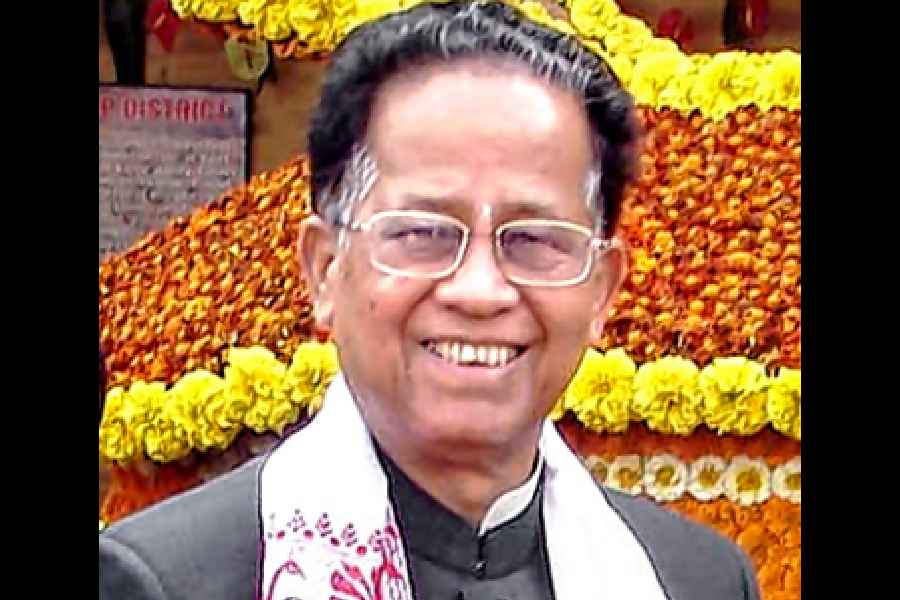
The renowned scholar, K. Parameswara Aithal, was born in Kota, in 1934. With advaitavendata of Sankara as a special subject, he studied the sastras for five years before passing the Vidvan examinations with distinction. For his dissertation 'non-rigvedic citations in Asvatayana Srautasutra', he was awarded the doctorate of philosophy by the Karnataka University in 1970. In 1968, Aithal was appointed as teacher in the South Asia Institute of the University of Heidelberg. During his 30 year long tenure in the university he impressed everybody who came in contact with his vast erudition.
Axel Michaels was one of the many admirers of Aithal. His aim is to re-assess the merits of traditional Sanskrit scholarship in India of which Aithal was an illustrious representative. At the seminar organized by him with this end, several Indian and European Indologists read out their papers which have been compiled in this volume.
The Pandit contains 13 essays distributed under four chapter heads. The essays seek to situate the pandit in the context of the education system in ancient India which prioritized a special bond between the teacher and the pupils, the guru-shisya parampara. This was looked upon as an ideal means of transmitting knowledge from one generation to the other.
In this gurukul system of education, the pandit was regarded not only as an individual, well-versed in one or many sastras and adept in memorizing long texts, but also as a hallowed symbol of wisdom and of asceticism. In short, the pandit represented an institution harbouring socially valued principles and acted as a pivot around which the social structure was built.
During Islamic rule and subsequently under British reign there was an inevitable decline in the social prestige which the pandit formerly enjoyed. He became increasingly marginalized as the European concept of modernism came to prevail in India.
Axel Michael shows that now Sanskrit learning has become merely an academic exercise and he goes on to record some of his speculations about the future of the pandit. Ashok Aklujkar explores the history of the term pandita which, according to him, Panini derived from the feminine noun panda, meaning 'having intelligence.' Aklujkar also analyses the process of despiritualization and desecularization that the doctor had undergone probably as an 'indirect result of the arrival of Islam on the Indian subcontinent.'
Christopher Z. Minkowski dwells on the controversy that centres around the inconsistency between cosmological models conceived in puranas and siddhantas. Bettina Baumer offers a brief yet interesting survey of the tantric tradition in Varanasi which was followed mainly by textual scholars, ritual practitioners and yogis. Madhav. M. Deshpande chronicles the process through which traditional Sanskrit scholarship veered towards modernism in Maharashtra in the 19th century under the aegis of the 'new' pandits like Vishnushastri Chiplunkar, B.G Tilak, V.S Apte and others.
Monika Horstmann's depiction of Pandit Hazariprasad Dvivedi whom she calls 'a pandit among modernists and modernist among pandits' is insightful. Harry Falk's reflections on the samhitapatha and the padapatha and Albrecht Wezters' remarks on Nirukta 1.20, though a little beyond the grasp of lay readers, are likely to encourage further researchers. One feels that Gaay Caran Tripathi's article should have been translated into English before being included in this volume.
 Saturday, 04 April 2026