
PASSAGE TO BONDAGE: LABOUR IN THE ASSAM TEA PLANTATIONS Edited and compiled by Samita Sen, Samya, Rs 1,000
Since the 1990s, the gaze of the social historian has shifted from the musty archives of official documents to the exciting world of vernacular print. In Bengal, the 19th century print industry that grew up in and around Calcutta catered to a variety of literate audiences. The world of Bengali literature not only offered the highbrow works of Bankim, Madhusudan and Dinabandhu, but also produced a fascinating array of mass-produced, low-brow books, ranging from almanacs to sexually titillating plays.
Of all genres, social dramas written in the form of satire - containing racy plots, themes of moral degradation and sexual prurience, and a liberal smattering of vulgar language - were highly popular. In their composition, themes and linguistic style, they bore a strong resemblance to their Western counterparts: the underground plays and novels of Victorian England and pre-revolutionary France. In spite of their importance in reflecting the mentality of the bhadralok class, they have not been fully explored. From this point of view, Passage to Bondage is a highly promising book that translates for the first time two 19th-century plays and an autobiography, written between 1874 and 1901, and deals with the deeply controversial issue of illegal recruitment of coolies for Assam tea gardens.
Collected by historian Samita Sen and translated by Suhit Kumar Sen, the three works collectively throw light on a range of issues: the coercive labour regime of the tea gardens, the physical and sexual exploitation of female workers and the collusion between the white planters and their Indian recruiting agents. More generally, conscientious readers will also find connections between the timing of their original publication and the public debate on labour laws in India at that time. Readers interested in histories of labour, gender and nationalism would find these texts to be a welcome addition to their usual historical sources. While labour history is a well-developed field of research, and has spawned numerous monographs and journal articles, it is yet to explore fully the dazzling world of vernacular print in recovering histories of workers. Sen's introduction to the book provides the context within which these texts were written and circulated.
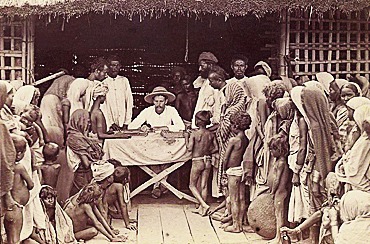
By the late 19th century, the tea industry in India was known to employ the highest number of female labourers. The reason for this was the widespread belief that the careful yet monotonous task of plucking tea leaves was best suited to women. Procuring a large supply of single women, however, proved to be quite a challenge for planters. Since no upper caste, married Hindu woman would voluntarily leave her husband and go work in a plantation, planters had to either recruit both husband and wife or resort to abduction and coercion. In addition to their physical labour, women were also valued for their reproductive labour. Female coolies were expected to contribute to a self-replenishing labour force in the tea gardens. The more common victims of this recruitment process were poor peasant women and adivasis from Chotanagpur. Helping this vicious cycle of chicanery were the Indian collaborators of the white planters - recruiting agents (arkatis) who worked on the basis of a commission. In the three works included in the book, the recruiting agents are all Indians, who are sometimes related to the victims through social ties or village connections. It is interesting to note that while in the first play, the agent is a Brahmin, in the second play, the white recruiter is assisted by a schoolmaster. Finally the local zamindar, who is well aware of the goings-on, is also complicit in the process.
Very little is known about the writers of these plays or their reception. The first tract is Cha-Kar Darpan (The Mirror of a Tea Planter) and belongs to the category of what is called darpan (literally meaning mirror) literature. A darpan, along with its close cousin prahashan (farce), was a play with a strong moral message that dealt with issues of moral decadence. The second play, Arkati: Natak, is similar in theme and literary style, but has a slightly convoluted plot, with more complex characters. The third tract, an autobiography called Cha-Kulir Atmakahini (Autobiography of a Coolie) , is more urbane and refined in taste. The first play deals specifically with the rape of a coolie woman, while the second and third pieces focus more on the dynamics of labour recruitment.
The authorial sympathy of the writers lies with the victims, who are portrayed as characters of unquestioned moral good. In contrast, the villains are more complex with changing graphs of morality. Sometimes they have a change of heart and realize the enormity of their misdeed. Although the plays are meant to highlight the plight of coolie women, the treatment of the female characters appears to be highly retrogressive. They are often rendered as though without any agency and their existence seems to revolve around patriarchal constructions of chastity and feminine virtues. Cha-Kar Darpan ends on a rather violent note when Nrityakali, the sister-in-law of the rape victim, slits her own throat fearing that she too will meet the same end.
While ostensibly dealing with matters of social, rather than political, importance, these texts incorporate a trenchant political critique of colonial rule within the larger social narrative. While the playwrights, seemingly, believed in the divine benevolence of the British, they nevertheless reminded their masters that their right to rule was dependent upon their moral action. In the end of Arkati: Natak, Gangaram, a former recruiter, chastises Alpin saheb, the villain of the play with the following words: "...you belong to the race of masters, our God... We beg that in this country, too, you should attain ineradicable virtue as part of your ongoing achievements by banishing the cause of limitless sorrow of the coolies".
Translating 19th-century vernacular texts into formal English, while keeping intact their colloquialism, bawdiness and rusticity, is no easy task. Evidently, in spite of Suhit Kumar Sen's sincere efforts, much has been lost in translation. But since these texts are meant to be read for their historical importance rather than their literary merit, one can excuse the translator. The same, however, cannot be said about the publishers for doing a rather shoddy job of production. The book could certainly have done better with a more experienced publisher. One hopes that it finds the audience it deserves.