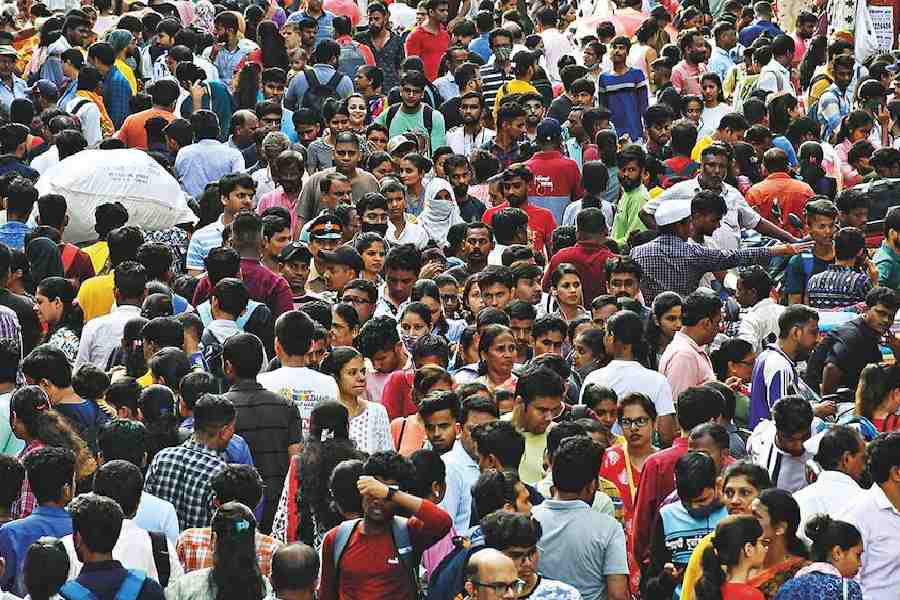
According to a report by the United Nations, India is the world’s largest contributor to urban population growth. But India’s case has its own peculiarities in this context. Compared to other Asian economies, where urbanisation was State-driven and infrastructure-led, India’s growth has been more organic but less planned. The speed of India’s urbanisation has also been striking. While countries like Japan and South Korea urbanised over several decades with strong institutional frameworks, India’s growth has been fragmented, with cities expanding faster than governance frameworks can adapt. The result is a pattern of uneven development. This has intensified pressures on crucial resources such as housing, transport, water supply, and waste management systems. It is thus significant that the Parliamentary Standing Committee on Housing and Urban Affairs recently recommended that the government constitute a high-level expert panel to comprehensively assess India’s urban infrastructure requirements, financing needs, governance reforms, and capacity-building imperatives up to 2047 — the year by which India aims to become a viskit nation. With projections suggesting that three-fourths of India’s population could be urban by 2030, the urgency is undeniable.
The scale of the challenge is unprecedented, especially since India lacks an integrated, long-term urban investment and strategy framework. Persistent infrastructure deficits manifest in the form of congested cities, inadequate public transport, and sprawling informal settlements. Cities struggle to generate sufficient jobs for incoming populations, leading to underemployment. Environmental pressures add another layer of complexity. Unplanned expansion leads to pollution, loss of green cover, and heightened vulnerability to climate risks such as flooding and heat waves. Although policy responses have begun to take shape — AMRUT 2.0, SBM-U 2.0, PMAY-U 2.0, Metro rail projects, and PM-eBus Sewa are striving to improve the quality of life in cities — gaps remain in implementation, financing, and coordination among various levels of government. The absence of an infrastructure framework, the Parliamentary Standing Committee has warned, may lead to fragmented planning, poor resource allocation, and financing stress in the future. Last year, the World Bank asserted that India stands at a “critical opportunity” to shape resilient urban development, but only if it acts decisively now. Without a coordinated strategy grounded in data and foresight, India risks allowing rapid urbanisation to deepen existing inequalities.