|
|
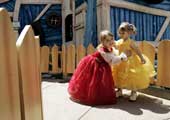
| Sisterly act |

Getting Out of the House By Isla Dewar, Review, ?6
The blurb on the book cover describes the novel as a story of Nora, who, as a child, had waged a war against her mother, Maisie, because she preferred her elder daughter, Cathryn. While Nora was ?shy, awkward, prone to telling fibs and day dreaming?, Cathryn was ?bright? and ?beautiful?. Now Nora is leading a happy life in Edinburgh, far away from her mother. However, the happiness of her near perfect life is threatened when Maisie?s world suddenly falls apart, and she and Cathryn decide that Nora should take her mother?s responsibility.
A prospective reader, with this bit of information, might assume that this is another novel on sibling rivalry. To a certain extent the assumption is true but the novel is much more than a simple story about Nora and her rivalry with Cathryn. It is a story about Nora?s family and friends, and each of the characters has a space and a life of its own in the book. There is nothing extraordinary about any of them. In fact, they are rather mundane and perhaps ?boring? too, yet each one is unique.
For example, initially, Cathryn seems to be simply Nora?s rival and a good and obedient daughter of Maisie and quite predictable. However, as the novel progresses, she turns out to be very intriguing. She divorces her husband, becomes a feminist lawyer and enters into a lesbian relationship. Again, Nora?s father, Alex, is basically a hen-pecked husband leading a very routine life. In the first half of the novel, he is merely a shadowy figure but Alex slowly grows as a character. He has a romance and leaves his wife of thirty years for the woman he loves in order to give himself a chance in life.
Even Nora seems to be quite a predictable Bridget Jones-like character. She is careless, to a certain extent dumb and even clumsy. But she surprises us by the way she deals with her relationships, be it as a daughter, sister, friend, lover or an unwed mother.
The most endearing thing about the novel is that it is not judgmental. The characters are neither good or bad, they are human. They have virtues and vices. In other words, they are ?normal?, and this is why each of them leaves a mark on the reader. Even Maisie ? hyperactive and alcoholic, a demanding wife and an insensitive mother ? is at the end human, and that, perhaps, is the redeeming feature about her character. In spite of all her flaws, it is difficult to hate her. The only character who is difficult to like is Nathan, Nora?s lover. Nathan is both arrogant and conceited, which make him unforgivable.
Subtlety is the hallmark of the novel. From the language to the treatment of characters and themes, everything is underplayed. It questions relationships and raises issues like homosexuality, adultery and single motherhood. But all of it is done with poise and control.
Further, the novel does not attempt to answer all the questions that it raises. This is perhaps because in life all questions cannot be answered, judgments cannot be passed as things cannot simply be right or wrong, good or bad. This is one of those books which have to be read over a time, relished and savoured.