Ancient texts and their attendant wisdom are often criticised for being anachronistic. Here, the line of thinking is that the Classics no longer speak to modernity, its complexities and contradictions. Nothing can be further from the truth though. Consider, to cite just one example, the potency of old texts and philosophies in untangling contemporary geopolitical knots. When Donald Trump visited China to hold a meeting with Xi Jinping last month, the Chinese president invoked — tellingly — the conundrum that goes by the name, ‘Thucydides Trap’. Extolled by the Harvard political scientist, Graham Allison, Thucydides Trap refers to the great structural stress that is the consequence of an ascendant power challenging a dominant one. Thucydides, the Athenian historian, was referring to the anxiety in Sparta regarding the rise of Athens. The resultant conflict — the Peloponnesian War — had disastrous consequences for ancient Greece. It would not be an exaggeration to suggest that China and the United States of America risk enacting the roles of Athens and Sparta, respectively, in the modern context.
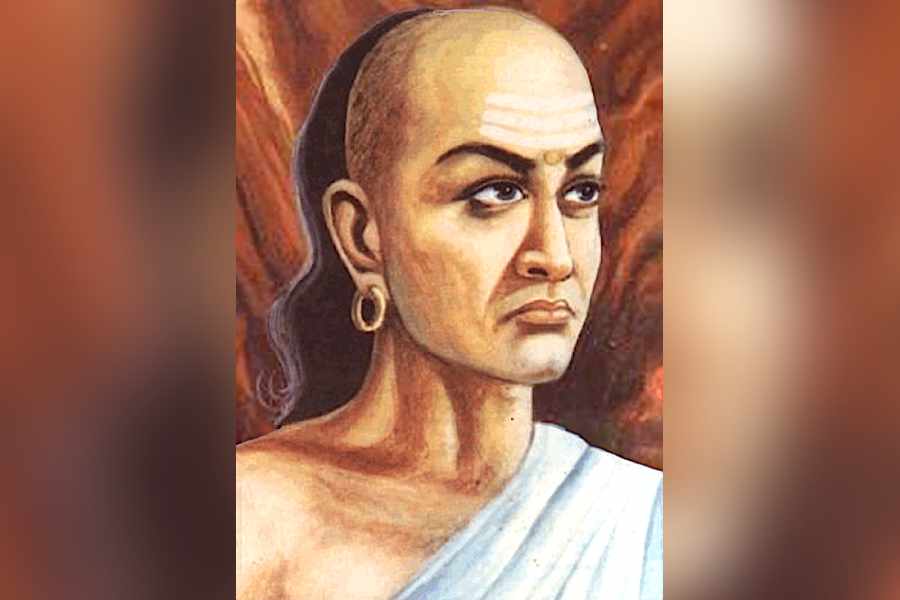
What makes the Thucydides Trap particularly dangerous is that it often leads rivals to accept the inevitability of conflict. Such a blind spot could spell doom for a world order already battling multiple existential fires: economic whiplashes, climate change as well as the erosion of a rules-based order. Is there then no way of breaking this deadly trap? Mercifully, the answer is in the affirmative. And the answer comes from Asian wisdom that offers strategic correctives: Sun Tzu’s The Art of War and Chanakya’s (Kautilya’s) Arthashastra. The former is overwhelmingly perceived as a distillation of military philosophy while the latter reflected on not just military campaigns but also diplomacy and governance. What is interesting is that even though both texts emphasise
the primacy of triumph following different paths, they converge — agree — on one fundamental aspect. That statecraft’s finest hour is when it succeeds in avoiding conflict altogether. Mention must also be made of another work of yore that has immense significance in this discussion: the Tirukkural or the Kural of Thiruvalluvar which is a compendium of values and virtues in couplets. Even though the Kural identifies conflict as inevitable, it emphasises that diplomacy should be the first course of action. Instructively, non-violence and forgiveness, not vengeance, have been prioritised in this text.
Epistemological curiosity remains central to those engaged in diplomacy and military endeavours. Western philosophy continues to inform modern military doctrines. In India, there is Project Udbhav — an ambitious initiative that seeks to integrate the wisdom that is the result of ancient India’s philosophical explorations on statecraft, strategic thinking, diplomacy and so on with modern military imperatives. These are encouraging steps. But they must not remain ornamental in nature. They must also resist the temptation of ideological indoctrination. An open-minded engagement with ancient strategic thinking would, on most occasions, reveal the futility of war to the modern statesman and his peers.