|
|
| Benjamin Jowett |

Balliol College: A History
By John Jones,
Oxford, ? 65
This review should begin with the admission that I am not a Balliol man. But it was in Balliol ? especially its Junior Common Room and its Buttery ? that I spent some of the most enjoyable hours during my Oxford days. In the late Seventies, there were some outstanding history students in Balliol, two of whom ? Adrian Wooldridge and Simon Green ? went on to win fellowships at All Souls. We read, debated, discussed and had a lot of fun. Behind all this were two dons, Colin Lucas (later to become Master and Vice Chancellor) and Maurice Keen, who occasionally strolled into the Buttery to buy us ale. A little distant was Christopher Hill, then the Master, whose end-of-term parties were the best place to meet people. Balliol was learned, Balliol was radical and Balliol was fun.
John Jones?s history of the college captures Balliol?s erudition and its occasional bursts of radicalism but unfortunately misses out on the fun. What narrative of Balliol can ever be complete without at least some reference to the pranks of Maurice Keen and Richard Cobb which have become part of Oxford?s lore? Or without reference to the riotous parties that Jack Gallagher gave in his room in the college during what he invariably called his ?Siberian exile?. (Jack felt he was in exile whenever he was away from Trinity, Cambridge.)
But this is to cavil at what is really a solidly researched book. Nobody knows the college record and archives better than Jones since he has been, for a long time, the archivist of the college. He stays very close to his records, and on occasion is the soul of discretion. For example, he refers to the (in)famous 1974 student demonstration which led to the occupation of the Indian Institute, and in a footnote tells readers that the dean of Balliol prepared a detailed file on the ?bizarre affair? which is closed but which Jones has obviously seen. But Jones reveals nothing.
Balliol?s origins were humble and in no way presaged its later fame as a house of scholarship. The college grew out of an endowment by John Balliol who hired a house in Horsemonger Street (today?s Broad Street) for 16 poor Scholars to whom he made an allowance of 8 pence a week each. ?The early existence of this community, from which the present-day College descends directly, is confirmed by a royal writ dated 22 June 1266.? This community was governed by no statutes; the scholars made their own rules and elected their own Principal. The first statutes came only in 1282.
Jones?s recreation of the early history of Balliol is a tour de force, given the fact that the records relating to this period are scanty. He also describes the geographical expansion of Balliol, and the maps that act as aids to this description are excellent. From the maps it is clear that the present shape of the college was quite different from what it was even in the middle of the 19th century.
The early history of Balliol is inevitably associated with John Wyclif who came to the college as a BA from Merton in 1356, and within the next four years became an MA, and then Master of Balliol. His Mastership was undistinguished save the impropriation of the Rectory of Abbotsley by the College. His major philosophical works were written in Oxford but after he had stepped down from the Mastership. His attacks against the Church, however, gave to Balliol, even though it had nothing to do with the views, a retrospective air of radicalism.
Balliol emerged from what Jones very aptly calls ?a medieval fog? from around the 16th century. In 1534, after the Act of Supremacy established the King as the head of the Church of England, members of all colleges were asked to make a formal acknowledgement of the principle. Balliol dissented by writing in abbreviated Latin, between the pro forma declaration and the college seal, that the members had signed but had no intention of prejudicing ?divine law, the rule of the orthodox faith, or the doctrine of Holy Mother Catholic Church?. The relative anonymity of the college and its members saved it from Henry VIII?s and Thomas Cromwell?s wrath. Balliol was once again not part of the mainstream.
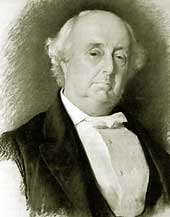
Arguably the greatest Master the college has had is Benjamin Jowett who became head of Balliol in 1870. Jones?s chapter on Jowett?s Balliol is a gem. The famous jingle about Jowett says everything about him: ?First come I. My name is J?W?TT,/There?s no knowledge but I know it./I am master of this College/What I don?t know isn?t knowledge.? Jowett played a critical role in bringing young Indians to Balliol: of the 49 Indians who came to Oxford during Jowett?s Mastership, 22 came to Balliol. He got ICS probationers to come to Balliol and appointed Arnold Toynbee as their Tutor. Balliol, thanks to Jowett, and despite being Lord Curzon?s college, never quite became a college of empirewallahs. Trinity, next door, has always had things to say about this.
Jones?s concluding chapter about Balliol in the late 20th century lacks the leisurely pace of his earlier chapters. There is surely a story to be told about how Balliol came to elect as Master 20th century?s most famous Marxist historian. And also why Maurice Keen, a great upholder of tradition, went on record to hail Hill?s Mastership as part of the ancien regime of Balliol. Despite all this, for all those who love Balliol ? and for those who want to catch a glimpse of Oxford across the centuries ? John Jones?s book is something to be treasured. I hope it is discussed and debated in the JCR and the Buttery.