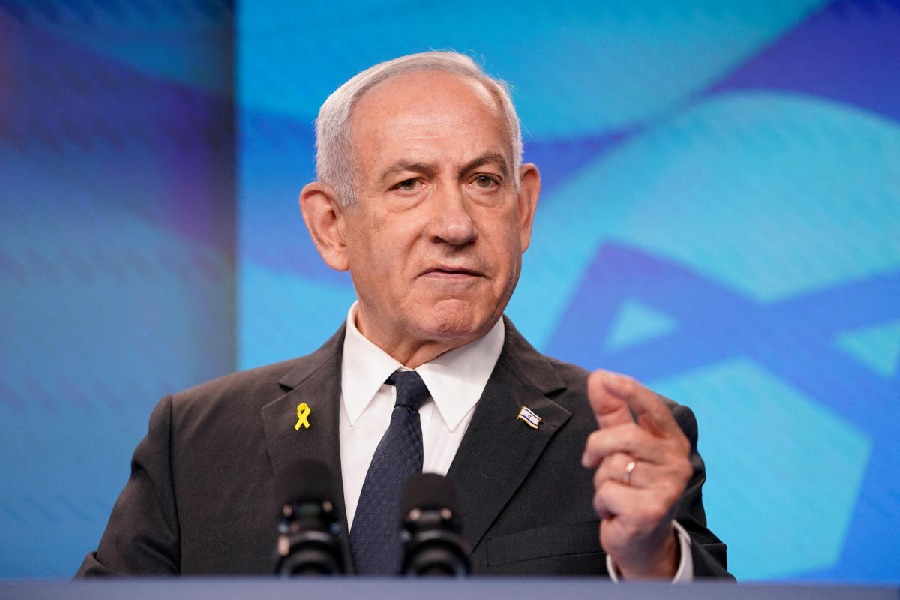
At times, the ending can be made sense of only through the beginning. There is now a ceasefire in the conflict between Iran on the one hand and the United States of America and Israel on the other, but it hangs by a thread. This means that the resumption of war and its attendant horrors and sufferings cannot be ruled out. However, once the dust settles, it may be instructive to examine the roots of the West Asia crisis. And, if an illuminating account in The New York Times, the reporting of which is all set to be part of a forthcoming book, is any indication, Donald Trump may, indeed, have lit the fire in West Asia. But — and this is of crucial importance — he was egged on to light the flames by a Machiavellian ally, a nation that appears to have disproportionate heft with the United States of America, so much so that it can bring the US, and the world, to war. That nation, the news report makes it clear, is Israel.
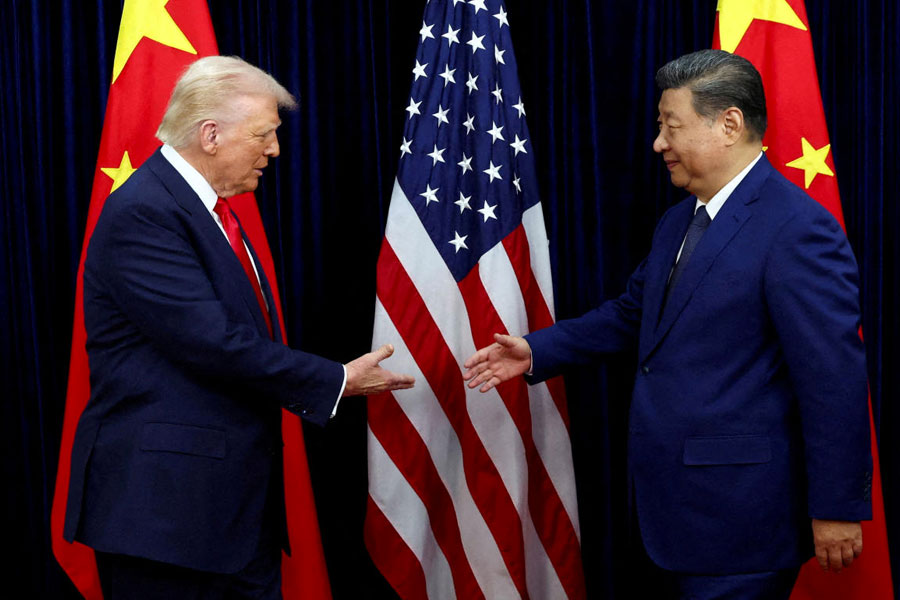
On February 11, so goes The New York Times’s account, Benjamin Netanyahu met Donald Trump and key members of his administration in a crucial meeting at the Situation Room in the White House. What tilted the outcome of the meeting in favour of conflict was Mr Netanyahu’s hard selling, in the form of a presentation, of some conclusions, which, in hindsight, stand disproved. For instance, in that meeting, the Israeli prime minister appeared certain of the capitulation of the Iranian regime facilitated by war and domestic uprising: he further claimed that Iran’s missile capacities could be neutralised quickly; that Tehran was too weak to choke the Hormuz Strait; and that Iran’s capacity to retaliate against the US and its Gulf allies was minimal.
Mr Trump was swayed, as was most of his Establishment, save for the vice-president. But the war has discredited each of Mr Netanyahu’s assertions.
Several, albeit speculative, inferences can be drawn from this engagement. For instance, Mr Trump may have been influenced not just by Mr Netanyahu’s convincing presentation: Israel’s historical ties with the US as well as the convergence of the American president’s own hawkish views with those of the Israeli prime minister may have acted as a trigger. That America’s intelligence apparatus as well as all most of the president’s wise men nodded in agreement — eventually — also exposes the perils of institutional acquiescence towards an overbearing executive authority. This is, by no means, a phenomenon limited to the US: the mother of democracy is not immune to this erosion either.
Two months after that consequential meeting, it would be interesting to see where the two stakeholders — conspirators — are placed. The war with Iran has cemented Mr Trump’s image as a gullible, unpredictable, and whimsical president. His constant, contradictory fulminations, against perceived foes and friends, in the course of the war have made matters worse. He now faces rising anger at home, international opprobrium, and, yet, chooses to stomp on a battered world battling a severe energy crisis among other challenges. Mr Netanyahu, though, will not be displeased. Israel’s predations in Lebanon — they have cast a shadow on the ceasefire with Iran — mean that apart from strategic gains in the region, the clouds of war would continue to deflect public attention from Mr Netanyahu’s domestic troubles, including judicial examination of charges of corruption. And while Iran, the world, and even Mr Trump count their respective losses, Mr Netanyahu can afford — as of now — to bask in his ledger of gains.