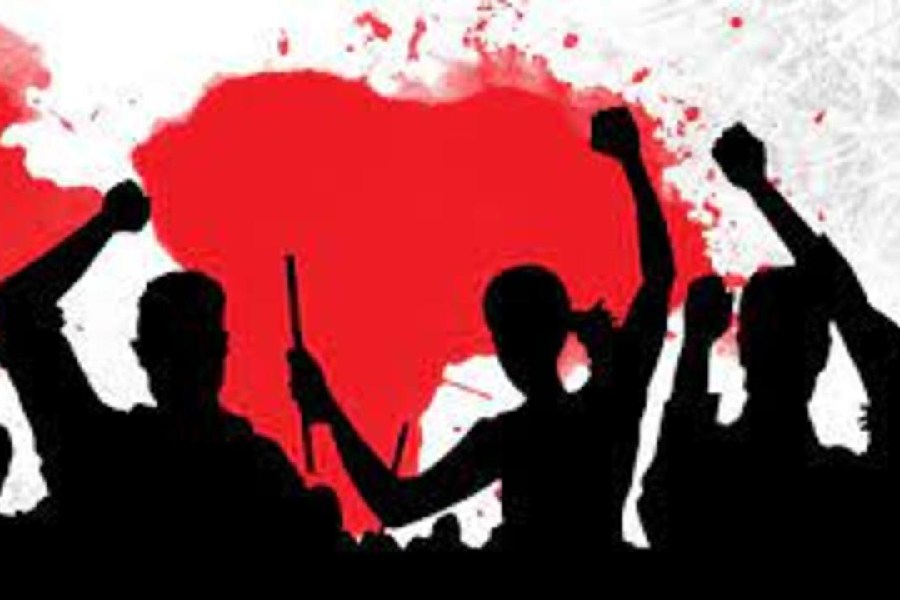
The latest assessment by the Armed Conflict Location & Event Data, an independent conflict monitor, provides a stark image of the contemporary architecture of violence in the world. In 2025, an estimated 831 million people were exposed to conflict and violence. Strikingly, the data show that violence is no longer confined to battlefields, triggered by exceptional moments, or the handiwork of clearly-defined enemies. Instead, it has become routine and embedded in the way power is exercised across much of the world. For instance, ACLED reported that nearly three-quarters of violent events around the world now involve State forces and that violence directed at civilians is at its highest in five years. This reflects a worrying shift. Where civilian harm was once treated as a failure of statecraft or even the global order, it is increasingly framed as unavoidable or strategic. This normalisation is concerning. When the State lowers its own thresholds for violence, it recalibrates expectations across society, signalling that force is a legitimate means of resolving disputes.
The ACLED findings also highlight the fact that the global spread of violence is driven by the fragmentation of authority. Contemporary conflicts involve dense networks of militias, paramilitaries, criminal organisations, and aligned insurgent groups. These actors thrive in environments where governance is weak, contested, or predatory. Such fragmentation multiplies points of violence. It creates localised conflicts that bleed across borders and resist diplomatic settlement. Technology accelerates this diffusion. Digital platforms ensure that violence is no longer limited by geography or resources. It can be inspired remotely, coordinated loosely, and enacted with minimal infrastructure. The result is a world in which the capacity for harm is widely distributed, but accountability remains scarce.
However, the template of violence that is taken into account by ACLED represents only one layer of an intricately variegated phenomenon. Intimate partner violence and other forms of interpersonal abuse such as domestic violence are rising globally and affect far more people than armed conflict. Nearly one in three women worldwide experiences physical or sexual violence in her lifetime, and hundreds of millions of children grow up in homes shaped by fear and coercion. These forms of violence are often treated as separate social problems but they mirror and reinforce the same dynamics visible in conflict zones: inequality, impunity, and the use of force to maintain control. Climate change adds a further — existential — dimension to this already volatile mix. Droughts, floods, and extreme heat displace populations, often in countries with limited institutional capacity. As resources become scarcer and livelihoods more precarious, they magnify subterranean tensions. In such conditions, both State and non-State actors are more likely to resort to coercion as a means of managing scarcity and dissent.
Violence is spreading because the checks that once limited the use of force — a robust international order, accountability, morality, to cite some examples — are eroding, while the conditions that generate violence — inequality and scarcity — are expanding. These checks did not eliminate violence but they limited its reach. Their rejuvenation is necessary to stop the global bloodshed.