
POPULATION BOOST
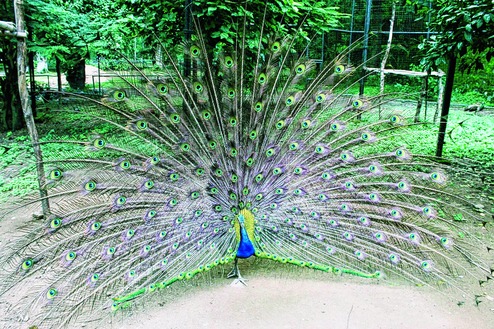
Bhubaneswar, Oct. 8: Whenever dark clouds gather over the Pakidi hill near Aska in Ganjam, about 200km from here, hundreds of dancing peacocks is a sight to behold.
Their bright plumage fanned out regally, they strut about without the fear of being trapped or killed.
The area has turned into a safe haven for the national bird and perhaps has the largest concentration of these birds at one place in the state. 'Though a scientific survey of the birds has never been conducted, but ocular estimates put their number around 1,500,' said Ghumsar south divisional forest officer Bijay Ketan Acharya.
With the forest officials and the local peacock protection committee, a volunteers' body, taking care to ensure that peacocks are not harmed in any way, the birds feel completely secure at Pakidi, a protected forest area spread over 480 hectares.
The birds frequently descend from the hill and roam about at the periphery villages feeding on leftover food and drinking water from the artificial tanks constructed by the committee.
'So far, we have not come across any case of intentional killing of these birds. People residing at 20 villages around the hill love peacocks and will not harm them,' said Acharya. At Chermaria, one of these villages, located about 8km from Aska town, the forest department has set up an eco cottage, where tourists can stay and enjoy the scenic beauty of the hill and the surrounding. Local peacock protection committee president Samir Pradhan said the forest department co-operated with them in protecting the peacocks. 'The birds love ripe tomatoes and red chillies, which are found in abundance at our villages. Sometimes we have to protect the crops from them, but no one ever harms the birds. We also keep pots filled with water for the peacocks to slake their thirst,' Pradhan said.
However in 2011, 10 peacocks had died at Pakidi after feeding on cotton fields sprinkled with pesticides. The issue had led to a confrontation between the forest and agriculture departments with both pointing accusing fingers at each other. 'However, things have been fine since then. The birds are perfectly safe at Pakidi,' Acharya said.