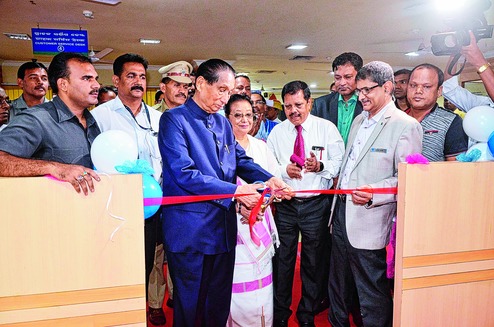

Bhubaneswar, Aug. 27: The Odisha University of Agriculture and Technology (OUAT) will promote and support production of nutrition-rich crops in seven districts to check problem of malnutrition in the state.
"Malnutrition rate is high among kids and health status of women in our state is also poor. We have selected seven districts that are most affected where we would promote cultivation of nutrition-rich crop varieties such as green crops, pulses, millets, leafy vegetables and so on," said vice-chancellor Surendra Nath Pasupalak told The Telegraph on the sidelines of the OUAT foundation day event.
The seven districts identified are Boudh, Kandhamal, Koraput, Rayagada, Gajapati, Nuapada and Jajpur. The varsity has partnered with voluntary organisations, which will monitor the improvement in health indicators after one year. According to sources, 34 per cent of the total children below five years age in the state are underweight.
The varsity has also decided to expand its research across the state. The research will be done in districts to provide quality seeds of pulses, paddy, maize and wheat to the farmers. "The aim is to double the farmers' income in the state by 2022," said Pasupalak.
The varsity is working on developing cold and weed resistance pulse varieties. Under the project, five varieties, including green gram, red lentil, black gram, peas and fava beans, will be cultivated in farms after paddy harvest is done.
"By doing the dual crop of both paddy and pulses, the farmers' income will be increased substantially," he said. The government has sanctioned Rs 2.25 crore for research on developing new varieties of pulses.
The OUAT has decided to increase the number of pulse seed hubs from seven to 11 districts where the varsity will provide technological inputs and support to the farmers to grow quality pulses seeds. The varsity will buy these seeds to distribute among farmers.
"We are also working on developing a high-yield variety of aromatic rice with the use of genomics," he said.