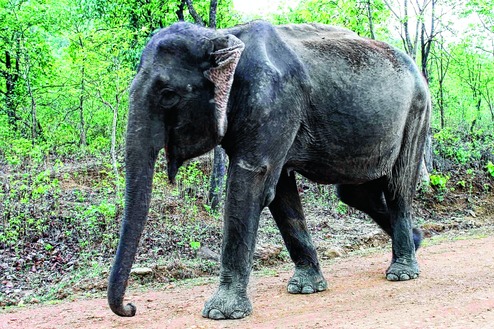

Bhubaneswar, July 7: Human-elephant conflict continues to be a cause for worry at a time the population of elephants in the state has gone up marginally in the past two years.
Statistics show 393 elepha-nts have died in the state in the past five years, most of them falling prey to poaching and electrocution by high-tension wires. The latest electrocution deaths took place in the Dhen-kanal forest division for which two officials were suspended.
While hunters and wildlife smugglers killed 28 elephants during this period, nine died of poisoning and 60 were killed in road and train accidents. Electrocution has claimed the lives of more than 50 elephants in the past five years.
On the other hand, elephants have killed more than 300 persons during this period besides damaging 4,405 houses and crops over 69,071 acres. Environmentalist Sailabala Padhi said habitat loss was among the biggest factors responsible for human-elephant conflict in the state.
"Disappearance and degradation of forest cover forces animals to make forays into human habitations. They come looking for food and water," said Padhi.
Sources in the forest department said the government was implementing a special plan to contain the conflicts between humans and elephants with focus on creating new elephant corridors and restoring the old and eroded ones. Both old and new corridors would have provision for sufficient food and water, essential to keep elephants from straying into human habitations close to the forests.
The focus, according to forest department sources, would be the Similipal Wildlife Sanctuary, considered the state's biggest elephant habitat. The authorities are keen to ensure the safety and security of elephants in the sanctuary area where at least 10 carcasses of these animals have been found in the last four years raising the fear of large-scale poaching.
Besides, Similipal is also known for an annual hunting ritual called akhand shikar during which tribals plunge into the reserve forests killing animals almost at will. Though the scale of killings has come down over the past few years following a sustained government campaign against it, the practice remains a threat. <>"Poachers sometimes take advantage of the tradition and kill animals during the shikar, which takes place during April-May each year," said an official, not willing to be quoted.