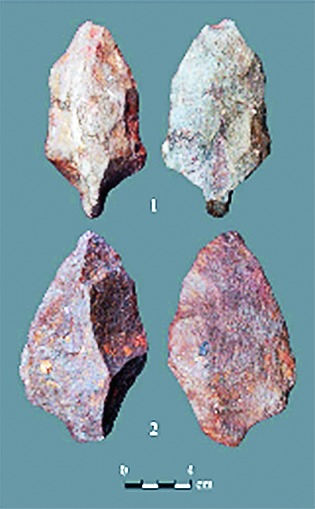


and (above) men at work during the archaeological excavation. Telegraph pictures
Sambalpur: The recent archaeological excavations in upper Danta, a tributary of the river Jira, near Torajunga village of Bargarh district, have brought to light extensive cultural remains of an early human civilisation.
During the excavation, the researchers had stumbled upon stone tools, weapons and artefacts.
The team used optically stimulated luminescence and other available dating methods to arrive at the exact date of the early human occupation in the area of exploration.
Associate professor Pradeep Kumar Behera of the department of history, Sambalpur University, and his team have been conducting the explorations since 2015. The excavation activity got further momentum last year and the findings have been a major boost to the team.
"The discovery of stone tools has immense significance in understanding migration and subsequent colonisation of the early human in this part of India. The findings are similar to the discovery near Attiranppan near Chennai," Behera told The Telegraph.
Stone tools manufactured by these early people show their potential skill in using different types of contemporary technology and bear striking similarities with those reported from several places in eastern and southern Africa, besides west Europe.
Most of these tools were designed for hunting large-sized game animals, now available in the Debrigarh wild life santuary, located a few kilometres north of Torajunga. Soil samples taken from various levels will be sent to several geophysical laboratories in India for palaeomagnetic study, Behera said.
Besides, scientific investigations will also be conducted to get information regarding the contemporary environmental conditions in which the early humans thrived, the professor said.
Acclaimed researcher and retired professor at the Central University in Chennai, Hema Achutan, will visit Sambalpur University in April to study the materials. She will take the materials to Chennai for scientific research, he said.