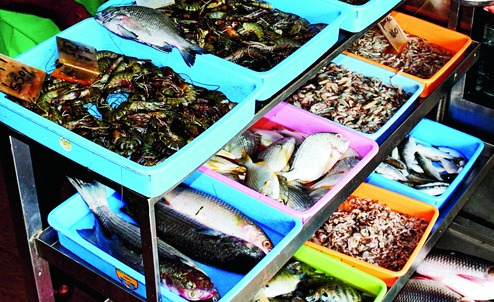

Bhubaneswar, March 23: Chilika fish, which have created a niche in the market, are safe for human consumption as the presence of heavy metals are below the danger level.
A research of the Central Inland Fisheries Research Institute, Barrackpore, has revealed that heavy metals such as copper, cadmium, zinc, lead and manganese in Chilika fish were in safe zone.
Researchers conducted the research on 15 fish species that are important from the economic point of view including Mugil cephalus, locally called Khainga, Daysciaena albida, locally called Boroga, and Eleutheronema tetradactylum or Sahala, Chelon macrolepis orDangala and Etroplus suratensis or Kundala.
"The research revealed heavy metal content in the fish species was below safe limit. All the 15 fish species studied from Chilika lake are safe for human consumption. Pesticide residues were detected in most of the fish samples analysed, but it was also below the safety limit," said additional chief executive of, Chilika Development Authority (CDA), Sasmita Lenka.
Chilika fish remains the first choice for many consumers in the state for which the government had launched Chilika Fresh kiosks here in 2014. "In order to keep the fishes fresh, insulation boxes have been provided to the fishermen that can keep the catch fresh for around 36 hours," added Lenka.
The research institute has also advised to promote the Chilika fish species as organic, safe and nutrient rich through screening and nutrient profiling. Besides it has asked the state government to promote all important fish species and "nutri-rich" fish.
Forest officials said the consumption of fish with higher limits of heavy metals could cause health problems.
"Too much of zinc can cause vomiting, stomach cramps, nausea and skin problems. Excessive cadmium can cause damage to the central nervous system, DNA, immune system and can also lead to infertility. Lead can cause damage to the kidneys, brain and liver. However, cooking reduces the amount of heavy metals," said a forest official.
Around 2 lakh people depend on fishing from the lake spread over 1,100sqkm in the three districts of Khurdha, Puri and Ganjam.
The annual catch from the lake is 12,140 tonnes. Of this, the annual catch of Boroga is around 526 tonnes and Khainga is around 265 tonnes.
The research that took 66 months included frequent survey of 33 fish landing centres and collecting samples from fishing boats from the 12 stations.
About two to five fishing boats were surveyed based on availability. Research on fish diversity of the lake was conducted for Rs 87 lakh.